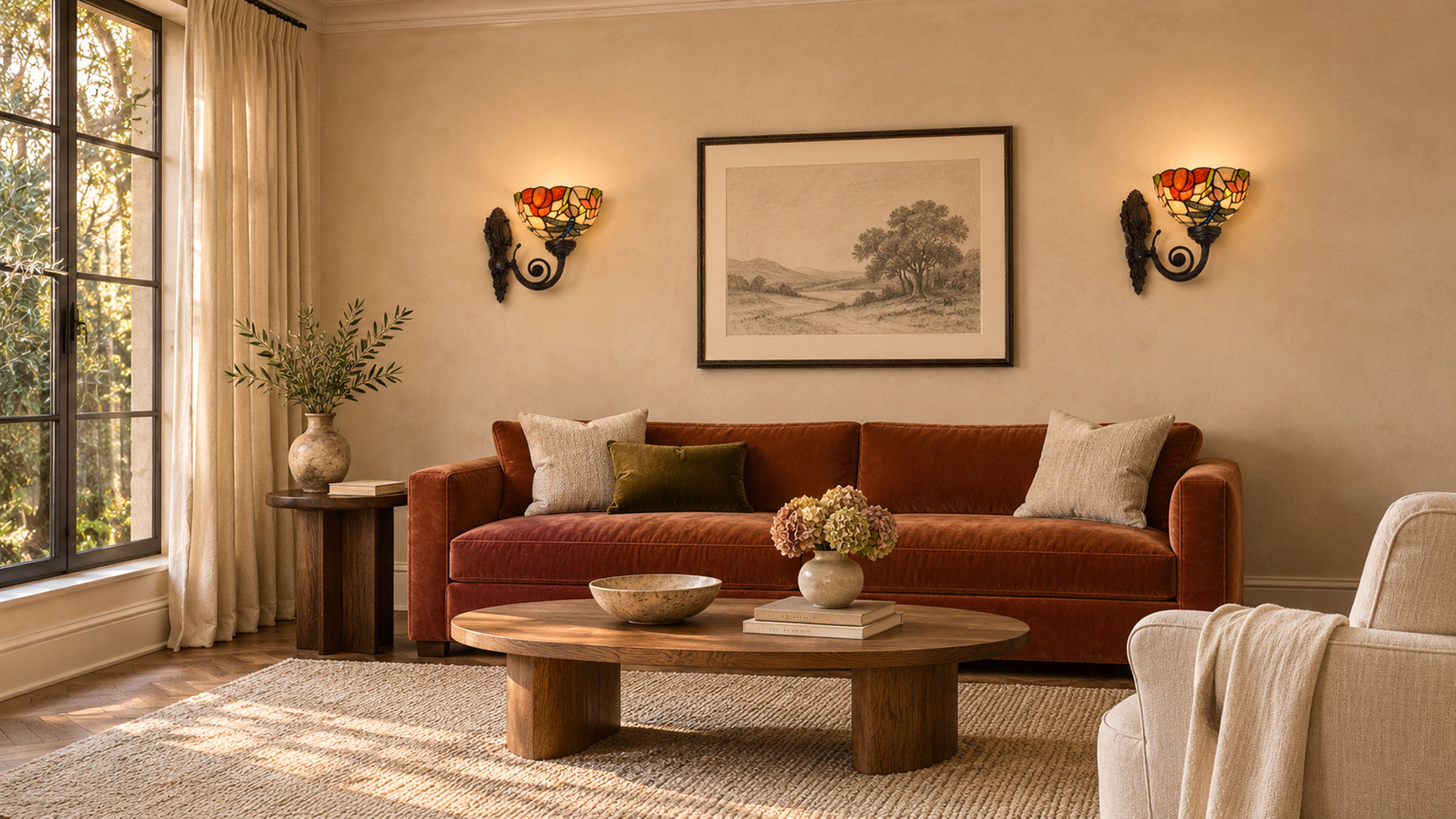
A living room can feel beautifully resolved in daylight and surprisingly unfinished after sunset. The sofa sits comfortably within the rug, the artwork has enough space around it, and the curtains frame the windows. Then the ceiling lights come on, and the room loses the depth that made it inviting. Walls recede, reflective surfaces become distracting, and the seating arrangement feels more exposed than relaxed.
Wall lighting offers a way to reconsider that evening experience. Tiffany-style fixtures introduce another dimension: their colored glass remains part of the decoration even when switched off. Used thoughtfully, they can bring detail to an otherwise restrained interior without requiring a room full of period furniture. The starting point is deciding what the wall—and the space in front of it—needs to do.
Choose the Wall Before Choosing the Pattern
Begin with the view from the room’s entrance, then sit in the places people actually use. These perspectives may suggest different priorities. A blank wall that looks prominent from the doorway might sit directly opposite the television, where a glowing shade could become an unwanted reflection. A quieter wall beside a conversation area may offer a more useful position.
When comparing Tiffany wall lights for living room arrangements, consider the relationship between the fixtures and the furniture below them. A pair can give a sofa wall a deliberate rhythm, while one fixture may be enough to define a compact alcove. There is no need to repeat the same treatment on every available wall.
Allow the selected wall to have a clear purpose. If it already contains a large painting, open shelving and strongly patterned upholstery, another intricate element may be difficult to appreciate. Removing a few competing objects can create a better setting for stained glass than adding more decoration around it.
Design the Whole Composition, Not Just the Electrical Points
For a pair of sconces around a picture, establish the position of the picture and sofa together. Centering everything on the wall’s full width can look awkward when a doorway or curtain stack changes the usable space. The visual center of the seating area is often the more helpful reference.
Leave enough room between the artwork and the fixtures for their outlines to remain distinct. An ornate backplate, curved arm and patterned shade need space of their own. Placing them too close to a frame can turn several attractive objects into one crowded cluster.
Before installation, use paper templates that represent the complete fixture, including the backplate and shade. Check them from the doorway, from the sofa and from adjacent chairs. A flat template will not show projection, so also measure how far the fixture extends into the room. This matters beside circulation routes and wherever someone might lean back or stand up close to the wall.
Let the Glass Introduce a Limited Color Palette
Stained glass does not require a room to repeat every color in its pattern. A more restrained approach is to choose one connection and let the remaining colors act as smaller accents. Amber and cream glass might sit beside pale plaster and oak. A few green details could relate to an olive cushion, while orange petals find a subtle echo in terracotta upholstery.
Looking through Tiffany style wall lights for living room options can help establish whether a floral, geometric or dragonfly pattern belongs in the proposed scheme. Judge the arrangement of the colors as well as their names. Broad pale sections create a different visual impression from a shade densely divided into dark, saturated pieces.
Keep the surrounding surfaces relatively quiet if the fixture is intended to be the decorative focus. A plain curtain, a textured rug and a simple picture frame can provide enough variety without competing with the glass. Matching every furnishing to the lamp tends to make the room feel more staged than personal.
Assess the Fixture in Daylight and in Use
Product photographs are useful for understanding a pattern, but they cannot fully predict how a shade will look against a particular wall. Its appearance changes with the light source inside it, the surrounding illumination and the camera exposure used for the photograph. Where possible, assess the actual fixture with the intended bulb before committing to final decorating decisions.
A stained glass wall light fixture should also be considered as a complete object. The backplate may be visually substantial even when the shade is small. A curling arm can introduce a strong silhouette, while an upward-facing bowl creates a different relationship with the wall from a downward-facing shade.
Check the manufacturer’s specified installation orientation, lamp compatibility and dimensions. Do not assume that a fixture can be inverted simply because another orientation would suit the composition. The mounting arrangement and the way the shade is supported are part of the product’s design.
Separate Decorative Glow from Reading Light
The lamp that makes a wall attractive may not provide enough useful light for a book. Colored glass, shade shape and mounting position all affect how light reaches nearby surfaces. Treat decorative sconces as one part of the room’s lighting plan, then assess reading and other close tasks separately.
For an armchair used every evening, a discreet adjustable reading light can accompany the wall fixture. This allows the stained glass to remain at a comfortable brightness while the page receives the illumination it needs. Someone sitting elsewhere should not have to tolerate an excessively bright decorative lamp just because another person is reading.
Test glare from seated positions. A bulb hidden when standing may become visible from a lower chair. Also check mirrors, framed glazing and television screens for reflections. Moving a proposed position before installation is much easier than trying to solve an uncomfortable sightline afterward.
Plan Controls and Maintenance Before Finishing the Wall
Consider which lights should operate together. Switching the decorative wall lights independently from the general room lighting gives the space more flexibility. If dimming is desired, confirm compatibility between the bulbs, fixtures and controls rather than assuming that any LED lamp will behave well on an existing dimmer.
For hardwired fittings, have the installation planned and completed by an appropriately qualified electrician. Agree on cable routes, mounting support and switch positions before repainting or applying wall finishes. In an existing home, these details can influence which wall is practical to use.
Maintenance deserves the same attention. Leave access for changing lamps and cleaning the shade according to its care instructions. A fixture installed high above a deep cabinet may photograph well but become inconvenient to maintain. Comfortable access helps preserve the appearance that justified choosing it in the first place.
Give the Room an Evening Test
Once the furniture and lighting are in place, spend an ordinary evening in the room. Close the curtains, sit in each chair, read for a while and look toward the television. Notice whether the wall lights support those activities or repeatedly draw attention away from them.
A successful arrangement might be as simple as two small stained-glass sconces framing a quiet drawing above a low sofa. The furniture provides comfort, the wall has definition, and the glass adds color without taking over the room. That balance is what makes decorative lighting feel like a lasting part of a home.
