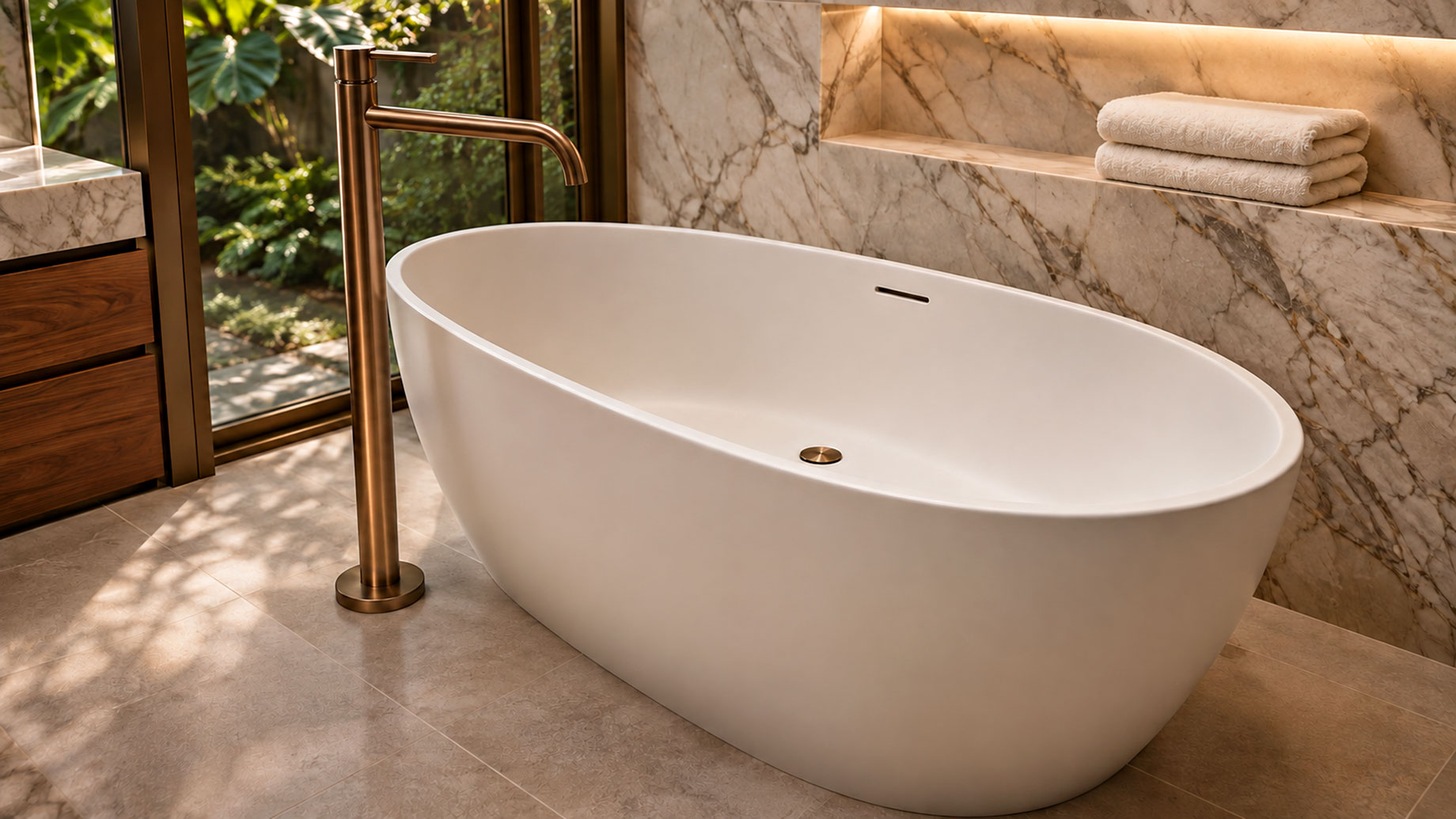
Thinking about adding a freestanding tub to your bathroom remodel? You’re not alone.
They look incredible, feel like a spa, and instantly become the main visual attraction of the whole room.
Lately, the 60-inch model (that’s 5 feet long) has been getting a ton of buzz. It’s pitched as the ultimate sweet spot for small-to-medium bathrooms—giving you that open, luxury vibe without completely eating up your floor space.
But is 60 inches actually practical for your house, or will you regret it the second it’s hooked up? Let’s walk through what you really need to know before hitting “buy.”
1. The Real Appeal of 5 Feet
Why is everyone talking about the 60 inch freestanding bathtub? Simple: size and math.
Full-sized bathtubs often run 66 to 72 inches. If you live in a typical single-family home or condo, squeezing a 6-foot tub into your bathroom usually means ditching your double vanity or shrinking your walk-in shower to a phone booth.
At 60 inches, you still get the sculptural freestanding look, but the tub leaves enough breathing room for the rest of your fixtures.
It also ties right into how people are renovating today. The Harvard Joint Center for Housing Research (JCHS) reported in its 2025 study that home repair and maintenance are keeping the market moving fast. Most homeowners upgrading their bathrooms aren’t building massive room additions—they’re trying to make their existing layout work harder. A compact 60-inch tub hits that exact balance between open space and functional luxury.
2. Don’t Ignore Your Floor Plan
Here’s a rookie mistake: measuring wall-to-wall length and calling it a day.
Installing a freestanding tub isn’t just about whether the box physically fits between two walls. You need to map out the entire room layout and traffic patterns.
The National Kitchen and Bath Association (NKBA) sets pretty clear bathroom rules on clearance and safety space for a reason. Ask yourself these practical questions first:
- Can you open the door? Seriously. Make sure your entry door, linen closet, and shower glass panel won’t swing right into the side of the tub.
- Where are your pipes? Moving drain lines under the floor joists gets expensive fast. If your subfloor plumbing is already set up for a specific layout, try to stick with it.
- Can you actually reach around it to clean? You need at least 3 to 4 inches between the tub and the back wall, or you’ll be jamming a mop into a tight gap forever trying to catch dust.
3. Comfort Is More Than Just Outer Length
Here’s the catch with a 60-inch tub: the inside is smaller than the outside.
Because acrylic and cast iron tubs have thick walls and slanted backrests, a 60-inch tub might only give you 42 to 45 inches of flat bottom space. If you’re over 6 feet tall, your knees are definitely going to stick out above the water line.
Always check the internal basin specs—or better yet, try a “dry test” sitting in a showroom model—before buying:
- Look at the depth: A deeper soaking depth (15 to 18 inches of water) makes a shorter tub feel way more comfortable and fully submerged.
- Pick the right material: Acrylic is lightweight, affordable, and holds heat well. Cast iron feels rock-solid and stays warm forever, but it’s crazy heavy—you’ll need to double-check if your floor joists require extra framing support before hauling it upstairs.
4. Fitting It Into Your Style (And Budget)
Brands like WELLFOR make a lot of these modern 60-inch designs, mostly because they fit so well into minimalist, modern homes. A clean, tub-on-the-floor silhouette opens up sightlines, making even a tight bathroom feel visibly larger than it is.
When you’re looking at specific models, don’t just shop with your eyes. Pay attention to how the tub connects with your faucet. Are you using a floor-mounted tub filler with a hand shower, or a sleek wall-mounted faucet? Does the tub come with an integrated pop-up drain, or do you need to buy a separate matching overflow kit?
Also, keep your total project budget in mind. Buying the tub shell itself is often the cheap part. Between tearing out the old alcove tub, patching wall tile, adjusting subfloor plumbing, leak testing, and hiring a licensed plumber, labor costs add up quickly.
5. Water Efficiency and Daily Upkeep
Beyond dimensions and looks, pay close attention to water consumption and long-term care costs.
Tub models vary significantly in internal capacity and recommended water depth. A larger basin doesn’t just use more gallons—it taxes your water heater. If your tank is undersized, you’ll run out of hot water before the tub even fills. Choosing a capacity that fits your family’s daily soaking habits is key to keeping utility bills under control.
Maintenance matters just as much. While freestanding tubs are easy to wipe down on the exterior, tight gaps around the base joint, drain outlet, and faucet connections still collect soap scum, water spots, and mildew over time. Check the manufacturer’s surface care requirements beforehand, and steer clear of harsh, abrasive chemical cleaners that could scratch or ruin the acrylic finish.
For American homeowners focused on long-term satisfaction, choosing a tub that balances easy cleaning, low energy/water demand, and durable performance gives you the best bang for your renovation buck.
The Verdict
So, is a 60-inch freestanding bathtub right for your home?
If you want the relaxing luxury of a deep soaking tub without sacrificing your entire bathroom footprint, yes—it’s one of the smartest, most versatile options on the market.
Just get out your tape measure, double-check your plumbing layout, confirm your water heater can handle the volume, and make sure the inside dimensions fit your body comfortably before making it official.
