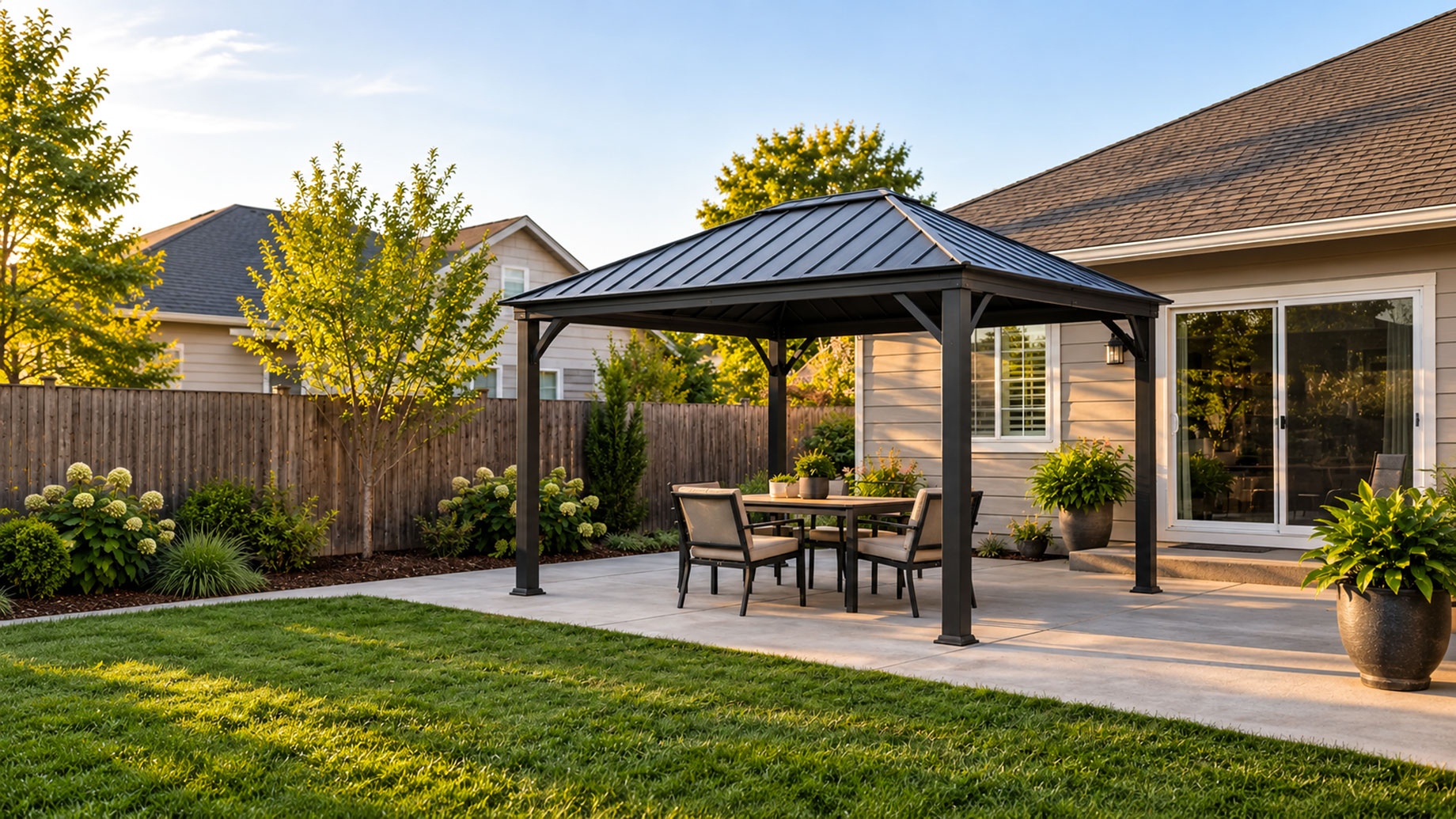
The gazebo in your shopping cart has a clear price. Getting it delivered, installed and ready for a Saturday lunch can be a different calculation. A base that needs work, assembly you had not budgeted for and furniture bought too early can all change what the project costs.
To plan a realistic gazebo budget, separate the structure price from the cost of preparing the site, installing it and making the space usable. Then decide which extras can wait. You do not need to finish the whole backyard at once, but you do need to know what the first usable stage will require.
Start with the way you will use the space
Write down the main reason you want a gazebo before comparing sizes. A shaded place for two people to read needs a different furniture layout from a dining area used by a family every evening. Trying to accommodate every possible occasion can push you toward a larger structure and more work than your daily routine justifies.
Measure the furniture you intend to keep. Mark its position outside, pull the chairs back and walk around the arrangement with a tray. Include the route from the kitchen, the garden gate and any storage you use regularly. This simple exercise helps you judge usable space instead of choosing from a product photograph.
When comparing gazebo designs, look beyond the overall roof dimensions. Check the exact model’s post layout, clear openings, roof overhang and assembly requirements. A structure can fit inside the yard while leaving too little room for the furniture or the path beside it.
Build a complete estimate before choosing a kit
Treat the advertised kit price as one line in your estimate. Ask what is included and record the items you will need to arrange separately. Delivery, installation and accessories may be bundled into one offer and excluded from another.
Use the same categories for every option: the structure; delivery and applicable taxes; site preparation and the specified base or footings; anchoring materials; assembly; any required approvals; and the furniture or accessories needed for your intended use. Add electrical work only if your plan includes it, and obtain a separate quote for that work.
Mark each line as confirmed, estimated or still unknown. An unknown item should stay visible rather than quietly becoming zero. Before placing the order, resolve anything that could change whether the gazebo is suitable for the site, especially the support and anchoring requirements.
Keep a separate allowance for unresolved work. Its size should reflect the uncertainty in your own project, rather than a percentage copied from a generic checklist. If nobody has assessed the existing base, a small decorating reserve will not make the installation budget complete.
Check what you can keep before paying to replace it
An existing patio, dining set or garden path may help you avoid unnecessary purchases. Start by asking which parts of the yard already do their job well. You may only need a roofed seating area and a clearer route to it, rather than new paving across the whole garden.
An existing surface is not automatically a suitable foundation, however. Have its suitability checked against the chosen structure’s instructions and the site conditions. For a deck, that assessment also needs to consider how loads and anchors connect to the supporting structure. Do not treat deck boards or loose paving as proof that the support is adequate.
Also look at the other covered areas on the property. If storage is the real problem, enclosing an existing carport may be an option worth investigating before assigning the entire budget to a second structure. Price it as a separate project, including assessment of the existing frame, drainage, ventilation and local requirements. Adding walls is a structural change to evaluate, not a shortcut to assume is suitable.
Choose the project that solves the problem you actually have. Sheltered parking, secure storage and a comfortable place to sit are different needs, even when all three involve a roof.
Compare installation quotes on equal terms
Give each installer the same model information, proposed location and description of the existing surface. Ask for a written scope covering the work you expect, including delivery handling, site preparation, assembly, anchoring and disposal of packaging or removed materials.
Clarify access before agreeing on a price. A narrow side passage, steps between the driveway and patio, or limited space to unpack components can affect how the work is organized. Share photographs and measurements, and ask whether a site visit is needed before the quote can be confirmed.
When two quotes differ, compare their exclusions first. One may cover assembly only, while another includes the base work. The lower number is useful only after you understand what you will still have to pay for or arrange yourself.
If you plan to assemble the gazebo yourself, read the full instructions before deciding what you will save. Check the required tools, number of people and installation sequence. Arrange appropriate help rather than assuming the most difficult parts can be managed when you reach them.
Spend in stages without paying for the same work twice
A sensible first stage includes the complete approved installation and enough furniture to use it comfortably. Decorative planters, matching cushions and a larger outdoor dining set can follow once you know how the space works.
For example, imagine a household that already owns a serviceable table and four chairs. Its first stage could retain that furniture and focus on the assessed base, gazebo and assembly. After using the space for a few weeks, the owners can decide whether they actually need extra seating, a side table or more privacy. This is a planning example, not a cost estimate.
Some later purchases still need an early decision. If you want powered lighting or outlets, discuss the route and installation with a qualified electrician before the ground or paving is finished. If screens or curtains matter, verify compatibility with the exact gazebo model before buying it. Planning ahead does not mean buying everything immediately.
Make a short “later” list and keep it separate from the installation budget. When the project needs trimming, review that list first. Required support, anchoring and approvals belong in the essential work.
Budget for the space you can comfortably maintain
Read the maintenance instructions and warranty terms before making the final comparison. Consider the cleaning, inspections, finishes and replacement accessories that the exact model may require. A purchase that fits today’s budget should also fit the time and money you can give it later.
Choose furniture and accessories with the same care. Use what you already own where it suits outdoor conditions, and consider where cushions or removable items will go when they are not in use. The easiest purchase to avoid is the one that creates another storage problem.
Make the next step a complete quote
A useful gazebo budget ends with a clear picture of what you can use when the work is finished. Choose the layout, confirm that the site can support the selected structure and total the essential work before adding decorative extras.
Your next step is to take one shortlisted model, your site measurements and the furniture plan to an installer for a complete quote. If the total is too high, simplify the layout or postpone optional purchases. That gives you a backyard project you can finish and enjoy, with fewer expensive decisions left until installation day.
