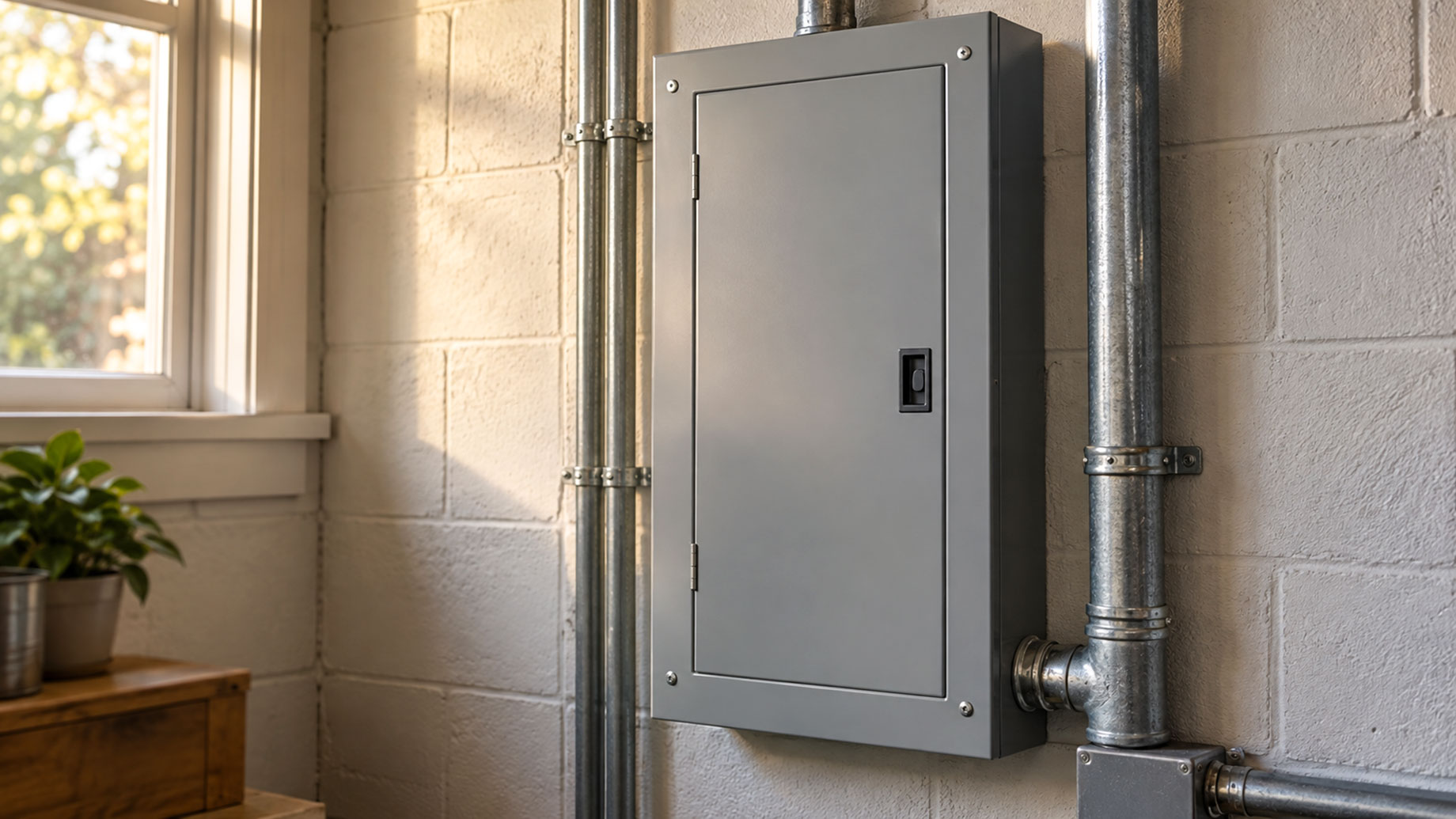
Walk through most neighborhoods on either side of the state line and you will find houses built when a family’s biggest electrical draw was a refrigerator, a window air conditioner, and a television. The service panel installed in those homes was sized for that life. It was never asked to run a heat pump, an induction range, a hot tub, a home office with three monitors, and a car charging in the garage overnight. A great many of those original panels are still in place, still bolted to the same basement wall, still doing a job that has quietly grown far beyond what they were built for.
Veteran Electric KC, a veteran-owned licensed electrical contractor founded in 2025 and serving the Kansas City metro from North Kansas City, handles residential panel upgrades alongside EV charger installation, whole-home surge protection, generator work, and rewiring on older housing stock. Panel work makes up a steady share of that call volume, and the pattern behind those calls is consistent: almost nobody calls about the panel itself. They call because something else stopped working, and the panel turns out to be the reason.
How Do You Know a Panel Is Undersized Rather Than Just Old?
Age alone is not a defect. A well-made panel that was correctly sized and has been left dry and undisturbed can serve for decades. What matters is capacity and condition, and those show up as symptoms rather than as a date stamp.
The most common tell is a breaker that trips on a predictable combination of appliances, not at random. If the kitchen circuit gives out every time the microwave and the toaster oven run together, that circuit is at its limit. When several circuits behave that way, the panel as a whole is short on capacity. Lights that dim noticeably when the air conditioning compressor kicks on point the same direction. So does a panel with no empty slots left, or one that has been filled with tandem breakers squeezed into spaces meant for single ones.
Physical condition matters just as much as capacity. Rust streaks inside the cabinet, a burning or fishy smell near the panel, warmth on the cover, a persistent hum, or scorch marks around any breaker are all reasons to stop guessing and get a licensed electrician out. Those are not capacity problems, they are failure-in-progress problems.
- Breakers trip on the same appliance combination symptom: That circuit is at capacity, Add a circuit or evaluate the whole panel
- Lights dim when the AC or a large motor starts symptom: Service is strained under load, Load calculation
- No open slots, or tandem breakers filling the box symptom: No room to add anything safely, Plan a panel upgrade
- Warmth, hum, or a burning smell at the panel symptom: An active fault or loose connection, Call an electrician now
- Rust, moisture, or scorching inside the cabinet symptom: Compromised equipment, Replacement, not repair
- Fuses instead of breakers symptom: Service is likely 60 amps, Upgrade before adding any large load
What Actually Forces the Upgrade?
Usually a specific project rather than a general worry. Three come up again and again in this metro.
The first is electric vehicle charging. A Level 2 home charger typically needs a dedicated 240-volt circuit drawing somewhere between 32 and 48 amps continuously, and continuous loads are sized at 125 percent of their rating under the National Electrical Code. That single addition can consume more capacity than everything else added to the house in twenty years. On a 100-amp service already running central air and an electric dryer, there is often simply nothing left to give.
The second is heating and cooling. As homeowners move off older gas equipment toward heat pumps and mini-splits, the electrical load shifts substantially onto the panel. The third is a kitchen renovation, which tends to convert a single lightly loaded circuit into several dedicated ones for an induction cooktop, a wall oven, a disposal, and small appliance runs.
There is also a category of panel that should be replaced regardless of capacity. Federal Pacific Stab-Lok and Zinsco panels, both widely installed in mid-century American homes, have well-documented histories of breakers failing to trip under fault conditions. Home inspectors flag them routinely, and some insurers will not write a policy on a house that still has one. If a panel carries either label, capacity is not the deciding issue.
What Does the Work Involve?
A panel upgrade is a permitted job, and it should be. The utility disconnects service, the old panel and often the meter socket and service entrance conductors come out, a new panel goes in with a correctly sized main breaker and a proper grounding and bonding arrangement, every branch circuit is landed and labeled, and the work is inspected before the utility reconnects. Most single-family upgrades are a one-day job with the power off for a substantial part of it, though older homes with cloth-insulated or aluminum branch wiring can surface conditions that extend the timeline.
The sizing decision deserves more thought than it usually gets. Upgrading from 100 amps to 150 or 200 amps is a common move, but the right number comes from an actual load calculation covering existing appliances plus what the household realistically plans to add, not from a rule of thumb. It is far cheaper to size for the EV charger and the future heat pump during the upgrade than to revisit the service a second time.
According to the team at Veteran Electric KC, the mistake they see most is homeowners treating the panel as the last item on a renovation list rather than the first. “By the time somebody calls us, they have usually already bought the charger or the range,” is how the company describes the pattern. “Sorting the service out first makes everything after it simpler and cheaper.”
For homeowners weighing whether a project is realistic, the practical first step is an evaluation of the existing service and a load calculation before committing to new equipment. Anyone considering upgrading an electrical panel in Kansas City is generally better served by having that assessment done early, while the scope of the renovation can still flex around what the electrical service will actually support.
Is This Worth Doing Before Selling?
Often yes, and for reasons beyond capacity. An obsolete or hazard-flagged panel is a routine inspection finding, and inspection findings become negotiating points late in a transaction when there is the least time and the least leverage to address them. Insurers increasingly ask about panel type and service size directly. A modern panel with clear labeling and documented permitted work removes a line item from the inspection report and answers the underwriting question before it is asked.
For homeowners staying put, the calculation is simpler. The panel is the one piece of equipment every other electrical decision in the house depends on. It sets the ceiling on what the home can do, and in a housing stock as old as this metro’s, that ceiling is frequently lower than people assume until the day something will not turn on.
