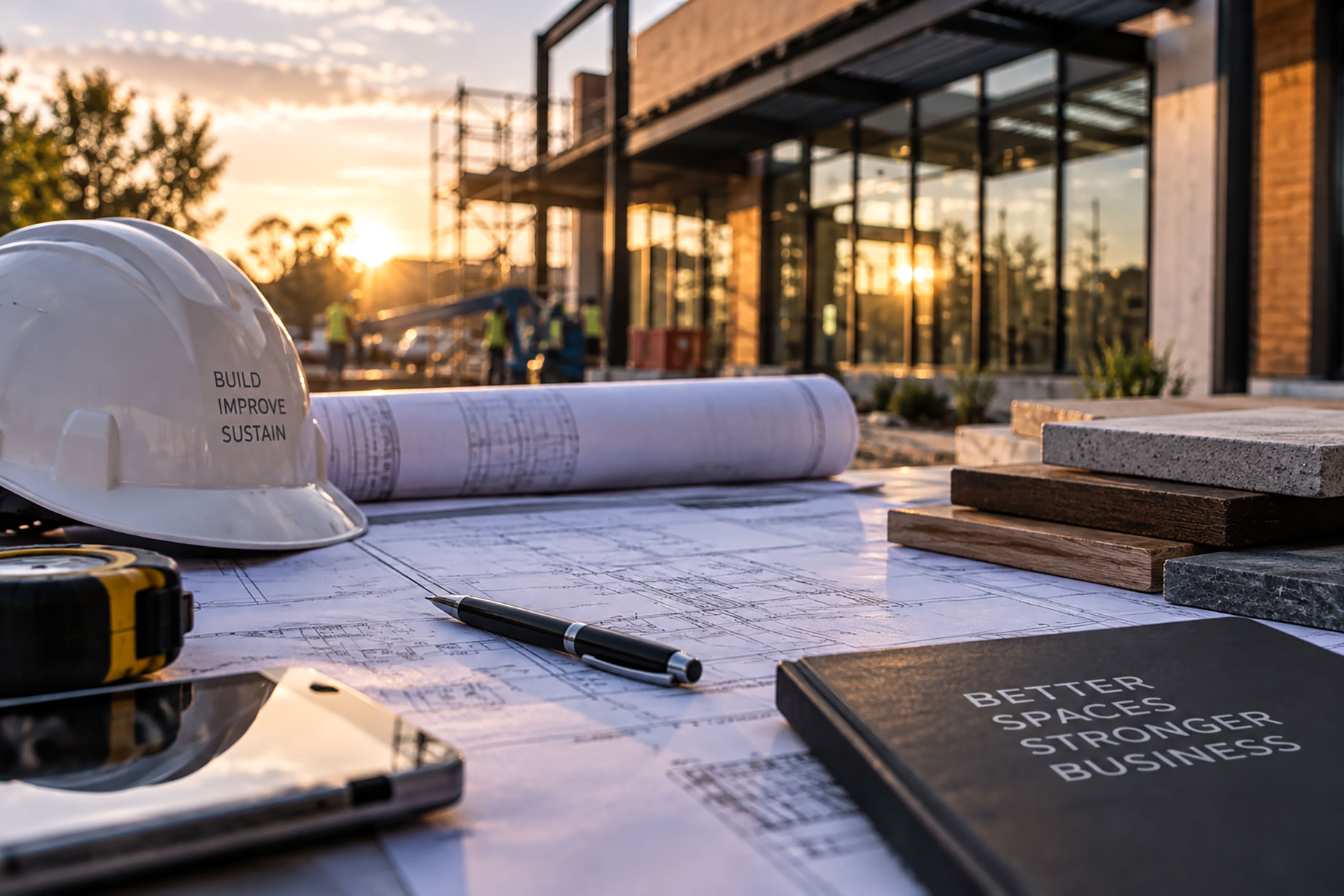
Commercial renovation project spending exceeds $300 billion annually, yet only a small percentage of those capital expenditures translate into increased asset value. Executive decision-makers often struggle to determine where capital investments will yield the highest long-term financial returns. Balancing short-term operational budgets with long-term asset value requires clear prioritization.
Property owners frequently debate whether to focus capital on immediate aesthetic updates or foundational building upgrades. While cosmetic fixes like fresh paint, modern lobby furniture, or updated signage offer an instant visual refresh, they rarely protect the building from underlying structural depreciation or operational risks.
Cosmetic Renovations Versus Structural Improvements
Cosmetic enhancements play an important role in attracting tenants and shaping brand perception. A modern facade or an updated reception area signals professionalism to clients and prospective tenants alike. However, relying solely on surface-level improvements often masks deeper, more costly problems.
An aesthetic facelift does little to mitigate recurring operational costs if the underlying building infrastructure is deteriorating. Modernizing interior finishes without addressing environmental efficiency or building envelope integrity typically leads to inflated energy costs and frequent emergency repairs.
Investing in foundational infrastructure protects the asset’s core value. Upgrading mechanical systems, improving insulation, and sealing the exterior envelope directly reduce overhead expenses while protecting the facility from weather damage. Over a ten-year holding period, foundational upgrades consistently generate higher risk-adjusted returns than purely cosmetic renovations.
Strategic Budget Allocation for Commercial Facilities
Determining where to allocate capital expenditure is important in any commercial context, and for property upgrades, it requires a clear framework that prioritizes risk reduction alongside financial return. Effective facility budgets separate updates into immediate operational requirements, mid-term efficiency gains, and long-term capital preservation.
Capital allocations should follow a structured sequence to ensure building protection precedes cosmetic improvements:
- Prioritize building envelope integrity and roof stability to stop weather intrusion
- Upgrade core mechanical and lighting systems to lower recurring utility bills
- Modernize interior spaces and tenant amenities to enhance market positioning
When capital improvements follow this logical sequence, utility savings often help fund subsequent tenant amenity upgrades. Building envelope improvements like high-efficiency insulation and advanced roofing systems significantly reduce thermal load, directly reducing strain on HVAC machinery.
Protecting Business Operations with High-Yield Investments
Unplanned disruptions to daily business operations remain one of the costliest risks for commercial property managers. Water intrusion from a failed building envelope can halt operations, damage inventory, and create substantial liability claims within hours.
Strategic improvements serve as defensive measures that protect continuous revenue generation. Asset managers who focus heavily on preventative structural upgrades experience significantly fewer operational downtime events than those who defer essential maintenance. Upgrading essential structural components ensures business continuity while securing stable lease rates from quality corporate tenants.
In real estate asset management, building value relies directly on long-term sustainability and low, predictable maintenance costs. Commercial buyers and institutional investors conduct thorough technical due diligence, looking past fresh paint to scrutinize the age and condition of core structural assets. Properties with documented structural upgrades command premium valuations and negotiate faster sales terms.
Durable Building Systems as the Anchor Investment
The roof remains one of the most critical structural barriers protecting any commercial asset. A failure in the roofing system exposes the entire facility to moisture damage, structural rot, and compromised electrical systems.
Selecting high-performance commercial roofing systems from Charter Roofing provides reliable protection that safeguards interior tenant improvements for Houston businesses. Specialists like this can be found across the country and can also offer further advice and input on managing major upgrade projects like this, including available technology.
For instance, modern commercial roofing solutions incorporate advanced reflective membranes and thermal insulation that optimize building envelope efficiency. Installing reflective membrane technology reduces roof surface temperatures during peak summer months, lowering cooling costs for tenants below. This upgrade turns a traditional liability into an active cost-saving mechanism.
Evaluating repair versus complete replacement timelines allows executive leadership to make informed capital decisions based on total cost of ownership. Investing in robust, professionally installed commercial roofing systems eliminates structural vulnerabilities and protects interior assets. A durable building envelope forms the foundation for future property enhancements.
Integrating Tax Incentives and Energy Efficiency Financing
Navigating commercial capital improvements extends beyond direct asset preservation into financial optimization strategies like utility rebates and federal tax incentives. Upgrading structural components allows property owners to leverage provisions like the Section 179D commercial buildings energy efficiency tax deduction.
Accelerating depreciation on high-performance building envelope upgrades significantly lowers net project expenses. Leveraging local energy efficiency programs further improves initial cash flow during major renovation cycles. Combining these financial instruments helps offset upfront expenditures while building long-term asset value across your real estate portfolio.
Strategic Planning for Long-Term Property Value
Capital improvement strategies must align short-term cash-flow needs with long-term asset-preservation goals. Decision-makers who prioritize structural durability over quick cosmetic fixes build resilient properties that maintain market value across changing economic cycles.
Executing facility upgrades with a focus on long-term durability reduces unexpected repair costs and stabilizes operating budgets. Choosing reliable, energy-efficient roofing materials helps keep the entire facility secure, dry, and operationally sound for decades.
Reviewing current facility performance logs and roof inspection reports offers a practical starting point for planning your next capital budget cycle. Check out more of our posts on real estate and design to expand your understanding of the industry even further.
