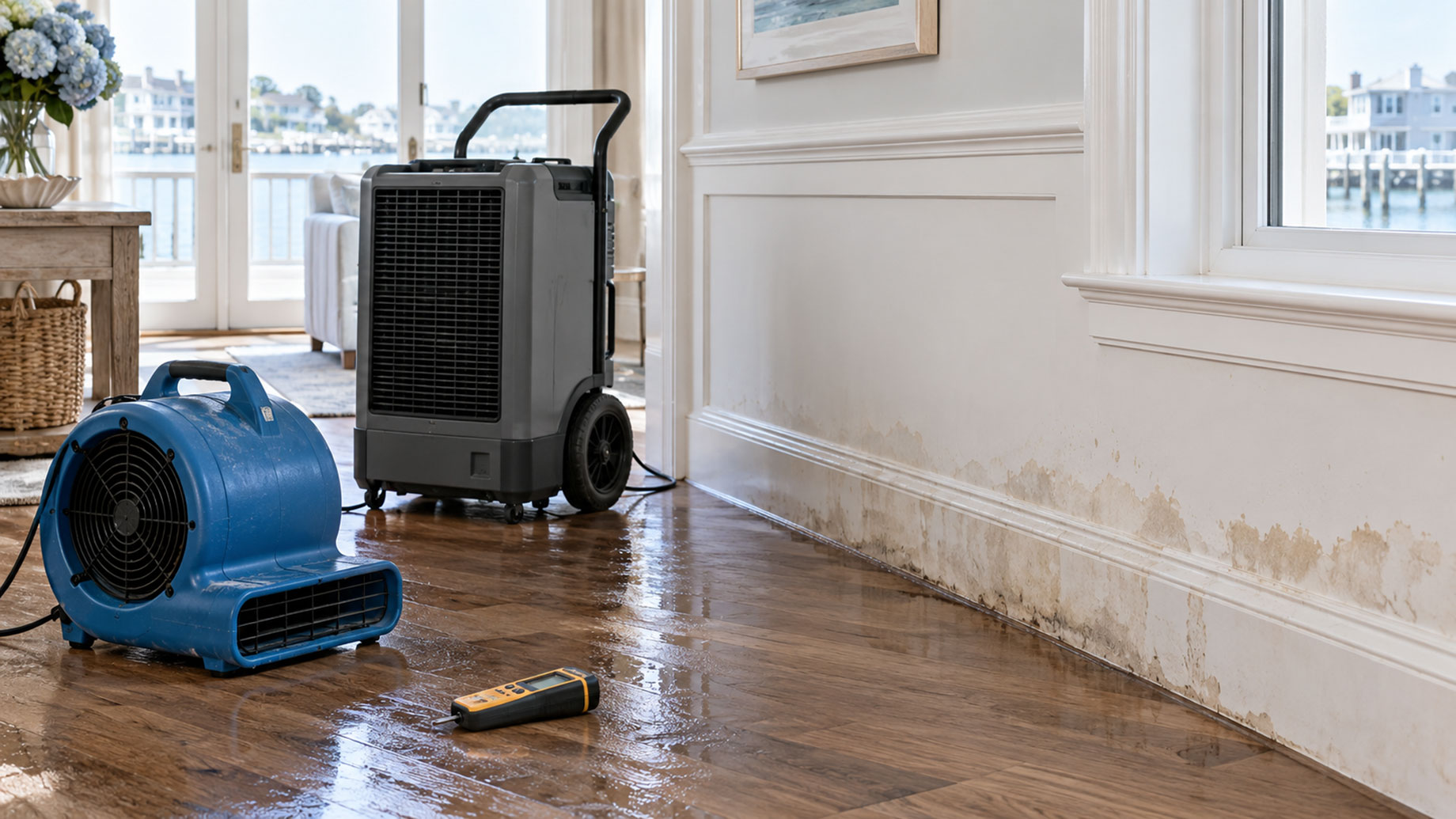
Water intrusion is one of the most destructive challenges a homeowner can experience. Whether caused by sudden plumbing failures, severe coastal storms, appliance malfunctions, or roof leaks, lingering moisture rapidly undermines structural components and encourages hidden microbial growth. For residents across coastal and suburban communities in New Jersey, prompt mitigation is essential to preventing permanent property deterioration, expensive secondary structural damage, and costly repairs.
Understanding the Stages of Indoor Water Damage
When standing water infiltrates flooring, baseboards, and drywall, damage occurs in progressive stages. Within minutes, moisture spreads rapidly across porous building materials, soaking deep into carpets, insulation, framing, and subflooring. Within hours, wooden structural elements begin to swell, drywall loses its structural integrity, painted surfaces blister, and metal hardware starts to oxidize. If dampness remains unaddressed beyond twenty-four to forty-eight hours, secondary damage accelerates significantly, often leading to pervasive fungal contamination and indoor environmental hazards.
Effective mitigation requires a systematic, science-based approach that goes far beyond basic surface cleaning. Certified restoration technicians utilize sensitive moisture meters, thermo-hygrometers, and infrared thermal imaging cameras to map hidden pockets of trapped water behind walls and beneath finished flooring. Identifying the precise category of water—clean supply water, gray water from appliances, or unsanitary black water—also determines the necessary containment protocols, sanitation steps, and personal protective equipment required.
Critical Steps in Professional Structural Drying
Professional remediation relies on controlled psychrometric principles to achieve thorough, balanced structural drying. The restoration process typically involves several comprehensive phases designed to restore indoor environments safely, quickly, and efficiently:
- Emergency Water Extraction: Powerful truck-mounted extractors and heavy-duty submersible pumps remove bulk liquid quickly, drastically reducing overall drying times and preventing deeper saturation.
- Strategic Air Movement: Industrial air movers generate high-velocity airflow across floors, walls, and cavities to evaporate bound moisture into the air.
- Commercial Dehumidification: Low-grain refrigerant (LGR) or industrial desiccant dehumidifiers capture airborne water vapor, maintaining low relative humidity levels to prevent secondary condensation.
- Antimicrobial Application: Environmentally responsible EPA-registered sanitizers are applied to inhibit bacterial propagation, eliminate odors, and neutralize residual fungal spores.
Homeowners who experience significant property flooding should partner with experienced local specialists who understand regional architectural styles, seasonal humidity, and weather patterns. Seeking reliable water damage restoration brick nj ensures that technicians arrive equipped with commercial-grade extraction systems, advanced thermal inspection tools, and proven drying protocols tailored to coastal residences.
Addressing Mold Risks After Water Intrusion
Mold spores are naturally present in ambient indoor and outdoor air, but they require moisture, warmth, and organic food sources to thrive. When indoor building materials remain saturated, mold colonies can establish themselves in as little as twenty-four to forty-eight hours. Common problem areas include ceiling cavities, carpet padding, ductwork, and the interior cavities of exterior walls.
Attempting to remove extensive mold without proper containment often disperses microscopic spores throughout the home’s HVAC system, aggravating respiratory issues and contaminating previously unaffected rooms. Professional remediation teams establish negative air pressure containment zones equipped with HEPA air scrubbers. This prevents airborne particulates from migrating while contaminated drywall, insulation, or baseboards are carefully bagged and safely discarded according to industry standards.
Long-Term Moisture Prevention and Maintenance Tips
Preventative maintenance is the most effective safeguard against catastrophic indoor flooding and costly remediation projects. Homeowners can mitigate potential risks by adopting several proactive habits:
- Inspect Supply Lines Regularly: Check braided stainless steel lines and rubber hoses connected to washing machines, dishwashers, ice makers, and water heaters for bulges, cracks, corrosion, or loose fittings.
- Maintain Sump Pump Systems: Test primary and battery-backup sump pumps quarterly, especially before seasonal weather shifts and heavy rainfall events common along coastal regions.
- Ensure Proper Exterior Grading: Keep soil sloping away from the foundation and maintain clean gutters and downspouts to prevent rainwater from pooling near basement walls and foundation footings.
- Monitor Indoor Relative Humidity: Maintain indoor humidity levels between thirty and fifty percent using whole-home ventilation systems or standalone dehumidifiers to discourage microbial growth.
Immediate action during a water emergency protects both your property investment and indoor air quality. By combining routine home maintenance with prompt professional intervention when unexpected disasters strike, homeowners can preserve structural longevity and maintain a clean, healthy living space year-round.
