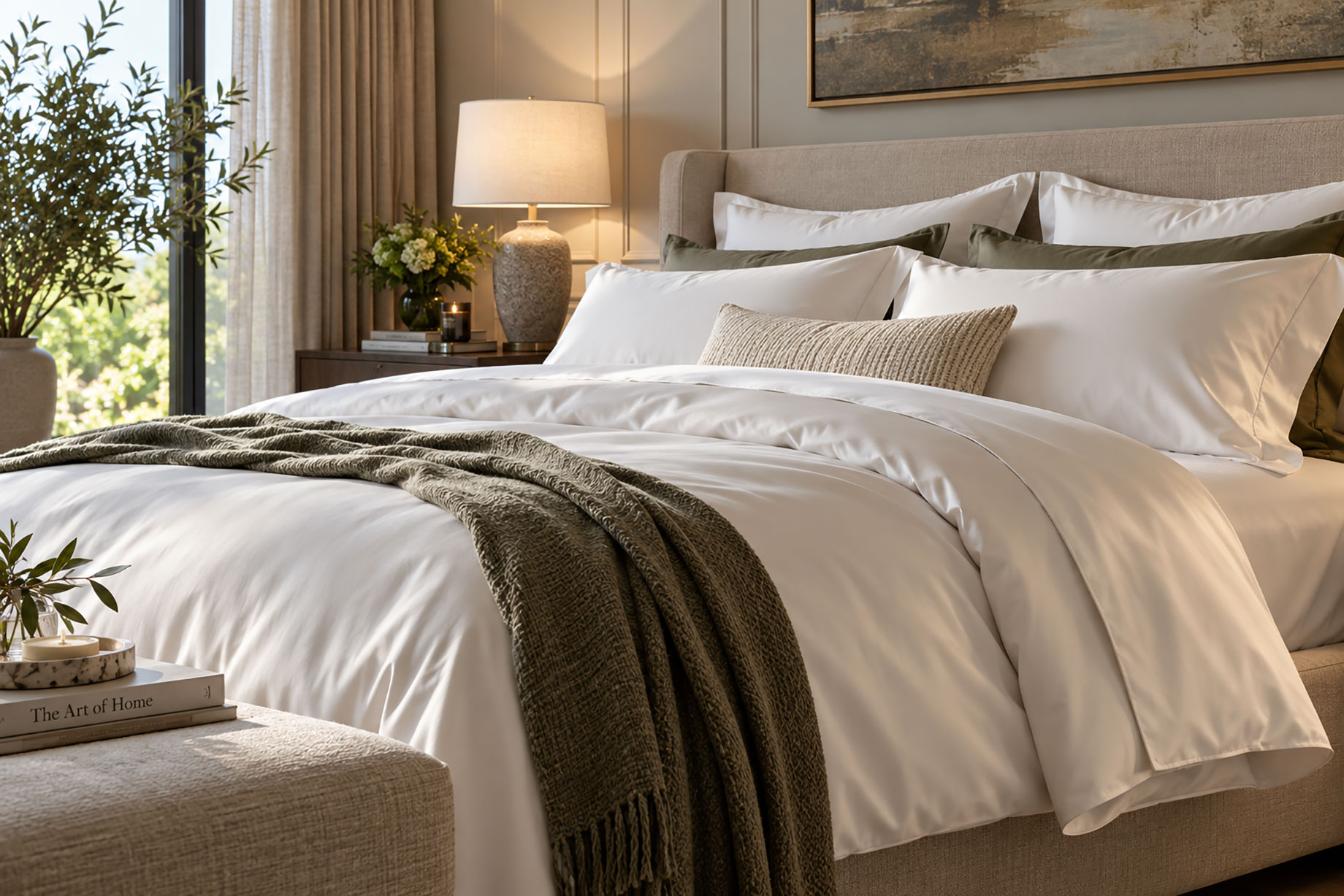
You can spend a fortune renovating a bedroom and still get into a bed that feels ordinary. New joinery, a considered colour scheme, the right lighting, a mattress chosen after weeks of research, and then the whole thing is finished off with bedding bought in a hurry because it was the last item on the list. It is the most common misstep in a high-end bedroom, and the easiest to put right.
The layer you feel, not the one you look at
The reason it matters more than its price suggests is contact. Everything else in the room you look at. The bedding you feel, for eight hours a night, with your whole body. It is the finishing layer that decides whether all the work above it reads as luxurious or merely expensive, and unlike most of a renovation it can be changed in an afternoon rather than a fortnight.
The instinct when trading up is to reach for a high thread count, because that is the figure the market has trained everyone to respect. It is a poor guide. Beyond a point, thread count stops indicating quality and starts indicating density, and a dense cotton sheet sleeps warm. Given that a cooler room supports better sleep, and the NHS lists a cool, comfortable bedroom among the foundations of good rest, chasing the biggest number often works against the very thing a bedroom is for.
What designers actually check
Designers who fit out high-value homes tend to judge bedding by three things instead, and none of them is a headline figure.
The first is the fibre. Bamboo viscose has become the material of choice for a reason: its naturally hollow structure supports airflow, so it breathes; it draws moisture away from the skin; it resists dust mites and bacteria; and at a like-for-like thread count it feels softer than cotton. As a raw material, it also stands up well to scrutiny on sourcing, which matters to buyers who ask where things come from, and organisations such as Textile Exchange track exactly that kind of fibre data.
The second is the weave. A sateen weave gives bedding its soft sheen and its drape, the quality that makes a bed look settled and considered rather than stiff. In a room where every other surface has been chosen with care, that drape is what stops the bed from letting the scheme down.
The third is thread count kept in proportion. Four hundred is the highest specification bamboo bedding reaches, and it is the right amount: durable and substantial, without the heaviness that makes high-count cotton sleep hot. It is a premium number that earns its place, rather than a large one printed for effect.
Specifying it properly
What separates a genuinely high-end bed is that these three arrive together. When you are specifying for a bedroom you have just spent real money on, look for a set that states all three plainly: 100% bamboo viscose, a 400 thread count and a sateen weave. That is the marker of premium bamboo bedding worth putting on the bed, and it is a small line in a renovation budget for something you touch every single day.
Built to last as long as the room
The final argument is longevity, which is where cheap bedding quietly fails. A considered renovation is meant to last, and the bedding should match. Good bamboo bedding adjusts to body temperature rather than working in one direction, so a single set carries the room through summer heat and winter cold without needing to be swapped out. It softens with washing rather than wearing thin, and it holds its finish for years. In a home built to a standard, that is the standard the bed should meet too.
