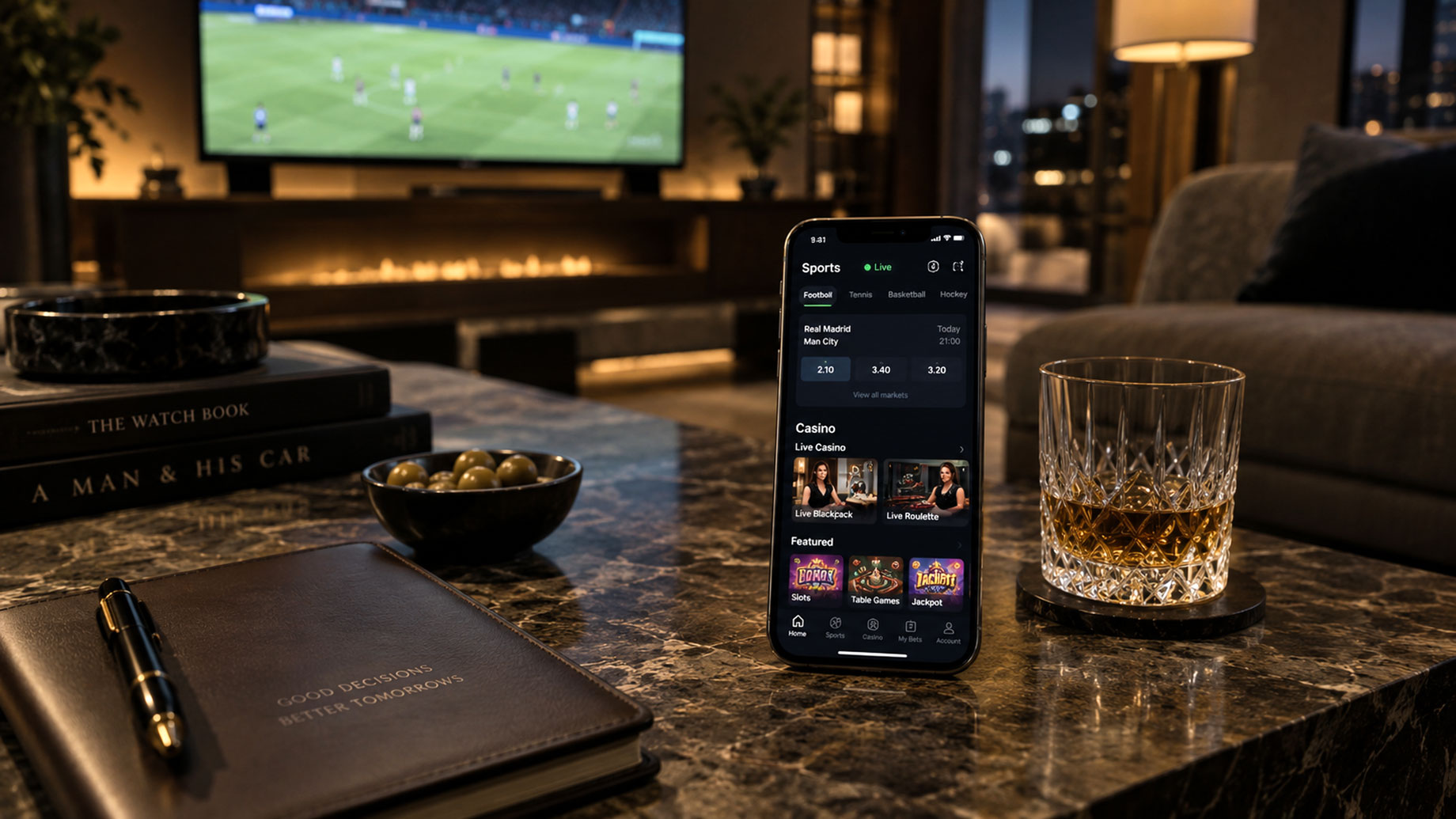
Quiet luxury places value on discretion, personal comfort, and the freedom to enjoy an experience without turning it into a public performance. Those priorities offer a useful way to understand where online casinos and sports betting can fit into affluent leisure: as optional activities accessed privately, alongside an existing interest in games or sport.
Digital access changes the setting. A casino game no longer requires an evening at a resort, and a sporting wager can be placed through a phone while watching a match at home. For wealthy adults who already choose to gamble, that flexibility may be appealing. Whether it complements their lifestyle depends on the service, the attention it demands, and the boundaries around its use.
The relationship is more nuanced than the familiar image of the high roller. Luxury is increasingly discussed in terms of how people want to live, while digital gambling makes participation easier to weave into everyday life.
Quiet Luxury Starts With the Freedom to Choose
In interiors, quiet luxury can mean excellent materials, thoughtful proportions, and details that reveal their quality through use. Applied to leisure, it suggests a similar preference for personal satisfaction over visible expenditure. An experience earns its place because someone values it.
Research on luxury travel provides some context. McKinsey’s 2024 analysis associated wealthier traveler segments with privacy, tranquility, and personalized service. Bain and Altagamma’s spring 2026 luxury-market update also described the continuing strength of experiences and a growing emphasis on personal fulfillment. These findings concern luxury consumption; they do not establish that wealthy people are increasingly gambling online.
They do, however, suggest a useful standard for evaluating digital leisure. Does a service make an enjoyable activity easier to access on the customer’s terms? Does it respect their time and preferences?
This connects with the idea of wealth as freedom and flexibility. The ability to choose an activity, leave it, or decline it altogether matters more than demonstrating the capacity to spend.
How Online Casinos Fit Into Private Leisure
Online casinos separate access to games from the journey to a venue. Software-based games and live-dealer formats offer different experiences: the latter streams a human dealer to a connected device, bringing some of the interaction of a table into a private setting.
For someone who enjoys casino games but does not always want a full evening out, this creates a different way to participate. The surroundings can remain their own, with no travel, dress expectations, or need to organize the evening around a casino visit.
The luxury element, where one exists, comes from the wider experience. Comfortable surroundings, an understandable interface, and responsive assistance can matter more than decorative graphics or an extravagant account label. A digital service can be convenient without being exclusive, and exclusivity alone says little about its quality.
There is also a change in rhythm. Leaving a physical venue gives an evening a visible ending. An online account remains accessible, making it easier for an occasional activity to spread across several parts of the day. The same convenience that makes participation flexible can make its boundaries less obvious.
That makes the ability to finish a session an important part of the experience. A quiet luxury approach gives as much consideration to the time after an activity as to the activity itself.
Sports Betting Beside the Sporting Occasion
Online sports betting occupies a different place in leisure because it connects to an event with its own history, personalities, and emotional appeal. A tennis supporter follows a tournament’s unfolding story. A Formula 1 enthusiast studies a team’s progress across a season. A wager adds a financial interest to that existing attention.
Sport already has a substantial luxury culture around it. The hospitality surrounding the Monaco Grand Prix brings together waterfront settings, dining, and opportunities to spend time with guests. Elsewhere, Soho House’s House 44 at the 2025 British Grand Prix combined track views with guided experiences, live performances, and conversations with sporting and cultural figures.
These examples illustrate how much of a sporting occasion’s appeal comes from access, atmosphere, and company. They do not imply that hospitality guests place bets.
The same principle applies at home. Watching a match with friends in a thoughtfully designed media room can be an occasion built around comfortable seating, clear sightlines, and conversation. A betting app introduces a separate activity within that setting.
For adults who choose to use it, the distinction is worth preserving. Following the contest and repeatedly checking wagers can compete for the same attention, particularly when betting continues during play. Familiarity with a sport may inform an opinion, but it does not make the financial outcome predictable.
The quality of the afternoon can still rest on the match and the people sharing it. Its success need not depend on a betting result.
Privacy Extends Beyond Where Someone Plays
Discretion is one of the clearest points of connection between quiet luxury and online leisure. Using a personal device can reduce the public visibility of an activity. It does not make the underlying account anonymous.
The distinction resembles privacy planning in luxury real estate: a private setting depends on practical arrangements as well as appearance. Digital privacy similarly involves what information is collected, how it is handled, and which communications a customer receives.
Identity checks are part of regulated gambling in many markets. In Great Britain, for example, Gambling Commission rules require online operators within their scope to verify a customer’s age and identity before permitting gambling. Additional financial information may also be requested. Playing away from public view therefore should not be confused with playing without records or verification.
For a customer who values discretion, clear privacy information and control over marketing communications are meaningful aspects of service. So is an intelligible explanation of why documents are needed and how the verification process works.
International travel adds another consideration: access to a website does not establish permission to gamble where the traveler is located. Local laws, age requirements, and the operator’s territorial restrictions still apply.
What Premium Service Should Mean Online
Luxury hospitality builds much of its appeal through attentive service. A helpful person resolves a problem, remembers a preference, or makes an arrangement easier. Online casino and sportsbook operators may use similar language through dedicated account support and VIP programs.
The comparison has limits. The UK Gambling Commission describes high-value customer schemes in terms of a customer’s commercial value to the operator, including personalized incentives connected to spending or frequency of play. The designation is not a measure of someone’s net worth or social standing.
An invitation can feel exclusive while still serving a commercial purpose. Evaluating it clearly means considering the service and any conditions attached to it, without treating the recognition as an obligation to participate more often.
From a quiet luxury perspective, a stronger definition of premium service would emphasize accurate account information, understandable terms, responsive support, and respect for a decision to disengage. These are qualities a customer can assess directly. An impressive-looking tier or a personal greeting cannot substitute for them.
The most relevant hospitality principle is attentiveness to the customer’s wishes. That includes accepting a preference for fewer messages, less contact, or no further participation.
Wealth Changes the Financial Context, but Time Still Matters
A larger discretionary budget changes what an expense means to someone’s finances. It does not change a casino game’s mathematical structure or remove uncertainty from a sports wager. Gambling expenditure remains separate from a plan to preserve or build wealth.
Financial capacity also leaves other considerations unresolved. The World Health Organization identifies effects on relationships and mental health among gambling’s potential harms. An activity can interfere with daily life even before its cost becomes the most visible concern.
Luxury research offers a particularly relevant counterpoint to constant connectivity. McKinsey’s 2024 study found that luxury travelers were more likely than mass travelers to cite disconnecting from devices as a reason for travel. The ability to access entertainment everywhere can coexist with a desire to leave it behind.
For digital gambling, that makes time and attention part of the decision. Deciding the amount and duration beforehand, reviewing total activity across accounts, and using available limits can make intentions more explicit. Such measures do not guarantee protection from harm. Repeatedly exceeding limits, chasing losses, or concealing activity are reasons to stop and seek qualified support.
The lifestyle question is therefore broader than affordability. It includes whether an activity leaves room for an uninterrupted dinner, a restful evening, or a sporting event enjoyed without continual attention to a phone.
A Deliberate Place for Digital Entertainment
Online casinos and sports betting can occupy a place in the private leisure of affluent adults who choose them where permitted. Their relevance to quiet luxury lies in the possibility of convenient access and personal choice, balanced against the demands they can make on money and attention.
There is no need to adopt a high-roller identity for an occasional interest, or to make gambling part of a luxury lifestyle at all. A private home, a memorable sporting occasion, and thoughtful hospitality retain their value independently.
Quiet luxury offers a demanding standard for digital entertainment: it should fit within the life someone wants to enjoy, with enough space left for the people, places, and experiences that give that life its character.
