Two million dirhams has become the most quoted number in Dubai real estate. It appears in brochures, in investor webinars, and in almost every conversation about buying into the city from abroad.
The figure is not a price point that the market invented. It is a legal threshold, and understanding where it came from explains a great deal about how buyers behave once they arrive at it.
What it buys, in practice, depends far less on the number itself than on how far a buyer is willing to move from the tower that defines the skyline.
The Threshold That Set the Price Point
The reason the figure recurs is residency. According to the Land Department, an investor holding property with a purchase value of AED 2 million or more can apply for a ten-year renewable residence permit, with the ability to sponsor a spouse, children and parents.
That single provision reshaped the lower boundary of the international buyer market. A purchase at AED 1.9 million and one at AED 2.1 million are not marginally different propositions; they are categorically different, because only one carries a decade of residency with it.
Developers understood this immediately. Inventory clusters around and just above the threshold in a way that would be difficult to explain on square footage alone.
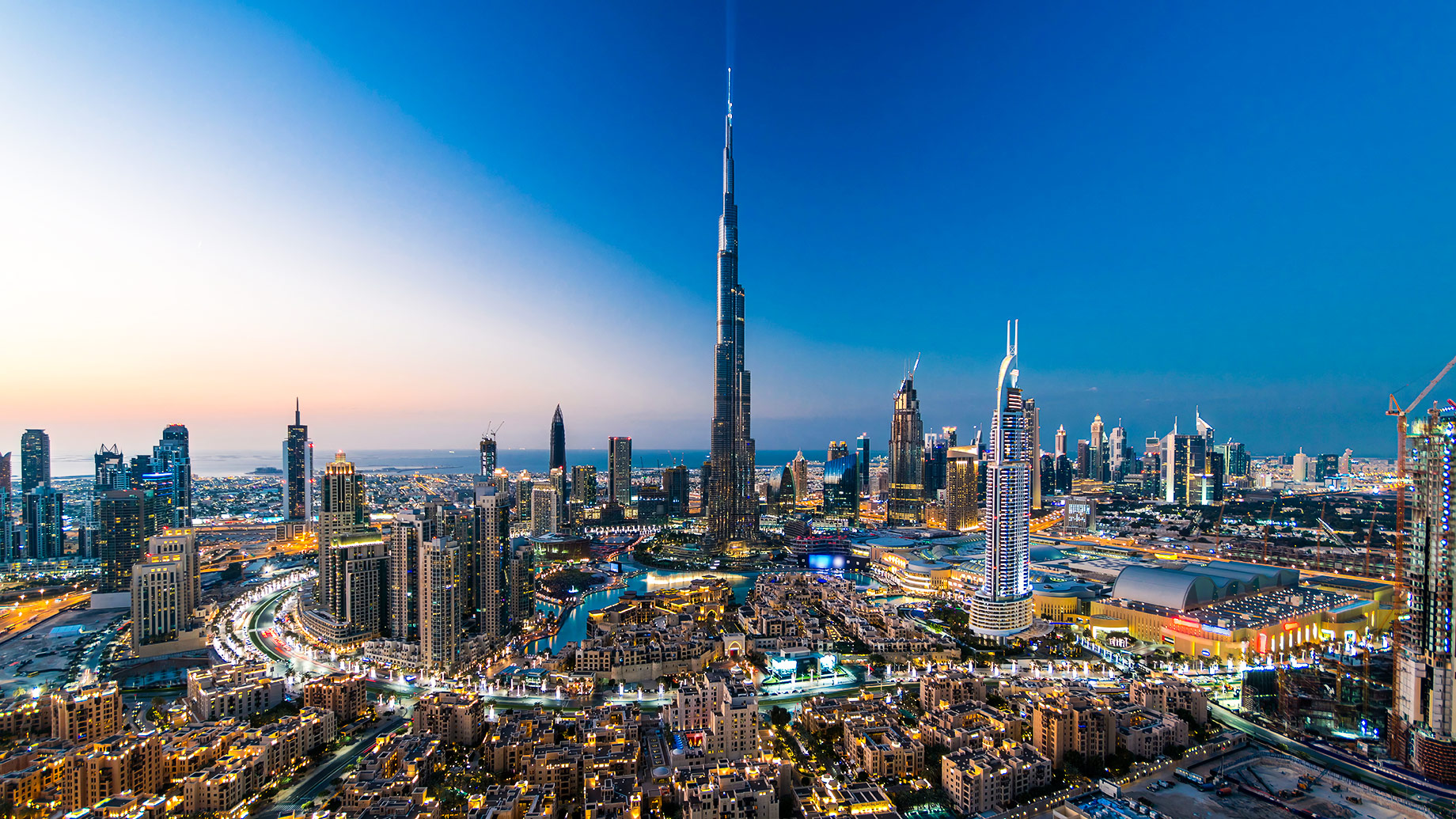
The Burj Khalifa itself anchors the geography of that demand. Britannica notes that the Council on Tall Buildings and Urban Habitat, which arbitrates these rankings, classifies a tall building as one of fourteen or more stories standing over fifty meters — a definition Dubai now clears several hundred times over, with the Burj at the top of the global list.
Proximity to that tower functions as a pricing gradient. Every hundred meters of distance from it is, in effect, currency.
What a Two Million Dirham Property Search Returns Downtown
Here the honest answer diverges from the marketing one.
Inside Downtown Dubai proper — the blocks immediately surrounding the Burj Khalifa and the Dubai Mall — AED 2 million generally does not buy space. It buys address. Buyers at this level are typically looking at compact one-bedroom units, often in older towers, frequently without a Burj-facing aspect.
Move outward by a single district and the arithmetic changes considerably. Business Bay sits directly across the water, within walking distance of the same amenities, and delivers meaningfully more floor area at the same figure. Push further to Jumeirah Village Circle, Jaddaf Waterfront or Al Jaddaf, and the same budget can move a buyer from a studio-adjacent unit into a genuine two-bedroom home.
Binghatti, for example, carries projects across Business Bay, Jumeirah Village Circle, Jaddaf Waterfront and the Burj Khalifa district itself, and its current inventory illustrates how widely a property search at this level ranges once buyers stop treating the Downtown postcode as non-negotiable.
The developer’s portfolio also demonstrates the second variable that determines what the money buys: branding. Towers developed in association with luxury houses and automotive marques command a premium over structurally comparable buildings a few streets away.
Whether that premium is worth paying is a question of intent rather than value. A buyer purchasing for residency and rental yield is buying square meters. A buyer purchasing for a name is buying something else, and should be clear-eyed about which of the two they are doing.
The Documentation That Decides Eligibility
This is where transactions at exactly the threshold most often come undone, and it deserves more attention than brochures give it.
Eligibility is not established by market value or by a private appraisal. Residency authority guidance specifies that the property value must be certified by a property status statement issued by the Dubai Land Department, and that where ownership is a share in a jointly held property, that individual share must itself meet the AED 2 million figure.
The practical consequence is significant. A property that has appreciated to AED 2.2 million but was purchased for AED 1.8 million may not qualify, because the recorded purchase value governs.
Financing adds another layer. The same guidance permits mortgaged property to qualify, provided the applicant can evidence the required amount already paid, supported by a bank letter.
Off-plan purchases carry their own conditions. The Ministry of Economy sets out that an investor may qualify through the purchase of one or more units off plan with a total value of at least AED 2 million, provided the purchase is made from local companies approved by the competent authority, and that the applicant holds comprehensive health insurance for the duration of the stay.
Approved developer status therefore becomes a material criterion rather than a marketing claim. A buyer purchasing off plan from an unapproved entity may hold a valid contract and still fail the residency test.
What the Number Does Not Cover
Buyers arriving from markets with higher transaction costs are often pleasantly surprised by Dubai, then caught out by the specifics.
The headline figure is the purchase price. Registration fees, agency commission, service charges and, for financed purchases, mortgage registration all sit outside it. Service charges in particular vary enormously between buildings and are the cost most frequently underestimated, since they recur annually for as long as the property is held.
Newer towers with extensive amenity provision — pools, gyms, concierge, landscaped podiums — carry higher charges than older stock. A unit that appears marginally cheaper at purchase can prove more expensive across a decade of ownership.
Rental yield deserves the same scrutiny. Districts a short distance from Downtown frequently produce stronger returns than Downtown itself, precisely because entry pricing is lower while tenant demand remains robust.
The Trade Buyers Are Actually Making
Reduced to its essentials, AED 2 million in Dubai purchases one of three things, and rarely more than two at once.
It buys proximity, if the buyer accepts a smaller unit. It buys space, if the buyer accepts a district a few minutes further out. Or it buys a name, if the buyer accepts paying for association with a brand rather than for additional floor area.
What it reliably buys in every case is the residency threshold, which is why the figure has become the organizing principle of the international end of this market.
Buyers who decide in advance which of the three they are actually purchasing tend to conclude the process quickly and without regret. Those who expect all three at the threshold spend considerably longer looking, and generally end up choosing anyway.
