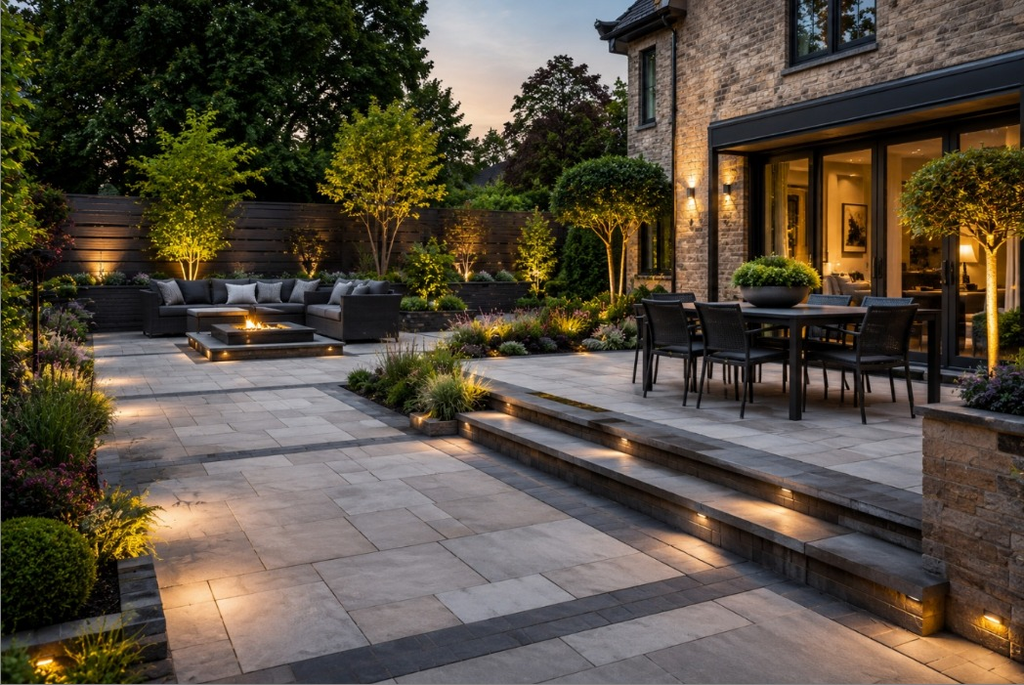
Outdoor areas are increasingly being viewed as an extension of the home rather than an afterthought. A well designed garden, patio or driveway can influence how a property looks, how people move through it and how much they enjoy spending time outside.
Paving plays an important role in achieving this balance. Although primarily practical, the right paving can establish a visual foundation for an entire outdoor space. It can define different areas, create a sense of movement and provide a durable surface for everything from everyday access to outdoor entertaining.
Start With the Purpose of the Space
Before choosing paving materials, it is worth considering how the area will actually be used. A driveway has different requirements from a garden pathway, while a large patio designed for entertaining needs a different approach from a small seating area.
Think about how people will move through the space and where you want them to spend time. A pathway might lead naturally from the front entrance towards the garden, while a patio could create a dedicated area for dining, relaxing or entertaining.
Starting with purpose makes the design more practical and can prevent an attractive surface from becoming an awkward addition to the garden.
Create a Strong Connection Between Home and Garden
The most successful outdoor designs tend to feel connected to the property rather than looking like separate projects. Paving can help create this relationship through colour, texture and proportion.
For example, materials that complement the tones found in the exterior walls, window frames or architectural details can create a more unified appearance. This does not mean everything needs to match exactly. Subtle relationships between materials can be enough to make the overall design feel intentional.
This approach is particularly effective when the patio or pathway can be seen clearly from the main living areas of the home.
Think Carefully About Material Choice
There is a wide range of paving materials available, each offering different visual and practical characteristics. Natural stone can introduce texture and variation, while porcelain can provide a cleaner and more contemporary appearance.
Concrete paving can offer flexibility in terms of shape, colour and finish, while traditional options can work particularly well with period properties.
The right choice depends on more than appearance. Consider durability, maintenance, weather exposure, drainage and how the surface will be used throughout the year.
A material that looks impressive in a photograph may not necessarily be the best choice for a busy family garden or frequently used driveway.
Use Paving to Define Outdoor Zones
Large outdoor spaces can sometimes feel difficult to organise. Paving provides an effective way to introduce structure without relying on walls or fencing.
A generous paved area can establish a dining zone, while a smaller section can create a quiet seating area. Pathways can connect these spaces and guide people naturally around the garden.
This concept of zoning is already common in interior design, and it can work equally well outside. Instead of viewing the garden as one large area, think of it as a series of connected spaces with different purposes.
The result can be a garden that feels larger, more organised and easier to use.
Consider Scale and Pattern
The size and arrangement of paving can dramatically affect how an outdoor area is perceived. Large format paving can create a sense of openness, particularly in contemporary gardens where simplicity is important.
Smaller units and more intricate patterns can introduce character and work well in traditional settings.
Patterns should also reflect the proportions of the space. An overly complicated layout can make a small garden feel busy, while a very plain arrangement may lack definition in a larger area.
The goal is to find a balance between visual interest and consistency.
Make the Entrance Count
The front of a property creates an immediate impression, making driveway and entrance design particularly important.
A thoughtfully designed paved driveway can complement the architecture of the house while providing a practical surface for vehicles and pedestrians. Edging, planting and lighting can be used to add definition without overwhelming the entrance.
This is where professional design can make a noticeable difference. For homeowners researching creative paving Colchester, looking at how different paving styles can work with the architecture and landscaping of a property can be a useful starting point.
The entrance should feel welcoming while also being capable of handling regular use and changing weather conditions.
Do Not Forget Drainage
Good looking paving needs to perform properly as well. Water management should therefore be considered during the planning stage rather than treated as an afterthought.
Poorly planned surfaces can allow water to collect around buildings or create slippery areas after heavy rainfall. Suitable gradients, drainage solutions and appropriate installation methods can help direct water where it needs to go.
This is especially important for larger paved areas. The more surface water a space produces, the more carefully drainage needs to be considered.
A design that combines attractive materials with sensible water management is likely to remain useful for much longer.
Soften Hard Surfaces With Planting
Paving can provide structure, but too much hard surface can make an outdoor space feel stark. Plants can soften these areas and introduce colour, texture and movement.
Consider using borders alongside pathways, planting around patio edges or incorporating raised beds into the overall design.
Greenery can also help connect a paved space with the wider garden. Trees, shrubs and ornamental grasses can create a more natural transition between hard landscaping and planting.
The contrast between structured paving and softer vegetation often produces a more balanced appearance.
Consider Outdoor Lighting
A well designed paved area should not disappear once the sun goes down. Outdoor lighting can improve both safety and atmosphere while highlighting important features.
Low level lighting along pathways can help define routes through the garden, while carefully positioned lights can draw attention to architectural features, planting or textured paving.
Lighting should be subtle rather than overwhelming. The aim is to make the outdoor space usable and inviting after dark while preserving the character of the garden.
Design for Long Term Enjoyment
Outdoor improvements should be approached as long term investments rather than short lived trends. While current design preferences can provide inspiration, the most successful spaces usually reflect the architecture of the property and the way its occupants actually live.
Consider how the garden might be used in five or ten years. Will there be enough room for entertaining? Will the pathway remain practical if mobility needs change? Will the chosen materials continue to complement the property if the exterior is updated?
Thinking beyond the immediate project can lead to more sustainable and satisfying design decisions.
Quality Installation Matters
Even the most carefully selected paving materials can disappoint if they are installed poorly. Uneven surfaces, inadequate preparation or poor drainage can create problems that affect both appearance and performance.
A professional installation should begin with appropriate preparation of the ground and careful consideration of levels, drainage and intended use.
Attention to detail is particularly important around edges, steps and transitions between different materials. These areas can influence the finished appearance more than homeowners might expect.
A Considered Approach Creates Better Outdoor Spaces
Paving may appear to be a relatively simple element of garden design, but its influence can be considerable. It provides structure, connects different parts of the property and establishes the foundation for outdoor living.
The best results come from considering the whole space rather than selecting paving in isolation. Materials, planting, lighting, drainage, furniture and architecture should all work together to create an environment that feels cohesive.
Whether the aim is to create a sophisticated entertaining area, improve a tired driveway or introduce a more defined garden pathway, thoughtful paving can make an outdoor space feel more purposeful and complete.
When practical requirements and design ambition are considered together, paving becomes more than a surface. It becomes an important part of the way a home is experienced from the outside.