Walk through an old European manor sometime, and it’s tempting to credit the thick walls and the stonework for how well the place has held up. Nobody mentions the part that actually mattered more, which is that somebody was watching that building for decades. Small problems got caught early, long before they turned into the kind of thing that shows up in an inspection report and kills a sale years later.
New luxury estates don’t really have that luxury, if you’ll forgive the phrase. They go up fast, with ambitious engineering, huge glass walls, basements dug deeper than they used to be, and wine cellars carved straight into a hillside. Looks incredible in a listing photo. Says nothing about whether the place ages well or starts costing someone real money in year five.
Wine Cellars, Basements, and the Humidity Problem Nobody Talks About
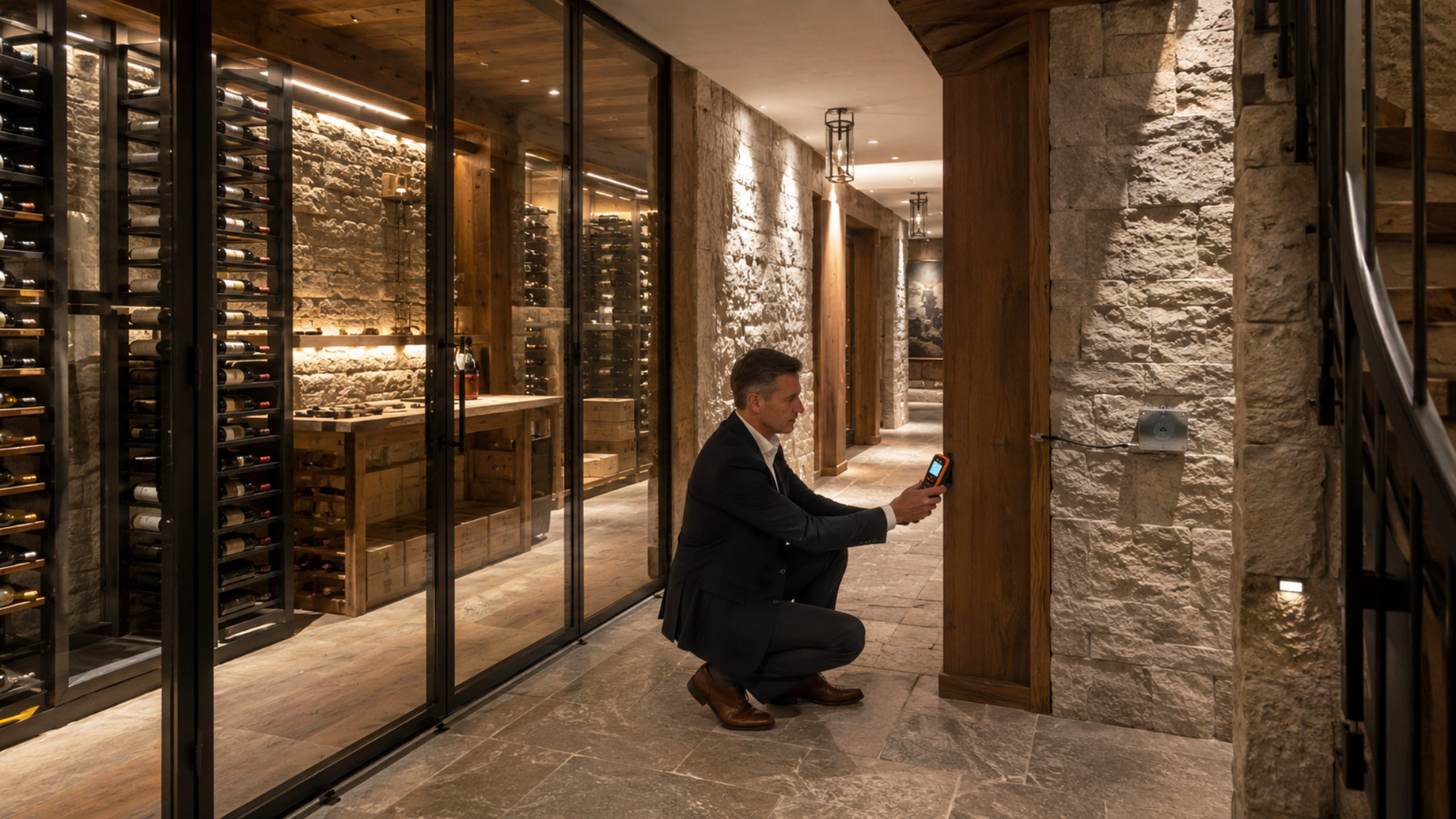
A lot of high-end homes have a wine cellar now, or a home theater below grade, or some temperature-controlled room for storing art. All three share a weakness nobody brings up until it’s already a problem. Humidity doesn’t announce itself. It gets into wood, warps flooring, and quietly ruins whatever’s sitting in that beautiful climate-controlled room the moment the system drifts out of range for too long.
Builders working on serious estates increasingly rely on proper moisture analyzers to check moisture content in wood, drywall, and masonry before those materials ever get sealed behind finished walls, rather than assuming a moisture barrier and a dehumidifier will handle everything on their own. That distinction matters more than people expect. A wine collection that’s supposed to sit at a stable 55 degrees and 70 percent humidity doesn’t forgive sloppy assumptions about what’s happening inside the walls around it, and neither does a hardwood floor sitting over a basement that was rushed to completion before the concrete and framing had actually dried out properly.
The homes that hold their value aren’t necessarily the ones with the most expensive climate control equipment installed. They’re the ones where somebody checked the actual moisture conditions in the building materials during construction instead of trusting the spec sheet and moving on to the next task.
Watching for Movement Before It Becomes a Crack in the Marble
Something most buyers never think to ask during a walkthrough: is the foundation actually stable, or does it just look stable right now. Big estates on hillside lots, or near coastlines with soil that shifts, can settle unevenly over years in ways that don’t show up until a hairline crack appears on an interior wall, or worse, in a stone floor that can’t just be patched over.
This is where crack monitors quietly do a lot of unglamorous work on higher-end builds and renovations, tracking whether an existing crack is stable or actively widening over time rather than leaving that judgment call to whoever happens to notice it during a routine walk-through. It sounds almost too simple to matter, a small device measuring movement across a hairline gap, but the alternative is guessing, and guessing wrong on a structural issue in a multi-million dollar property gets expensive fast. Catching movement early is the difference between a minor structural adjustment and tearing out imported stone flooring because nobody noticed the crack underneath it had been slowly growing for two years.
Why This Actually Matters for Resale
Buyers in the luxury market aren’t just purchasing square footage and a view. They’re purchasing an assumption that the place will still look and perform the way it does on closing day five, ten, twenty years down the line. That assumption gets tested the moment a buyer’s inspector finds something the seller didn’t disclose, or worse, didn’t know about because nobody was checking for it in the first place.
Estates that have documentation showing ongoing monitoring, whether that’s humidity records for a wine room or crack tracking on a section of foundation that had early settling, tend to move through due diligence a lot more smoothly than ones where the seller can only offer reassurance instead of data. It’s a small thing that ends up mattering enormously once real money and real lawyers are involved in a transaction.
Building for the Long Game
None of this means owning a luxury property should feel like waiting for bad news behind the walls. It’s more than the properties people are still talking about in twenty years, the ones that become genuinely legacy estates instead of just a great listing for a season, tend to have this in common. Someone treated the invisible parts, moisture, tiny shifts in a foundation, with the same seriousness as whatever gets photographed for the brochure.
The marble gets the attention. The glass walls get the attention. Ask somebody who’s actually owned a well-built estate for two decades what kept it standing, though, and it usually comes down to less glamorous stuff. Somebody is paying attention to what you can’t see from the driveway.