A long stay at the coast asks more of a home than a short visit does. A weekend can forgive an awkward layout, a dim kitchen, or a porch that only fits two chairs. A two-month stay, a seasonal rental, or an extended work-from-home block surfaces all of those details quickly.
For coastal New York, which includes the Hamptons, the North Fork, and the quieter bay communities along Long Island’s East End, a few design principles tend to separate the homes that work for long stays from the ones that feel smaller than they measure on paper.
Layout: Rooms That Extend the Day
The homes that hold up best over a long stay tend to be organized around a long daytime room: a connected kitchen, dining, and living space that opens to an outdoor area on at least two sides. A single large open room is more useful than two smaller well-appointed ones when the same family is moving through it for weeks at a time.
The primary bedroom’s distance from the kitchen matters more than people expect. A kitchen directly below a bedroom turns early risers into the alarm clock for the rest of the house, and a long stay magnifies that small imbalance.
Guest bedrooms near the primary often feel closer than they should after two weeks. Homes that separate guest wings from the main sleeping area tend to survive visits better, and travelers weighing extended-stay homes along Long Island’s coast across different layouts often find this detail shapes the experience more than square footage does.
Light: Knowing the East and West of the Plot
The orientation of a coastal home matters most for long stays. East-facing kitchens and living rooms get morning sun, which is the single detail most people cite after a successful rental. West-facing rooms run warmer in the late afternoon, and summer afternoons can turn an unshaded western living room into a room that is not usable until six.
South-facing outdoor spaces collect the most afternoon sun and are the most usable through the shoulder seasons. North-facing porches stay cooler in summer and are better suited to workday afternoons than to summer dinners.
A long-stay rental with clerestory windows, skylights, or a wraparound porch tends to handle the daily light shifts better than one with a single large picture window. The light changes every few hours on the coast, and a home that can move with it is easier to live in than one that cannot.
Outdoor Living: Planning for All Four Hours
Coastal New York has four distinct outdoor hours in a day: morning coffee, midday sun, late-afternoon windbreak, and evening dinner. The homes that hold up for long stays have a usable space for at least three of those four.
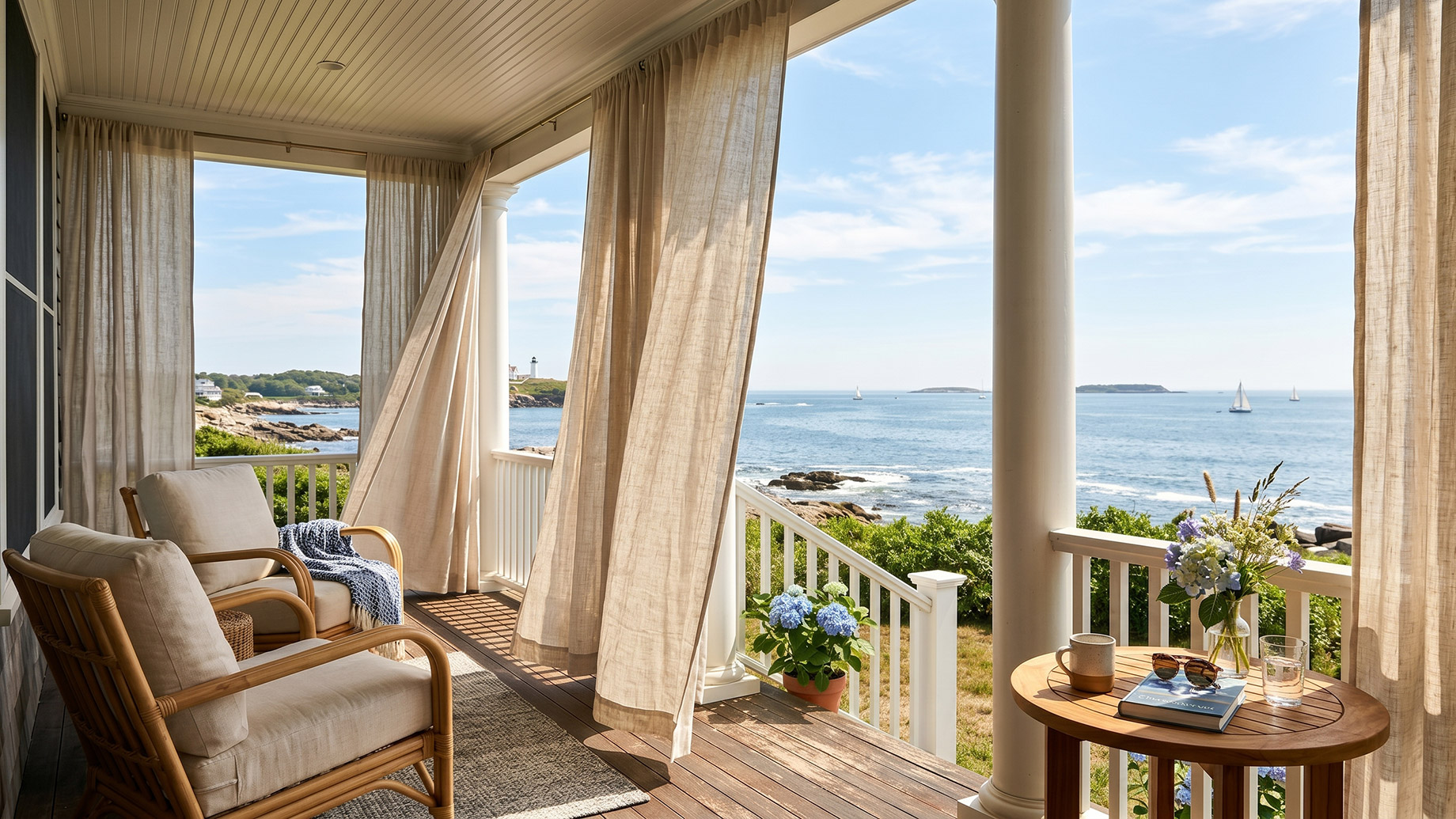
A screened porch, a covered patio, or a partial pergola extends the outdoor usability by one full season in each direction. In April and October, a covered outdoor space is often the difference between usable and unusable outside dining. A home that has only an open deck is workable in July and painful in November.
Fire pits, outdoor showers, and a small sheltered seating area are the three upgrades most long-stay travelers cite as what made the trip feel longer. The outdoor shower in particular is one of the quietly universal coastal New York preferences, and a home without one usually reads as incomplete after the first week.
Travelers looking at waterfront residences around the Hamptons often find the homes with multiple outdoor zones are the ones that hold up longest through a seasonal stay. A single large deck does less work than a deck plus a side patio plus a small covered porch.
Materials That Survive the Climate
Coastal New York homes live in salt air, winter wind, and summer humidity. Cedar shingles, slate roofs, and teak or ipe decking are the traditional materials because they survive the climate and improve visually with age.
Interiors benefit from the same logic. Linen curtains breathe better than synthetics in summer humidity, and painted-wood floors forgive sand better than dark hardwoods. Furniture that can be moved outside for an afternoon and back inside at sunset is more useful than fixed pieces.
Long Stays Across the Region
A long stay in the Hamptons feels different from a long stay on the North Fork or on Shelter Island. The Hamptons have the larger restaurant scene but also the heavier summer traffic, and the North Fork has the quieter pace but a shorter restaurant calendar. Shelter Island sits between the two and tends to feel more removed than either.
Travelers considering retreat properties across the North Fork for a season-long visit often find that the fork’s balance of quiet mornings, farm proximity, and accessible dinners matches the expectations of a long stay better than the south fork does.
Closing Thoughts
Long stays are a different kind of rental decision. Square footage matters less than layout, finishes matter less than orientation, and a single small detail, like the presence of a covered porch, often shapes the experience more than the headline features.
The homes along coastal New York that hold up best for long stays are usually the ones that were lived in long-term by someone before they were rented. That history shows in the small conveniences, and it is the single clearest signal that a home is ready for a stay longer than a weekend.
