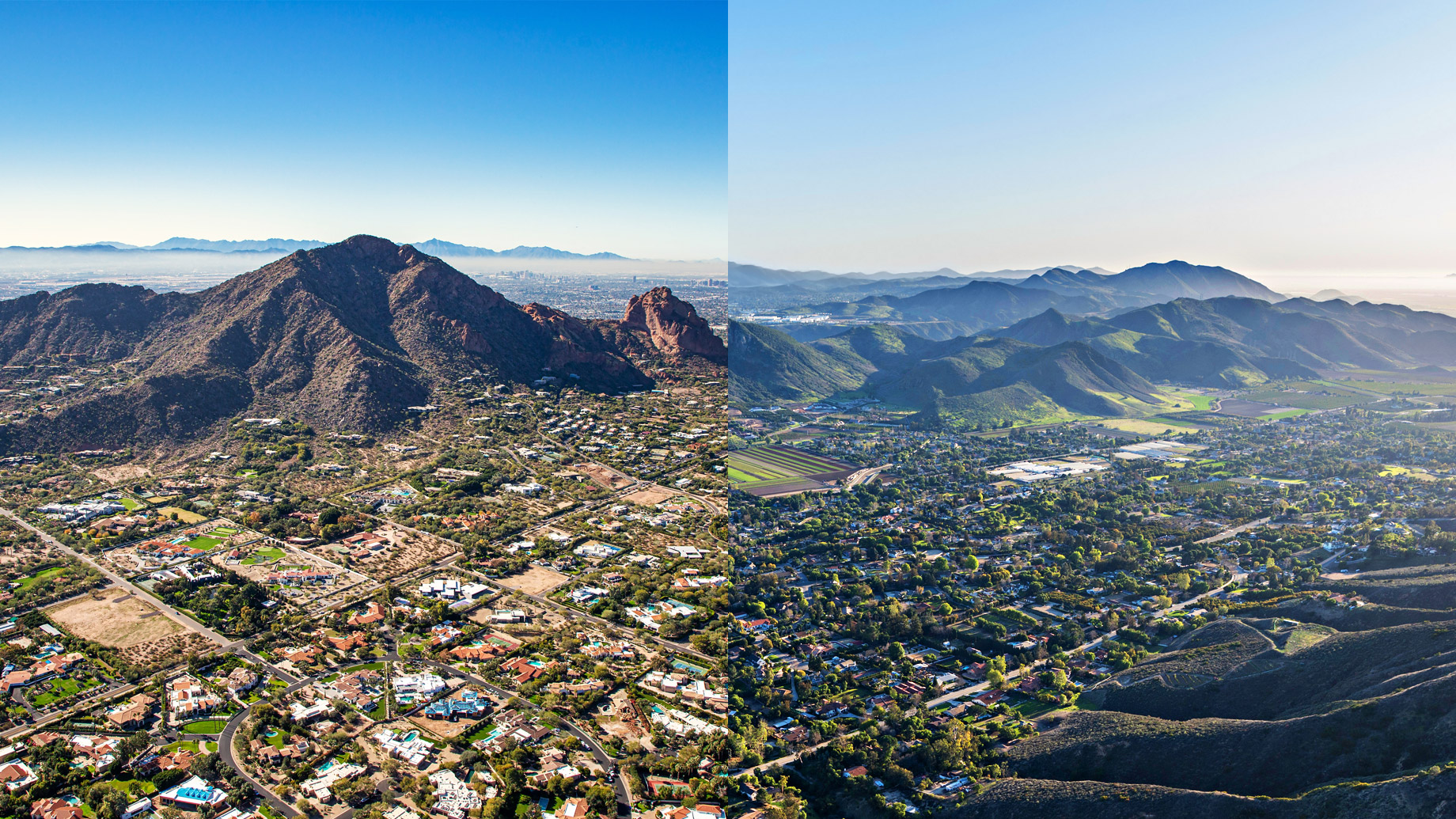
Choosing between Phoenix, Arizona, and Santa Rosa, California, means weighing two very different versions of West Coast life. One is a sprawling desert metropolis; the other is a smaller city tucked into California wine country. Here’s a side‑by‑side look at population, housing, costs, taxes, and climate to help you decide where your next move makes the most sense.
Population, Setting, and Overall Vibe
Phoenix is home to roughly 1.6 million residents, making it the fifth-largest city in the U.S. and the centerpiece of the broader Maricopa County metro. It’s a major Southwest urban hub with big-city amenities, professional sports, a major international airport (Sky Harbor), and extensive suburban sprawl set in the Sonoran Desert.
Santa Rosa, by contrast, has about 178,000 residents and serves as the largest city in Sonoma County. Located in the North Bay, about 55 miles north of San Francisco, it functions as a gateway to California’s wine country. Santa Rosa’s 21 distinct neighborhoods range from historic downtown areas to hillside enclaves, and its primary airport, Charles M. Schulz–Sonoma County (STS), offers regional connections, about 19 direct flights a week to Phoenix alone.
Buying a Home: Phoenix vs. Santa Rosa
Home prices are one of the starkest differences between these two markets.
- Phoenix: Zillow’s typical home value is around $411,323, down about 2.4% over the past year. Redfin reports a median sale price near $464,000 for the three months ending May 2026, up 0.9% year over year. Overall, Phoenix remains relatively accessible for first-time buyers compared with many coastal markets.
- Santa Rosa: Zillow lists a typical home value of roughly $712,049, up 0.1% over the past year. Redfin’s median sale price sits around $750,000, down about 0.66% year over year, with homes typically going pending in about 39 days. Neighborhood pricing can vary widely, from about $1.7 million in Fountaingrove to roughly $568,000 in West End.
If building equity on a more moderate budget is a priority, Phoenix tends to offer more options. Santa Rosa’s higher prices may appeal to buyers seeking long-term appreciation in a supply-constrained, lifestyle-driven market.
Renting and Shorter-Term Flexibility
Rental costs also tilt heavily in Phoenix’s favor.
- Phoenix: As of June 2026, Zumper reports an average rent of about $1,695 per month, down 5.6% year over year and roughly 13% below the national median. Typical rates: studios around $950, one-bedrooms roughly $1,150, and two-bedrooms about $1,495.
- Santa Rosa: Zumper’s average is approximately $2,349 per month, around 20% above the national average and about $399 more per month than a typical U.S. rental. One-bedrooms are near $1,895, and two-bedrooms average around $2,285. Relatively more affordable neighborhoods include Burbank Gardens and Scenic Brush Creek (both around $2,100) and Junior College (about $2,133).
Remote workers and renters concerned about monthly cash flow will generally find Phoenix easier on the budget, while Santa Rosa renters are paying a premium for proximity to the Bay Area and wine country amenities.
Cost of Living and Taxes
When you factor in housing, groceries, transportation, and other everyday expenses, Phoenix comes out about 23.5% less expensive than Santa Rosa. To maintain the same lifestyle that requires $60,000 in Santa Rosa, you’d need roughly $45,875 in Phoenix. However, employers in Phoenix typically offer salaries about 10.6% lower than Santa Rosa averages.
Taxes deepen the contrast:
- Income tax: Arizona uses a flat 2.50% individual income tax rate. California runs nine brackets from 1% to 12.3%, plus a 1% Mental Health Services Tax on income over $1 million, for a top marginal rate of 13.3%, the highest in the nation. On a $100,000 income, you might pay around $2,500 in Arizona versus about $5,762 in California.
- Sales tax: Arizona’s state rate is 5.60%, with an average combined state and local rate of about 8.52%. California’s combined rates vary by locality but are generally higher than the national average.
- Property tax: Arizona’s effective property tax rate is around 0.48% on owner-occupied homes, among the lowest in the country. California’s effective rate is higher, though Proposition 13 limits annual assessed-value increases for many longtime owners.
For tax-sensitive professionals, retirees, or early-career households trying to accelerate savings, Phoenix usually offers a lighter overall burden.
Climate and Outdoor Lifestyle
Phoenix has a hot desert climate, regularly posting 100°F or higher on more than 100 days per year, with some summer highs reaching 115°F or above. Winters are mild and sunny, making outdoor activities attractive from late fall through early spring, but summer heat can push many activities indoors.
Santa Rosa enjoys a Mediterranean climate: warm, dry summers and cool, wet winters. Temperatures are generally milder year-round than in Phoenix, and the surrounding vineyards, redwood forests, and coastline support an outdoor lifestyle that’s less constrained by extreme heat.
Jobs, Connectivity, and Practical Considerations
Santa Rosa’s economy is anchored by major employers such as Sonoma County, Kaiser Permanente, Santa Rosa Junior College, St. Joseph Health System, Keysight/Agilent Technologies, and Sutter Medical Center. The local job market leans toward healthcare, education, public sector roles, and high-tech instrumentation.
Phoenix, as a much larger metro, has a more diversified employment base, spanning finance, technology, logistics, aerospace, and service industries. Sky Harbor Airport serves as a major national and international hub.
If you want to maintain ties to both cities, American Airlines currently operates around 19 direct flights per week between Santa Rosa’s STS and Phoenix’s PHX, with one-way fares starting near $130, making it feasible to commute periodically or visit family on either end.
Which City is Right for You?
- Choose Phoenix if you prioritize lower housing costs, lighter taxes, and access to a large, growing job market, and can tolerate extreme summer heat.
- Choose Santa Rosa if you value a smaller-city feel, a milder climate, proximity to the Bay Area and wine country, and are comfortable with higher housing and living costs.
Ultimately, the right choice will come down to trade-offs among budget, climate, and lifestyle. If you decide that wine country living wins out and you’re planning a cross-state relocation, working with experienced long distance movers in Santa Rosa can simplify the logistics so you can focus on settling into your new community.
Take time to map your income, expenses, and priorities against each city’s realities. With clear eyes about costs and climate, either Phoenix or Santa Rosa can offer a rewarding next chapter.
