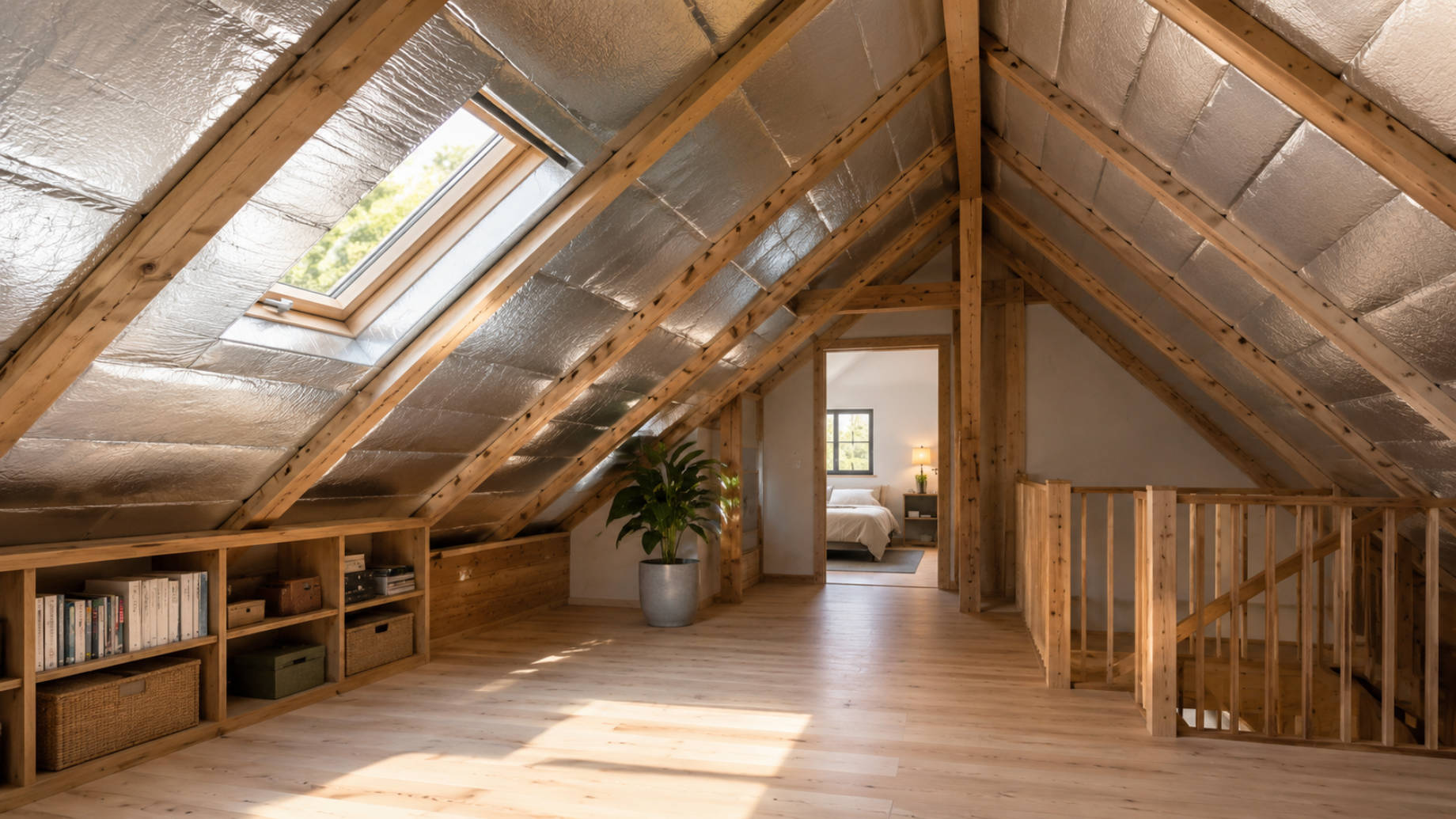
When people talk about improving insulation, the conversation usually starts at floor level: loft rolls, cavity walls, draughty doors, perhaps new windows if the budget stretches that far. But in many homes and light commercial buildings, the smartest place to begin is overhead.
That may sound counterintuitive. After all, insulation is often framed as a whole-house issue, and it is. Yet if you’re trying to make meaningful gains without tearing through every surface at once, the roofline often offers the clearest return. It’s where heat accumulates, where solar gain can become a problem, and where poor thermal control quietly pushes HVAC systems to work harder than they should.
Starting at the roofline is not about ignoring the rest of the building envelope. It’s about addressing the part of the structure that often has the biggest influence on year-round comfort.
Why the Roofline Deserves First Attention
Hot air rises. Most people know that. What’s less appreciated is how many secondary effects stem from that simple fact.
In winter, a poorly insulated roof allows warm indoor air to escape upward, creating a constant pull on your heating system. In summer, the roof becomes the building’s most exposed surface, absorbing solar radiation for hours at a time. Even before that heat moves into living spaces, it can superheat attics and roof voids, pushing temperatures far beyond outdoor levels.
That matters because roof-related heat transfer rarely stays contained. It radiates downward, affects ceiling temperatures, and changes how the rest of the building behaves. Rooms become harder to keep stable. Upper floors swing from chilly to stifling. Air conditioning cycles more frequently. Occupants start compensating with fans, portable heaters, and thermostat battles.
In other words, the roofline influences comfort far beyond the ceiling plane.
The Difference Between “Insulated” and “Controlled”
Many buildings technically have some insulation overhead, but not enough of the right kind, not installed continuously, or not suited to the local climate. Gaps, compression, poor detailing around rafters, and unaddressed radiant heat can all reduce performance.
That’s why roofline work is often less about adding material and more about improving thermal control. A well-considered roof insulation strategy can help with:
- limiting conductive heat loss in winter
- reducing radiant heat gain in summer
- easing pressure on heating and cooling equipment
- improving temperature consistency between levels
The result is usually noticeable. People may not describe it in technical terms, but they feel it immediately: fewer hot spots, less overnight heat build-up, and a house that doesn’t seem to fight back every time the weather shifts.
When Roofline Insulation Makes the Most Sense
Not every project should start there, but many should.
If you have an attic conversion, vaulted ceilings, usable loft space, or ductwork running through the roof void, the case becomes especially strong. In those situations, insulating only at the loft floor may leave too much of the building exposed to extreme temperatures. Bringing the thermal boundary closer to the roof slope can protect both the occupied space and the services running through it.
The same logic applies in warm climates or buildings with dark roofing materials, where solar gain becomes a major driver of indoor discomfort. If the upper level is always the first to overheat, the roofline is sending you a fairly obvious message.
Homeowners weighing whether it makes sense to tackle just the roof section first can benefit from practical, scenario-based reflective roof insulation installation advice before deciding how broad the project needs to be. The key is matching the insulation approach to how the roof assembly actually performs, rather than assuming one method fits every property.
Signs the Roofline Is the Real Weak Point
You don’t always need a full energy model to spot the pattern. A few clues show up again and again:
- upstairs rooms are consistently hotter or colder than the rest of the house
- the loft feels excessively hot in summer, even on moderate days
- HVAC runs longer than expected during peak weather
- ceiling surfaces feel cold in winter or radiate heat in summer
None of these symptoms proves the roof is the only problem. But together, they usually justify a closer look.
What You Gain by Starting at the Top
There’s a practical advantage to tackling the roofline early: it can improve the effectiveness of later upgrades.
Think of insulation as a system, not a checklist. If the upper part of the building is bleeding heat or absorbing too much of it, improvements elsewhere may still help, but they won’t perform at their best. Start by reducing the most aggressive source of thermal imbalance, and the rest of the envelope often becomes easier to optimise.
Better Comfort, Not Just Better Numbers
Energy savings are important, but comfort is what makes insulation feel worthwhile. A home that stays more stable across the day is easier to live in. Bedrooms are more usable. Top-floor offices stop feeling like greenhouses. Heating and cooling become less reactive and more predictable.
That kind of improvement also affects behaviour. When occupants stop overcorrecting with extreme thermostat changes, the building performs better in practice, not just on paper.
A Useful Step for Phased Renovations
Budget reality matters. Few people can upgrade an entire building envelope in one move. Starting at the roofline allows for a phased approach that still produces a meaningful result. It addresses a high-impact area first, then leaves room to tackle walls, floors, windows, or air sealing later.
That sequence often makes more sense than spreading a limited budget too thinly across multiple lower-impact fixes.
What to Consider Before You Begin
A roofline-first approach works best when it’s planned around the actual construction. Ventilation strategy, moisture control, roof type, and the intended use of the loft or attic space all matter. So does compatibility with any existing insulation.
Don’t Ignore Air Leakage
Insulation and air sealing are closely linked. If warm, moist air is moving freely into the roof assembly, thermal performance can drop and condensation risk can rise. Good roofline design isn’t simply about adding a layer; it’s about making sure the assembly remains durable as well as efficient.
Match the Method to the Building
A period property with complex rafters has different needs from a modern detached house or a metal-roofed workshop. Reflective materials, rigid boards, mineral wool, and hybrid approaches all have their place. The right choice depends on climate, space constraints, and the role the roof area plays in the broader envelope.
Start Where the Building Is Working Hardest
There’s no universal starting point for every insulation project. But if you’re looking for a strategic first move, the roofline deserves serious consideration.
It’s exposed, influential, and often underestimated. Improve that part of the building well, and you’re not just plugging a gap. You’re changing how the entire structure manages heat. For many properties, that’s the difference between an insulation upgrade that sounds good in theory and one that delivers in daily life.
