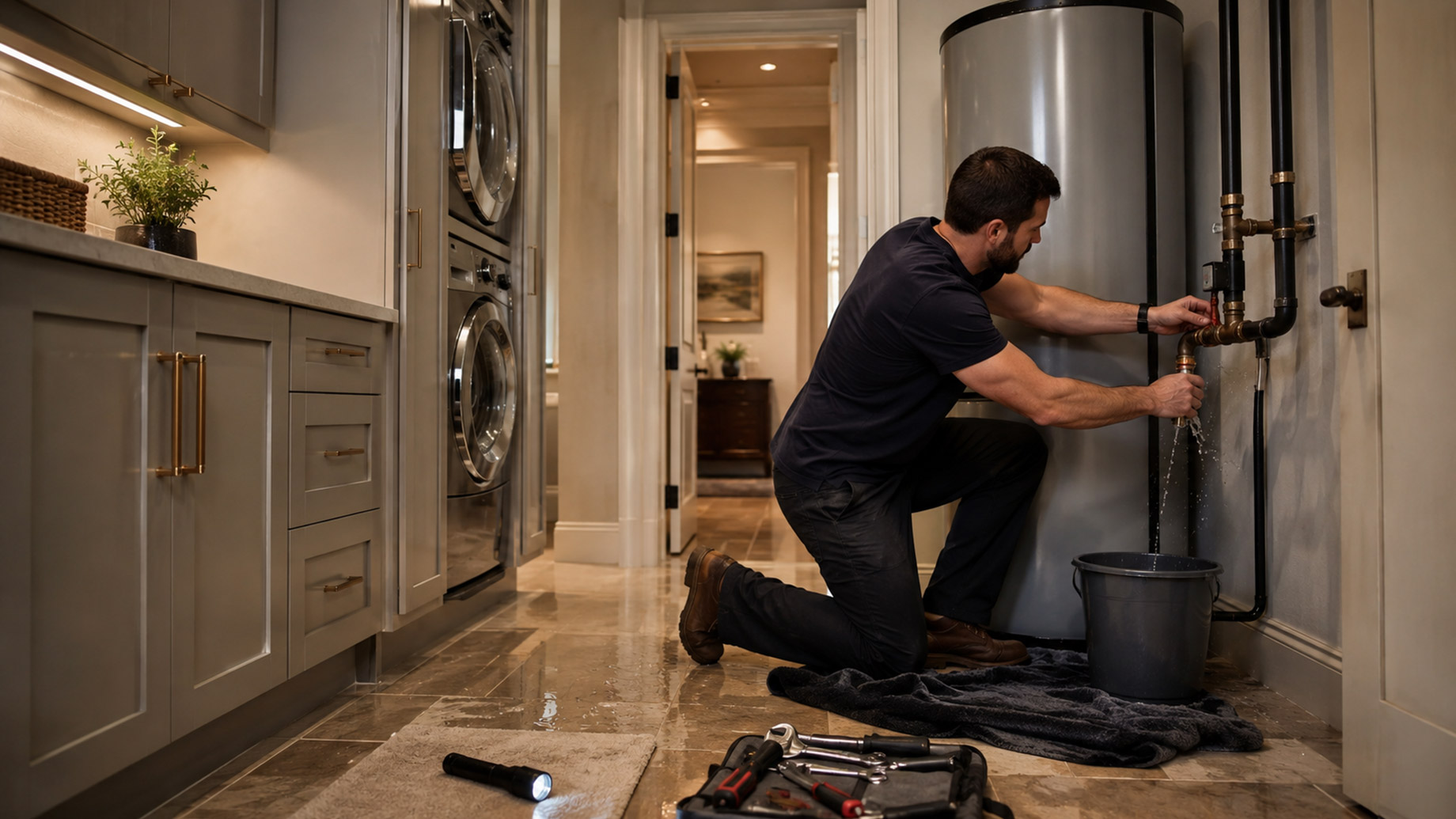
Plumbing emergencies strike suddenly while they develop into costly disasters which require specific emergency response procedures for proper resolution. A burst pipe together with an overflowing toilet and a leaking water heater and a sudden drain backup will produce severe water damage which will start to develop within minutes. The first actions during a plumbing emergency will determine how much damage occurs and how costly the repairs become.
Homeowners face panic attacks when these emergencies occur because they do not know what to do during the first moments. The development of a specific plan enables you to manage your stress levels while you protect your home and stop the problem from becoming worse. You can save vital time during emergency plumbing situations by learning the fundamental skills which emergency situations require before professional plumbers arrive.
Stay Calm and Identify the Problem
Any plumbing emergency requires you to stay composed while you evaluate the situation with complete attention. People who rush into action without first understanding the situation will create bigger problems than what they originally encountered.
You need to find out where the water enters your system while determining if the water issue affects only one fixture or if it impacts all plumbing components. The reaction process for small sink leaks differs from how you should handle complete pipe breaks and sewer system failures.
You need to watch for warning signs which include strange sounds and water marks and weak water flow and bad smells. These details can help plumbers diagnose the problem more efficiently once they arrive.
Shut Off the Main Water Supply
One of the most important actions during a plumbing emergency is turning off the main water supply. Water flow needs to stop because it will reduce flooding dangers which protect both walls and floors and furniture from damage.
Every homeowner should know where the main shut-off valve is located before an emergency occurs. The valve usually appears close to the water meter in either the basement or garage or on the exterior wall of most residential buildings.
You should open nearby faucets for water drainage after you have turned off the main water supply. The procedure helps the plumbing system release its built-up pressure which decreases the chances of additional water escaping through the leak.
Turn Off the Water Heater
A major water leak requires you to turn off the water heater as part of the safety measures which protect your home. Operating a water heater without enough water causes damage to the unit while it produces new operational issues.
For electric water heaters, switch off the power at the circuit breaker. For gas water heaters, turn the gas valve to the pilot setting.
The process needs immediate attention because it involves dealing with major leaks which could cause damage to hot water supply lines.
Address Small Leaks Immediately
Small leaks which occur without warning will start to create major problems when they remain unaddressed for too long. Water infiltration into flooring and drywall and wooden structures leads to fast mold growth which results in expensive building repairs.
You need to place towels and buckets and containers under the leak to stop water from spreading during the short term. The combination of pipe tape with clamps and temporary sealants enables you to control minor leaks until professionals perform their scheduled repairs.
Temporary solutions should not take the place of complete plumbing system repair. The hidden pipes will develop more severe damage which will need to be dealt with through proper repair procedures.
Avoid Using Chemical Drain Cleaners
Homeowners tend to reach for chemical drain cleaners when their drains become blocked during emergency situations. The products which seem useful at first glance create two major problems because they damage pipes and they create dangerous situations.
The combination of powerful chemicals with older plumbing materials will result in weak pipes which block the complete removal of severe blockages. The chemicals stay trapped inside the pipes which creates dangerous conditions for anyone who needs to perform future repairs.
You should stop using the affected drain because harsh cleaners pose a danger while you wait for a professional plumber to conduct an inspection and perform the necessary cleaning.
Prevent Electrical Hazards
Water and electricity create a dangerous combination during plumbing emergencies. People should stay away from electrical equipment until the power source becomes completely disconnected during flood situations which happen near electrical outlets and appliances and wiring systems.
You should turn off the power to the specific area through the circuit breaker system when necessary. Never stand in standing water while handling electrical equipment.
Safety should always remain the top priority during any plumbing emergency.
Protect Furniture and Valuables
You need to move all furniture and electronic devices and rugs and essential items to safe locations because water starts to spread throughout your home.
Water damage will destroy flooring and upholstery and personal belongings during the first few hours after it occurs. The process of taking away valuables during the first stages will help reduce total restoration expenses.
The fans together with ventilation systems will help reduce moisture levels which decreases the chances of mold growth after emergency control becomes effective.
Watch for Signs of Sewer Backup
During home ownership sewer line issues present the most dangerous plumbing problems which can occur at any time. The presence of sewage problems becomes clear when you smell bad odors and experience multiple blocked sinks and toilets that create bubbles and when wastewater flows backward into your bathtub and sink drains.
You need to stop using all plumbing fixtures when you suspect a sewer backup. The ongoing use of water will cause more polluted water to enter the residential space.
Because sewage exposure can pose health risks, professional assistance is usually necessary for safe cleanup and repair.
Know When to Call a Professional
Some minor plumbing problems can stay under control for a short period but most emergencies need immediate professional intervention. The following plumbing problems need immediate attention because they pose risks to your home: burst pipes, sewer backups, major leaks, and water heater failures.
Professional plumbers can detect hidden water damage through their specialized equipment and their skilled techniques which enable them to fix broken components and restore plumbing safety. The repair process tends to take longer because all building components begin to fall apart which leads to higher expenses for fixing the structure.
Quick action during an emergency can also help reduce insurance complications related to water damage claims.
Create a Plumbing Emergency Plan
People who get ready for plumbing emergencies before they happen will achieve better results when these emergencies show up. Every household should have a basic emergency checklist that includes important phone numbers, shut-off valve locations, and essential supplies.
Homeowners who have access to towels and buckets and flashlights and gloves and basic plumbing tools will handle unexpected situations with better effectiveness. The practice of conducting regular plumbing inspections together with maintenance activities helps prevent emergencies from developing into sudden emergencies.
Final Thoughts
Plumbing emergencies can escalate rapidly, but knowing the right steps to take can help minimize damage and protect your home. The emergency situation requires you to perform four essential tasks which include water supply shutoff and electrical hazard prevention and immediate leak management and identification of critical warning signals.
An emergency plumbing system which has been prepared will help homeowners avoid expensive repairs and water damage that develops over time. The solution to prevent plumbing problems from escalating into major disasters requires both speedy intervention and expert professional help.
