Hard water is one of the most common water quality problems homeowners deal with, yet many people do not realize they have it until plumbing issues become expensive. Hard water contains high levels of minerals, mainly calcium and magnesium. These minerals are not usually harmful to drink, but they can create problems throughout your plumbing system, appliances, fixtures, and daily household routines.
Recognizing hard water symptoms in home plumbing early can help you prevent clogs, appliance damage, low water pressure, and higher utility bills. The sooner you identify the signs, the easier it is to protect your home.
What Is Hard Water?
Hard water is water with a high mineral content. As water moves through soil, rock, and underground mineral deposits, it picks up calcium and magnesium. These minerals stay in the water as it enters your home.
Over time, the minerals in hard water can leave behind scale, which is a chalky, crusty buildup that forms inside pipes, around faucets, on showerheads, and inside water-using appliances. This buildup can slowly restrict water flow and reduce plumbing efficiency.
White, Chalky Buildup Around Faucets
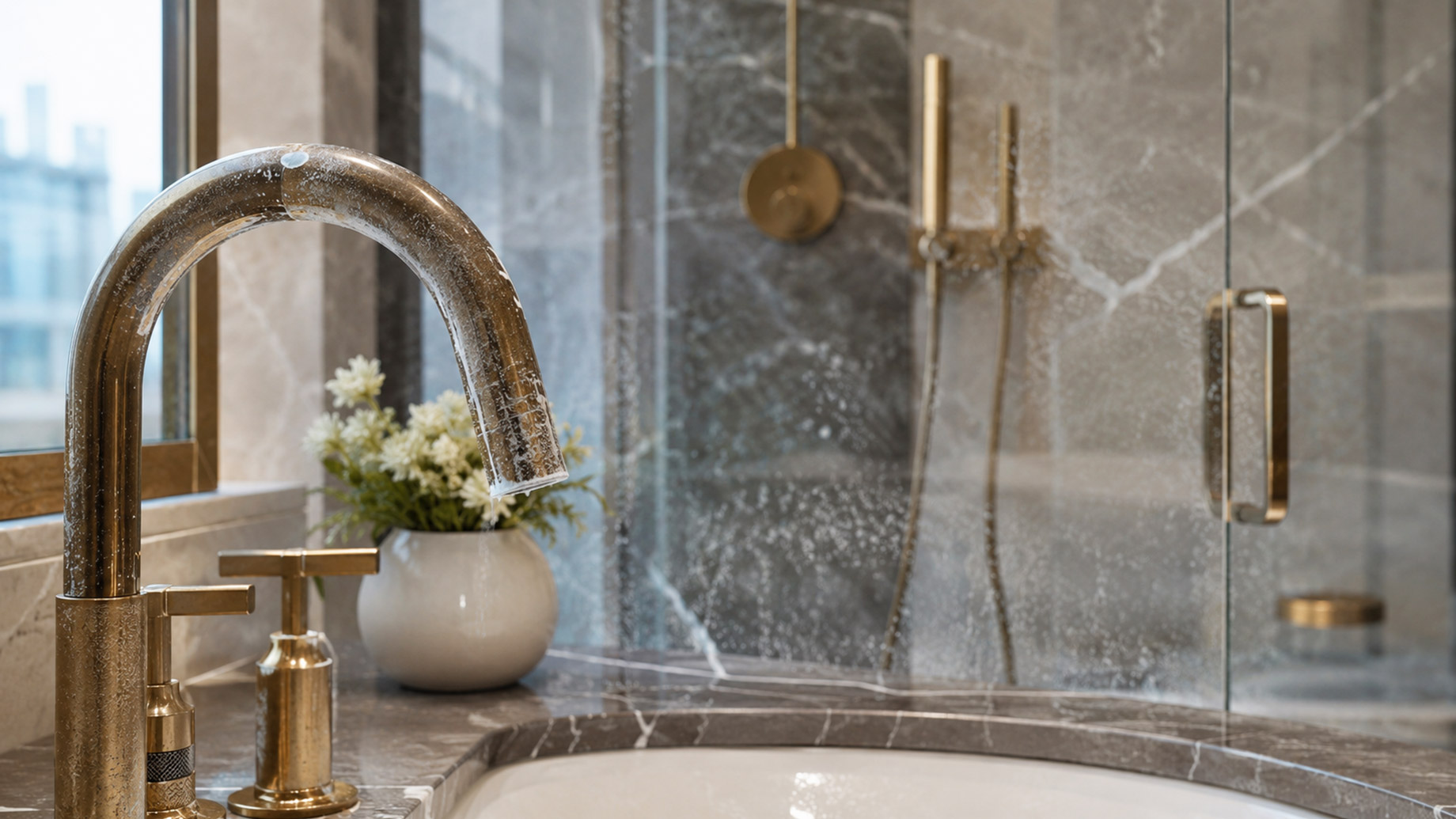
One of the easiest hard water symptoms to spot is white or gray buildup around faucets, drains, and showerheads. This residue is mineral scale left behind after water evaporates.
You may notice buildup:
- Around sink faucets
- On showerheads
- Near tub spouts
- Around drains
- On glass shower doors
- Inside toilet bowls
This buildup may seem like a cleaning issue, but it is often a sign that minerals are collecting throughout your plumbing system. If you see scale on the outside of fixtures, there may also be buildup inside pipes and appliances.
Low Water Pressure
Hard water can contribute to low water pressure over time. As mineral deposits collect inside pipes, they narrow the space where water flows. This can cause weaker water pressure in sinks, showers, tubs, and appliances.
Low water pressure may show up as:
- Weak shower spray
- Slow-filling washing machine
- Reduced faucet flow
- Toilets that refill slowly
- Inconsistent water pressure between rooms
If the water pressure problem is affecting multiple fixtures, hard water scale could be part of the issue. Ignoring it may lead to more severe restrictions and costly pipe repairs.
Clogged Showerheads and Faucets
Showerheads and faucet aerators are especially vulnerable to hard water buildup because they have small openings. Mineral deposits can block these openings, causing uneven spray patterns or reduced flow.
Common signs include:
- Water spraying in different directions
- Showerheads dripping after use
- Faucet water coming out unevenly
- Aerators clogging repeatedly
- Frequent need to soak fixtures in vinegar
Cleaning the fixture may help temporarily, but if the problem keeps coming back, hard water is likely the cause.
Spots on Dishes and Glassware
Hard water often leaves cloudy spots or streaks on dishes, even after they have gone through the dishwasher. Glassware may look hazy, and silverware may appear dull.
This happens because minerals remain behind after the water dries. While dishwashing detergent can help, it may not fully prevent spotting if your water has a high mineral concentration.
You may notice:
- Cloudy drinking glasses
- White film on plates
- Spots on silverware
- Dishes that feel gritty
- Poor dishwasher performance
These signs may seem minor, but they often point to the same minerals affecting your plumbing and appliances.
Soap Scum in Sinks, Tubs, and Showers
Hard water does not mix well with soap. Instead of creating a rich lather, the minerals react with soap and form a sticky residue known as soap scum.
Soap scum can collect on:
- Shower walls
- Bathtubs
- Sinks
- Faucets
- Tile
- Shower curtains
- Glass doors
This residue can make bathrooms harder to clean. It can also leave skin feeling dry and hair feeling dull after bathing.
Dry Skin and Dull Hair
Although hard water is a plumbing issue, it can also affect your daily comfort. The minerals in hard water can leave a residue on your skin and hair after bathing.
Common personal care signs include:
- Dry or itchy skin
- Hair that feels rough or flat
- Scalp irritation
- Difficulty rinsing out shampoo
- Need for more soap or shampoo than usual
These symptoms may not always mean you have hard water, but when they appear alongside plumbing issues, they are worth paying attention to.
Stiff, Faded Laundry
Hard water can make it harder for laundry detergent to work effectively. Minerals can cling to fabric, leaving clothes feeling stiff, scratchy, or less clean after washing.
You may notice:
- Towels that feel rough
- Clothes that fade faster
- White fabrics turning gray or yellow
- Detergent residue on clothing
- Need to use extra detergent
Hard water can also make washing machines work harder, which may shorten their lifespan.
Water Heater Problems
Your water heater is one of the appliances most affected by hard water. As water heats up, minerals separate more easily and settle at the bottom of the tank. This sediment buildup can reduce efficiency and cause performance issues.
Hard water may cause:
- Popping or rumbling sounds from the tank
- Longer heating times
- Reduced hot water supply
- Higher energy bills
- Shorter water heater lifespan
Sediment buildup makes your water heater work harder to heat the same amount of water. Over time, this can increase wear and lead to premature replacement.
Higher Utility Bills
Hard water can quietly raise your monthly costs. When pipes, fixtures, and appliances are affected by mineral buildup, your plumbing system becomes less efficient.
You may spend more on:
- Water heating
- Dishwasher cycles
- Laundry detergent
- Soap and shampoo
- Appliance repairs
- Plumbing maintenance
A small buildup problem can become expensive if it is ignored for years.
Appliance Wear and Tear
Any appliance that uses water can be affected by hard water. Mineral buildup can reduce performance, clog internal parts, and shorten appliance life.
Commonly affected appliances include:
- Dishwashers
- Washing machines
- Water heaters
- Coffee makers
- Ice makers
- Humidifiers
- Refrigerator water dispensers
If appliances need frequent cleaning or repairs, hard water may be contributing to the problem.
Rust-Colored or Stained Fixtures
Hard water can sometimes appear alongside other water quality problems, such as iron or manganese. These minerals may leave reddish, brown, orange, or dark stains around sinks, tubs, and toilets.
Stains may appear on:
- Toilet bowls
- Bathtub surfaces
- Sink basins
- Shower walls
- Laundry
While staining is not always caused by hard water alone, it can be a warning sign that your water has mineral issues that should be tested.
Frequent Plumbing Repairs
If you are calling a plumber often for slow drains, low pressure, fixture problems, or appliance issues, hard water may be part of the pattern. Mineral scale builds slowly, so the damage may not be obvious right away.
Repeated plumbing problems can signal that buildup is affecting multiple parts of your system. Addressing the water quality issue may help reduce future repair needs.
How to Confirm You Have Hard Water
The best way to confirm hard water is with a water test. You can use a home test kit or contact a local plumbing or water treatment professional.
A water test can show:
- Mineral hardness level
- Iron content
- pH level
- Other water quality concerns
Testing helps you understand how severe the issue is and what solution may be appropriate.
What You Can Do About Hard Water
If you notice hard water symptoms in your home plumbing, there are several steps you can take.
Helpful options include:
- Cleaning faucet aerators and showerheads regularly
- Flushing your water heater as recommended
- Using hard water cleaning products
- Installing a water softener
- Testing your water quality
- Scheduling a plumbing inspection
A water softener is one of the most common long-term solutions. It helps reduce calcium and magnesium before water moves through your plumbing system.
Why You Should Not Ignore Hard Water
Hard water may not seem urgent at first, but the effects can build over time. What starts as spots on dishes or a clogged showerhead can eventually become pipe restrictions, appliance failure, or water heater damage.
Ignoring hard water can lead to:
- Reduced water pressure
- More frequent repairs
- Higher energy bills
- Shorter appliance lifespan
- Harder cleaning
- Plumbing system strain
Taking action early can protect your home and save money.
FAQ
What are the most common hard water symptoms in home plumbing?
The most common symptoms include white mineral buildup, low water pressure, clogged showerheads, soap scum, spotted dishes, stiff laundry, and water heater sediment.
Is hard water dangerous to drink?
Hard water is generally not dangerous to drink, but it can cause plumbing problems, appliance damage, and cleaning difficulties.
Can hard water damage pipes?
Yes. Over time, mineral scale can build up inside pipes and reduce water flow. In severe cases, it can contribute to clogs and pressure problems.
Why does hard water leave white residue?
The white residue is usually calcium or magnesium left behind after water evaporates. This residue is commonly found around faucets, drains, and showerheads.
Can hard water affect my water heater?
Yes. Hard water minerals can settle inside the water heater tank, creating sediment buildup. This can reduce efficiency, increase energy use, and shorten the life of the unit.
How do I know if I need a water softener?
You may need a water softener if you notice recurring scale buildup, low water pressure, dry skin, stiff laundry, appliance problems, or high mineral levels from a water test.
Will cleaning remove hard water buildup permanently?
Cleaning can remove visible buildup temporarily, but it does not fix the source of the problem. If your water remains hard, mineral deposits will return.
What is the best way to fix hard water?
The best long-term solution is often a water softener or another water treatment system. A professional water test can help determine the right option for your home.
