Chicago-area homeowners planning a move from one high-value residence to another face a moving-company conversation that reaches beyond the headline price quote. Crew quality, packing protocol, climate-controlled storage access, and white-glove handling of art and antiques all shape the realistic move experience. The choice of moving company shapes both the day-of-move smoothness and the long-run protection of irreplaceable items.
Chicago-area owners typically look for a moving company with both local expertise and proven long-distance capability. Specialist providers like EZ Movers show the depth Chicago homeowners should look for, with residential, commercial, and long-distance services covering the city, Lincolnwood, Joliet, and the wider Chicago metro. A luxury residential move coordinates packing, transit, climate-controlled storage where needed, and white-glove install at the new residence rather than treating each as a separate engagement. The decision rewards a few hours of structured preparation before scheduling the move date.
What Distinguishes a Luxury Residential Move?
The luxury move differs from a standard residential move on several dimensions. The first is the value-and-fragility profile. Art, antiques, designer furniture, and high-end electronics together typically exceed the property value of standard household goods.
The second is the time-discipline profile. Owners and trusted-helper schedules often run tighter than standard move windows allow. The third is the documentation profile. Insurance, inventory, and condition reports matter more when moving high-value items.
The same considered thinking visible in coverage of luxury real-estate portfolios across North America translates to the moving decision. The right partnership extends across the full transition rather than just the truck-and-crew day.
What Should Chicago-Area Homeowners Verify Before Booking?
Six checks belong on every shortlist. The table below summarises what Chicago-area owners should weigh before commitment.
| Check | Why It Matters | What To Confirm |
|---|---|---|
| Licensing and insurance | Carrier accountability | USDOT number disclosed, valuation options offered |
| In-home survey | Accurate inventory and quote | Walk-through completed before binding quote |
| Crew composition | Service quality | Named foreman, vetted-crew protocol confirmed |
| Packing materials | Item protection | Custom crating for art and fragiles available |
| Climate-controlled storage | Interim need | Climate-controlled facility documented |
| Claims protocol | Damage recourse | Plain-English claims process explained |
A mover that produces clear answers across these six points signals a partner worth retaining. A mover that deflects on any of them signals a setup that often produces friction during the move itself. The Federal Motor Carrier Safety Administration’s moving company protections resource outlines the foundational consumer framework Chicago homeowners should reference.
Which Move Scenarios Reward Specialist Counsel Most?
Three move scenarios reward mover depth more than the others:
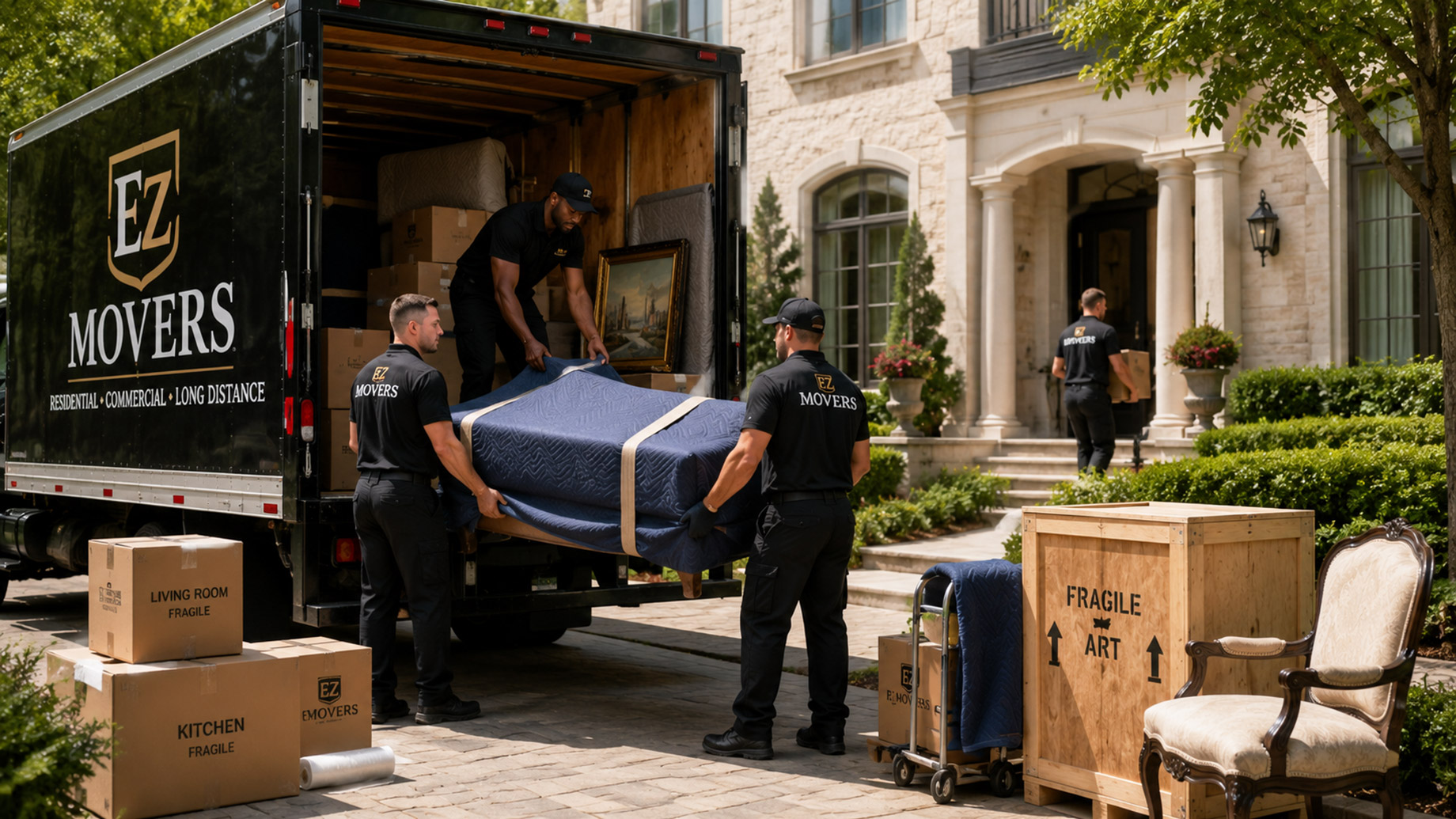
Alt text: A professional moving crew loading a residential truck
- Art-and-antique-heavy moves where custom crating, condition reporting, and climate-controlled transit all interact with the realistic claim experience
- Downsizing-and-staging moves where some items move to the new residence, others to climate-controlled storage, and a third group to designated charitable destinations
- Multi-state moves between Chicago and a Sun Belt second home where coordinated long-distance handling shapes timing and cost
The American Moving and Storage Association’s public consumer resources outline the broader framework Chicago homeowners reference. The first mover conversation typically runs 45 to 90 minutes covering in-home survey, packing scope, and a written binding quote.
What Common Errors Surface in Chicago Luxury Moves?
Several patterns recur. The first is taking a quote on volume-only data without an in-home survey. Distance-only or volume-only quotes often produce day-of surprises when the crew sees what actually needs handling.
The second is choosing on price alone. The cheapest quote often skips custom crating, named-foreman protocol, or full-value protection that owners later wish had been included.
The third is overlooking the climate-controlled storage option. A short interim storage need often arises between sale closing and new-residence handover. Coverage of finding home in Orlando’s best suburbs shows how owners planning multi-state transitions benefit from coordinated storage along the route.
The fourth is forgetting the valuation-and-claims pathway. Released-value cover at 60 cents per pound differs meaningfully from full-value-protection cover. The fifth is signing without confirming the written binding quote and crew composition. Coverage of traditional Mexican hacienda style homes reminds owners that custom architectural pieces often need maker-specific handling protocols during transit.
What Is the Bottom Line for Chicago-Area Homeowners?
The moving company decision rewards Chicago-area owners that plan rather than improvise. The window for thoughtful preparation typically runs 8 to 12 weeks before the planned move date. The right mover coordinates the in-home survey, the packing protocol, the transit, and the install at the new residence rather than treating each as a separate engagement.
Whether the move sits inside the Chicago city limits, spans North Shore communities, reaches the western suburbs, or crosses state lines to a second home, the criteria translate cleanly. The first mover conversation should answer specific questions about timeline, crew, and full-cost transparency. Chicago-area owners that run real comparison processes early end up with cleaner moves than owners that default to whichever mover the real-estate agent recommended first.
Pre-engagement preparation pays back across the entire move cycle. The in-home survey, the inventory documentation, and the written binding quote together set the framework for a calm move day. Specialist movers like EZ Movers typically charge a premium relative to budget-positioned providers. The premium typically returns through cleaner crew quality, fewer damaged items, and faster move-day execution.
Frequently Asked Questions
How Far in Advance Should I Book a Chicago Luxury Move?
Book 8 to 12 weeks before the target move date for the cleanest crew and equipment availability. Summer moves and end-of-month dates produce the tightest supply. Shorter lead times remain possible but typically narrow the choice of crews. Established movers usually offer a free in-home survey during the booking window.
What Does a Chicago Luxury Move Typically Cost?
Costs vary widely by distance, volume, and protection scope. Local Chicago-area moves often run 1,500 to 6,000 dollars for full-service residential. Long-distance moves to Sun Belt or coastal destinations typically run 6,000 to 25,000 dollars. Custom crating, climate-controlled storage, and white-glove install add separately at clearly disclosed rates. The binding quote should specify the full cost before scheduling.
Should I Pack Myself or Use the Mover’s Packing Service?
Most luxury moves benefit from full-service packing for fragiles, art, and high-value items. Owner-packed boxes typically save 10 to 20 percent on the total quote but shift damage-claim responsibility to the owner for those items. Many owners blend the approaches by self-packing books and clothing while leaving fragiles to the mover. The decision interacts with the valuation-cover choice.
How Do I Verify a Chicago Moving Company Is Reputable?
Check the USDOT number, the Better Business Bureau record, and recent independent reviews. The Federal Motor Carrier Safety Administration’s protect-your-move portal provides the licensing-and-complaint check. A reputable mover discloses USDOT number, carrier name, and full-value-protection options up front. Owners that verify before signing avoid the most common rogue-mover pitfalls.