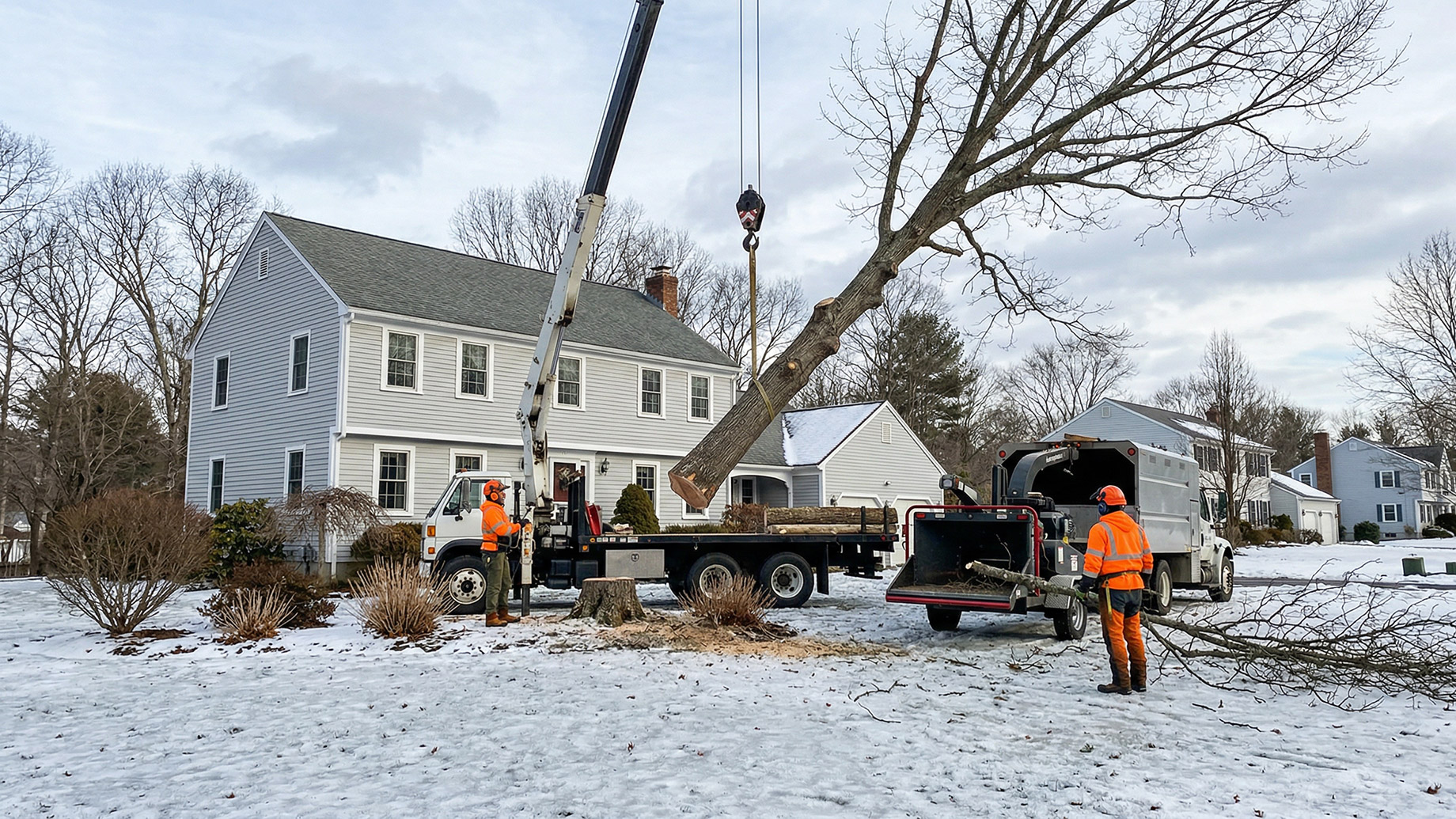
Property maintenance in New England brings unique seasonal challenges. You might look at a leaning oak in your yard and wonder if there is an optimal tree removal season in Connecticut. Many homeowners assume spring is the only time for arbor work, but proper timing depends on biology and soil conditions, not just warm weather.
Taking action too early or too late causes unnecessary expense and property damage. Recognizing the key signs of an ideal window for starting prevents damaged lawns and the spread of disease across your entire yard.
What Environmental Factors Dictate the Timeline
Weather patterns play a surprisingly massive role in deciding when heavy equipment can safely enter your property. Paying attention to these natural signals ensures a smooth process. Here is a clear breakdown of those essential factors:
Soil Saturation Levels
Thawing spring soil creates a soft, muddy mess that easily traps large trucks and destroys your grass completely. Waiting for solid ground guarantees a clean job site. Professionals always check the local frost line depth before bringing heavy lifting gear onto your private residential property.
Local Wildlife Nesting
Late spring introduces a complicated challenge with migratory birds building nests in the canopy. Disturbing these protected species can result in severe fines. Starting work earlier in the winter bypasses this legal headache entirely while respectfully preserving local wildlife habitats across your beautiful surrounding neighborhood.
Fungal Spore Transmission
Open wounds on fresh stumps attract pests and diseases rapidly during warm, humid days. Oak wilt spreads notoriously fast when beetles feed on fresh sap. Winter cutting eliminates this exact risk because the freezing temperatures actively suppress dangerous fungal spores and keep surrounding vegetation healthy.
Why Winter Dormancy Offers the Best Advantage
People often believe waiting for spring foliage is the smartest move before cutting. But why delay when the structure tells the full story? This misconception ignores how tree anatomy functions during the coldest months. When temperatures drop, sap retreats into the roots, making the wood significantly lighter and the tree removal process much safer.
This biological shift creates the perfect condition for scheduling North Branford tree removal services. Without a heavy crown of leaves catching harsh winter winds, crews work safely and efficiently. Frozen ground also protects delicate turf from machinery tracks, saving you money.
How Emergency Situations Alter the Standard Timeline
Sometimes nature refuses to follow a calendar. When hazardous conditions suddenly appear, sticking to a seasonal schedule becomes impossible. Recognizing immediate threats helps prevent catastrophic property damage. Consider these unpredictable scenarios and rapid response factors:
Structural Failure Signs
Think of a compromised trunk like a cracked foundation in a tall skyscraper. One commercial client ignored a sudden vertical split, resulting in a crushed garage. If you notice massive peeling bark or deep hollows, bypass the seasonal rules and seek professional help right away.
Severe Storm Damage
High winds snap thick branches, leaving them dangerously suspended above your roof. These widow-makers require instant attention regardless of the current season. Taking fast action removes the immediate physical threat to your family and stops moisture from rotting out the surviving base structure almost entirely.
Where Advance Planning Saves You the Most Money
Securing a spot on a reputable roster takes careful planning well before the frost hits. Waiting until late November means you’re competing with countless local neighbors who just realized their maples look completely dead. Booking your assessment in late summer or early fall locks in lower off-peak pricing.
Start inspecting your canopy with binoculars during August. Look closely for bare branches that lack healthy foliage. Documenting these specific changes gives contractors clear information, ensuring they arrive fully prepared with the right equipment. This simple visual check prevents expensive rush fees.
What Legal Boundaries Control Your Project Scope
Property lines often create intense disputes when heavy limbs hang over fences. While property laws generally allow you to trim branches crossing your property line, causing permanent damage to a neighbor’s tree can leave you legally and financially liable. Always confirm property boundaries legally before making operational decisions.
Municipal regulations also dictate specific preservation rules for historic neighborhoods. Many Connecticut municipalities strictly prohibit removing old-growth trees without an approved tree removal permit, regardless of the season. Verifying these local ordinances first protects your wallet from massive penalties and keeps your project moving forward flawlessly.
Questions About Tree Removal Season
Does a dead tree need winter removal?
Yes, standing deadwood becomes brittle during freezing temperatures. Frozen moisture cracks the trunk, increasing the chances of an unexpected collapse onto your roof. Taking it down before January prevents this extreme structural failure entirely.
Can contractors extract timber over septic systems?
Experienced teams utilize crane equipment to lift heavy logs straight up rather than dragging them across your yard. This technique bypasses the fragile leach field below, ensuring costly underground plumbing remains pristine regardless of surrounding surface disruption.
Will stump grinding happen immediately after cutting?
Heavy grinding machinery requires softer earth to penetrate deep into the root system effectively. While upper canopy work finishes during winter, professionals schedule subterranean stump grinding for mid-spring when the ground finally yields to sharp blades.
