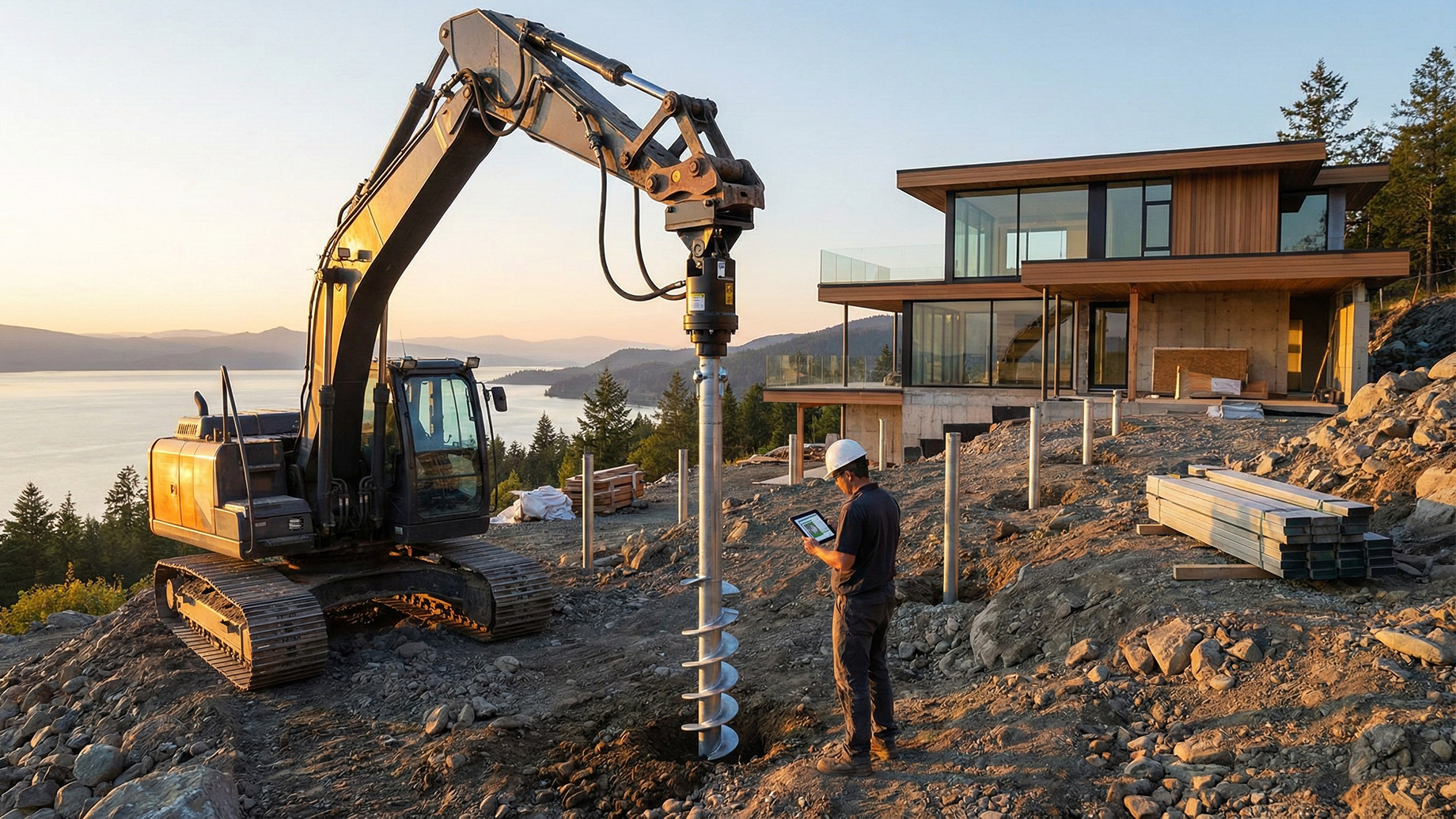
Building a luxury home starts below ground. The foundation determines if a property stands strong for decades. High-end construction demands equipment that delivers precision and speed.
Modern foundation work has changed completely. Specialized machinery now handles complex soil conditions. Builders working on premium projects need tools that match client expectations.
Foundation Options for High-End Properties
Luxury homes often sit in locations where traditional foundations struggle. Hillside estates face slope stability problems. Waterfront properties deal with soft soils. Mountain retreats hit bedrock at different depths.
Helical piles solve problems where old methods fail. These steel shafts have helical bearing plates that screw into ground. They move building weight to stable soil layers. The setup needs less digging than concrete footings. Weather delays drop since the process works in most conditions.
Soil testing shows load capacity before work begins. Engineers pick pile depth based on geological surveys. The U.S. Geological Survey notes that knowing subsurface conditions prevents foundation failures. This early analysis saves money compared to fixing problems later. If you need help with this, looking into Dura Pier Foundation Repair could be a very strong first step to take.
Essential Equipment for Foundation Work
Installing helical piles needs specialized machines. The equipment range includes handheld units, excavator-mounted systems, and self-propelled machines. Contractors often check options from suppliers of ground screw drivers for sale to match project needs.
Different equipment types serve specific purposes:
- Handheld models weigh under 100 pounds. Workers use these in tight spots where excavators cannot fit. They work well for deck foundations and fence posts. Two people can move and run these units.
- Excavator-mounted systems attach to standard construction gear. The hydraulic setup gives steady torque during installation. Operators watch pressure gauges to check proper depth. These handle residential and light commercial jobs.
- Self-propelled machines work on their own. Built-in power removes the need for extra equipment. Tracks keep them stable on slopes. These units install piles faster while staying accurate.
Installation Methods for Different Properties
Each property type brings different challenges. The right approach depends on terrain and soil conditions.
Hillside Homes
Steep slopes create problems for traditional concrete foundations. Standard methods need big excavation and retaining walls. Helical piles install at angles to match slope conditions. The process saves existing plants and reduces site damage.
Workers can position equipment on uneven ground. Installation happens without cutting into hillsides. This method costs less than building massive retaining structures.
Waterfront Locations
Properties near water need foundations that resist sideways forces. Waves and wet soils create movement problems. Helical piles reach stable layers below the water table. They stop both up-down loads and side pressures.
Installation works without pumping out water or using sheet piling. Crews finish faster than with concrete methods. The system protects against erosion over time.
Expansive Clay Soils
Clay soil expands when wet and shrinks when dry. This movement cracks regular foundations. Helical piles go below the active soil zone. They anchor to stable layers that moisture changes miss.
Properties on clay benefit from this deeper system. Foundation problems drop significantly. Repairs become rare compared to concrete slabs.
Rocky Terrain
Rock often stops traditional digging equipment. Helical pile systems with carbide tips cut through rock layers. The work takes hours instead of days. Less digging means landscaping stays intact.
Crews avoid using jackhammers and blasting. The quieter process suits residential neighborhoods. Installation moves forward without major disruption.
Speed and Accuracy in Foundation Setup
Time savings cut project costs directly. Traditional concrete needs digging, forming, pouring, and curing. The process takes several weeks. Helical pile work finishes in days.
Immediate weight transfer means building continues without waiting. Crews start framing as soon as piles go in. This schedule advantage matters on tight timelines.
Weather barely affects helical pile installation. Rain stops concrete work but not pile systems. Frozen ground that halts digging creates few problems. Winter building becomes possible in cold climates.
Quality Control During Installation
Workers verify capacity while installing each pile. Torque monitoring gives instant feedback on load requirements. Operators know right away if a pile meets design specs. This checking prevents problems that concrete work might hide until later.
Installation logs record torque and depth numbers. Engineers review this data to confirm permit compliance. The National Institute of Building Sciences recognizes proper monitoring as vital for foundation reliability. Digital systems now track all parameters automatically.
Documentation and Permits
Building departments need clear records. Installation reports show exact torque readings and depths. Engineers stamp documents after reviewing installation data.
The permit process moves faster with pile systems. Inspectors can verify work quickly. Digital records reduce paperwork and speed approvals.
Equipment Selection for Your Project
Project size determines which equipment works best. Small additions fit handheld systems. New home construction benefits from excavator options. Large developments justify self-propelled machines.
Choosing between rental and purchase depends on volume:
- High-volume contractors building several homes yearly should consider buying equipment. Ownership costs drop per project over time. Training crews on owned equipment improves efficiency.
- Occasional foundation work suits rental arrangements better. Rental eliminates maintenance and storage costs. Different projects can use different equipment types.
- Soil conditions influence specs needed. Dense clay requires higher torque. Rocky ground needs aggressive cutting edges. Sand allows lighter equipment.
Budget planning goes beyond equipment costs. Labor efficiency affects total project expenses. Faster installation cuts crew time on site. Less prep work lowers earthwork bills. Minimal cleanup reduces finishing costs.
The foundation method you pick affects timelines and quality. Modern equipment gives flexibility for different property types. Professional contractors match tools to site requirements. They avoid forcing one method across all jobs.
