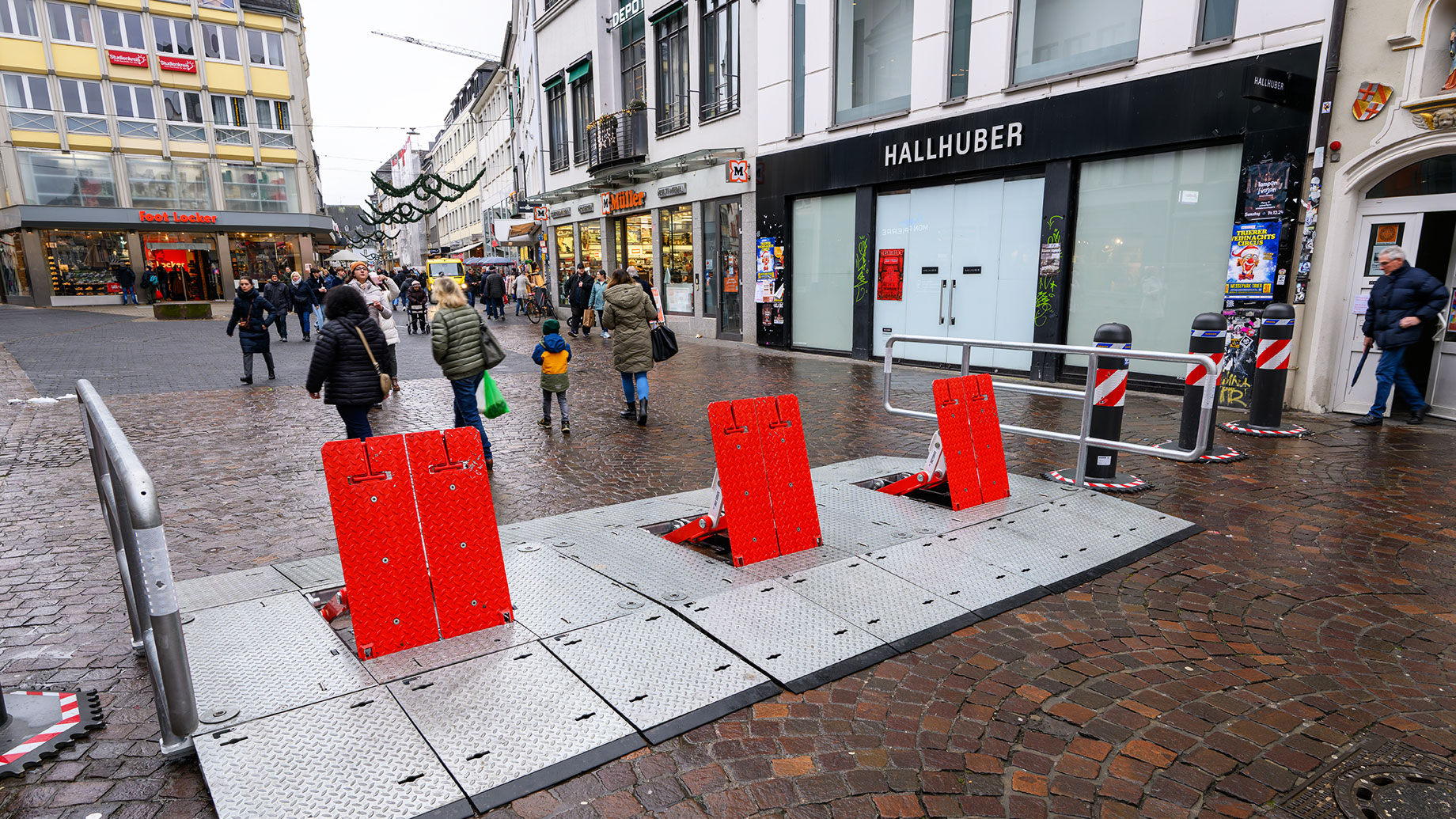
High-risk sites don’t become secure just because a fence goes up around them. The real challenge is controlling how vehicles move at the edges of a property, where they enter, where they wait, and how close they can get to people and critical assets. In recent years, vehicle-borne threats and accidental high-speed intrusions have pushed planners to think much more carefully about what a “secure perimeter” actually means in practice.
That shift is why purpose-designed vehicle barriers are now considered core tools rather than optional extras. Instead of relying on decorative walls or light bollards, more sites are specifying tested systems like an anti ram vehicle barrier and pairing them with smart layouts, monitoring, and procedures. These choices don’t just stop vehicles at a single line; they reshape the entire perimeter into a series of controlled zones that feel predictable for legitimate users and very difficult for anyone with bad intentions.
1. Strengthening Weak Perimeter Edges
Many perimeters look solid but behave like cardboard against a moving vehicle. Low garden walls, ornamental fences, or shallow bollards can be pushed aside or driven through with surprisingly little effort. Modern crash-rated systems are built differently. They’re designed to stop or dramatically slow vehicles under specific conditions and are tested to recognized impact standards rather than guessed at on a drawing.
When a site upgrades its soft edge with genuine vehicle barriers, whether that’s a beam, wedge, bollard line, or crash-rated fence, it turns a decorative boundary into a real line of protection. A correctly specified anti ram vehicle barrier is chosen to match likely vehicle sizes and speeds, not just to “look strong.” Instead of hoping a driver will respect paint and signage, you’re defining exactly where vehicles can physically go, and where they absolutely cannot.
2. Guiding Vehicles to Safer Speeds
A lot of perimeter risk comes from uncontrolled momentum. Long, straight approaches pointed directly at an entry or building give a driver speed, options, and time to build up force. A smarter design uses geometry and barriers together to pull that energy out of the system. Curves, deflections, and lane shifts gently slow vehicles and make it clear where they’re supposed to go.
Vehicle barriers become quiet guides in this process. Fixed elements like bollards and hardened planters can be used to narrow lanes and separate directions of travel. They discourage last-second lane changes and prevent vehicles from cutting across empty space near guard positions or pedestrian areas. In some layouts, a clearly visible drop barrier marks the transition into a more controlled corridor; drivers understand they’re leaving general traffic and entering a managed zone, even when the barrier is normally raised. The result is slower approaches, fewer surprises, and behavior that’s easier to read.
3. Creating Safer Distance from Vehicles
The closer vehicles are allowed to get to people, lobbies, or infrastructure, the less margin there is if something goes wrong. Standoff distance, how far a vehicle must stay away from what you care aboutI is one of the most powerful levers you can pull in perimeter design. Even a modest increase in distance can dramatically reduce the impact a vehicle can have if it loses control or is used deliberately as a weapon.
Vehicle barriers are the tools that fix those distances in place. By placing crash-rated barriers at the outer edge of plazas, entry queues, or building forecourts, you ensure vehicles stop well short of glass, doors, or dense crowds. Similar thinking applies to infrastructure: power systems, control rooms, and data centers can all be wrapped in their own “no vehicle” envelope, enforced not by cones and wishes but by steel and concrete. That structural buffer gives security teams and first responders time to react instead of forcing them to rely on perfect driver behavior.
4. Backing Up Access Decisions with Barriers
Most sites cannot simply keep all vehicles out. Staff, deliveries, contractors, and emergency services need to pass through the perimeter every day. The challenge is turning an access decision—yes, no, not yet—into a physical reality at the exact moment it matters. Active barriers exist to bridge that gap. These are devices that move between open and closed positions, such as retractable bollards, rising wedges, or crash-rated gates.
In a well-designed entry, a vehicle is guided into a lane, credentials are checked, and only when the guard or control system is satisfied does the barrier lower briefly to allow passage. For the rest of the time, it sits in a protective position, ready to deny access instantly if something doesn’t look right. A second anti ram vehicle barrier further inside the site can provide a backup layer if a vehicle slips through the first control point. This ability to move quickly between permissive and restrictive states is what turns a simple driveway into a true controlled access zone.
5. Creating Defense in Depth, Not Single-Point Gates
If all of your protection sits in a single line at a single gate, you’ve built a fragile perimeter. One malfunction, one misjudgment, or one successful push and there’s nothing left between a vehicle and the heart of the site. A more resilient approach uses layers: several rings of measures that each slow, divert, or stop a threat in different ways. Guidance for high-risk facilities consistently promotes this “defense in depth” model.
Vehicle barriers make those layers tangible. An outer ring of passive barriers and crash-rated fencing keeps vehicles away from building envelopes and pedestrian plazas. Mid-level rings use gates and lane-level barriers to manage vehicle entry. Inner rings, closer to the most critical assets, use short runs of barriers, raised platforms, or hardened street furniture to constrain movement even if a vehicle gets inside. Because each layer is designed to work independently, no single failure exposes the entire perimeter. Instead, every barrier buys time, adds friction, and forces a hostile vehicle to overcome more than one obstacle.
6. Linking Barriers with Fencing and Sensors
Vehicle barriers don’t operate in a vacuum. They’re most effective when they’re part of a broader family of perimeter security products that includes fencing, intrusion detection, and surveillance. Fences define broad “do not enter” zones; sensors identify attempts to cross those lines; cameras and sight lines give people the context they need to understand what’s happening. If these pieces aren’t aligned, you end up with protected areas nobody watches and watched areas nobody has truly protected.
Bringing those elements together means matching barrier locations to fence junctions and sensor zones, then checking that visibility from cameras or guard posts covers the same critical spaces. When an alarm triggers, it should correspond to a point where actual stopping power exists, not a dead corner that requires a long response. Barriers also define safe observation points for staff, keeping them out of potential vehicle paths while still able to see what they need to see. The perimeter starts to feel less like a set of disconnected products and more like one coordinated system.
7. Supporting Daily Operations
A design that works great on paper but constantly frustrates staff and visitors won’t stay intact for long. Gates get propped open, barriers are left down for “just a minute,” and clever work-arounds appear that quietly undo the security you paid for. The most successful barrier layouts are the ones that feel natural in everyday use. They help drivers understand what to do without a long explanation and help teams manage traffic without feeling like they’re fighting the site.
This is where small details matter: enough queuing space so vehicles aren’t spilling into public roads, clear sight lines so drivers can see which lane they should choose, and barrier placements that don’t force awkward maneuvers for large vehicles. Thinking ahead about maintenance access, weather, and future upgrades keeps systems reliable instead of fragile. When vehicle barriers are chosen and placed with operations in mind not just risk, they support a routine rhythm that people can stick to. Over time, that consistency is what keeps the perimeter behaving like a controlled zone instead of a collection of hard-to-use hardware.
Final Thoughts
Vehicle barriers won’t solve every security problem, but they do something nothing else can: they redraw the physical possibilities at the edge of a site. By hardening soft boundaries, steering vehicles into predictable paths, enforcing standoff, and making access decisions physically meaningful, they turn vulnerable edges into structured, manageable zones. When those same barriers are layered, aligned with other systems, and chosen with daily operations in mind, a high-risk perimeter stops being a thin line on a map and becomes a three-dimensional space that actively works in your favor.
For anyone responsible for a site with real vehicle exposure, the next step is to take an honest look at how traffic moves today and where the weak spots actually appear. Once those patterns are clear, it becomes much easier to decide where impact-rated solutions belong, how to mark key transitions along the route, and which elements of the perimeter need the most adjustment. The goal is not only to keep unauthorized vehicles out, but to shape an environment where movement, awareness, and protection all work together instead of pulling in different directions.
