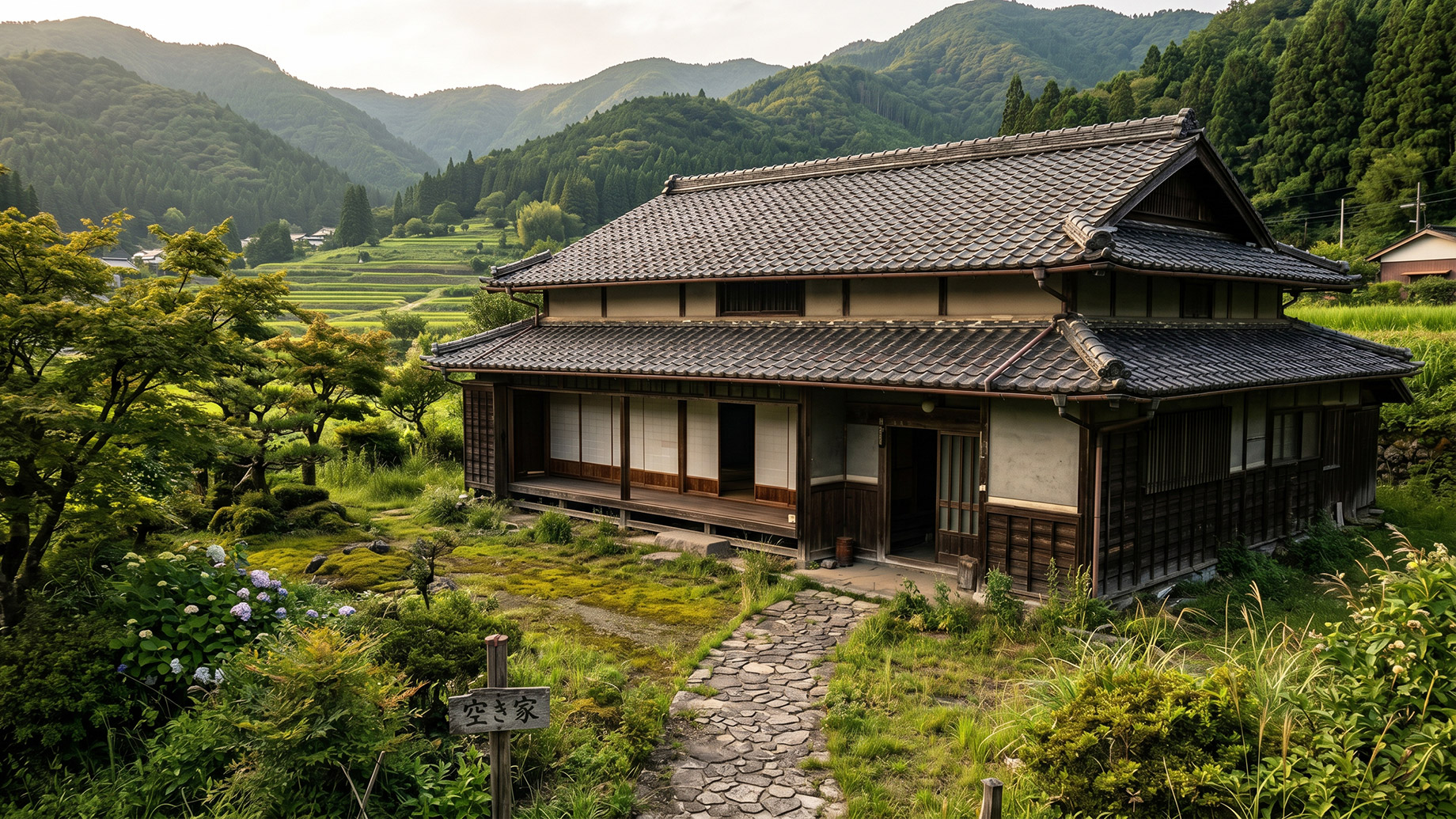
Japan is experiencing a real estate phenomenon unlike anywhere else in the world. Across the country’s rural prefectures and small towns, hundreds of thousands of properties sit empty—some for decades—waiting for a new owner willing to breathe life back into them. These are Akiya (空き家), literally “empty houses,” and they represent one of the most intriguing opportunities in global real estate today.
Whether you’re a seasoned investor, a remote worker craving a countryside retreat, or simply someone who has always dreamed of owning a home in Japan, understanding the old house for sale market here can open doors you didn’t know existed.
What is an Akiya?
An Akiya in Japan refers to an empty house, often abandoned or left uninhabited due to various reasons such as population decline, urbanization, or inheritance issues. These empty houses have become a significant social and economic problem in Japan, particularly in rural areas where the population is aging and declining.
Japan now has over 9 million vacant homes across the country. Many of these are genuine traditional Japanese houses—kominka (古民家), minka (民家), machiya (町家), samurai houses, and thatched-roof homes—featuring unique architectural elements like tatami mats, sliding doors, and traditional roofing.
The cultural backdrop matters here: many Japanese home buyers are only interested in recently built or custom-built new homes. The bias against used houses is a widespread cultural phenomenon. That cultural preference is the buyer’s loss and your gain.
How Much Does an Old House for Sale in Japan Actually Cost?
This is where things get genuinely exciting. Akiya houses typically range from $7 to $206,000 USD, depending on location, size, and condition, with a median sale price of $30,000. Rural Akiya houses are generally cheaper—as low as $311 in some prefectures—while properties in major metropolitan areas like Tokyo can average significantly higher.
Some properties can be bought for as little as 1 yen, although frequently prices can be comparable to property prices in other countries. Some municipalities even offer Akiya at no cost whatsoever in exchange for a commitment to live in and renovate the property.
However, the purchase price is only part of the equation. Basic renovations for Akiya houses can cost $7,000–$21,000 USD, while full renovations with modern amenities may cost $35,000–$104,000 USD or more. Common needs include roof repairs, plumbing, electrical work, and insulation.
Can Foreigners Buy an Old House in Japan?
Yes—and the rules are more straightforward than most people assume. Japan has no restrictions on foreign property ownership. You can buy land and buildings outright, and purchase remotely with a licensed agent.
You can buy property in Japan regardless of your nationality or visa. Even tourists can legally own property. However, owning property does not grant residency or long-term stay rights. If you want to live in your Akiya full-time, you will still need a valid visa.
For those looking to navigate the full buying process—from searching listings to closing—working with a bilingual real estate specialist is strongly recommended.
Where to Find Old Houses for Sale in Japan
Akiya Banks
The key to finding these houses is to access the special Akiya banks (空き家バンク) set up by many cities as part of their population growth departments. They operate as a sort of matchmaker between prospective sellers and buyers.
Since most Akiya properties are handled directly by each municipality in Japan, you need to first contact the municipality through their Akiya bank pages and register yourself on their system before you can officially inquire about a property.
Commercial Real Estate Platforms
Beyond municipal Akiya banks, many old houses for sale in Japan are listed on commercial real estate sites with English-language support. Some Akiya properties are both registered on the Akiya banks and listed for sale on commercial real estate sites. This gives buyers multiple avenues to discover the same property, sometimes with translated descriptions and added context.
Traditional Kominka Specialists
For buyers specifically drawn to traditional architecture, looking for kominka (古民家)—”old folk houses”—is a more selective approach. These are houses built as post-and-beam structures using traditional mortise and tenon joints pinned together with hardwood pegs, invariably older homes built a century ago, using massive timbers for the frame, mud and lime walls, tatami flooring, fusuma room separators, shoji doors, and engawa open-air verandas.
The Buying Process: Step by Step
1. Research and Shortlist
Use Akiya Bank portals, bilingual property platforms, and specialist agencies to identify properties in your target prefecture. Consider proximity to transport links, hospitals, and local services—particularly important in rural areas.
2. Engage a Licensed Agent
A real estate agent is highly advised, unless you live in Japan and are fluent in Japanese. If you have difficulty finding an agent who is fluent in English, it may be helpful to go through an intermediary who can facilitate the sale and even act as a representative on your behalf. Japanese real-estate agents can collect a commission from both the seller and the buyer, limited by law to 3% of the sale price plus ¥60,000 plus consumption tax.
3. Conduct Due Diligence
Old houses for sale in Japan can carry complications beyond their physical condition. Japan’s 2024 Real Property Registration Act mandates inheritance registration within three years, but many properties still list deceased owners or have numerous, potentially untraceable co-owners. If the ownership situation is unclear, assume the process will take longer—or stop entirely—unless a professional untangles it. A judicial scrivener (司法書士 / shihō-shoshi) can help navigate these inheritance issues.
Also, watch for agricultural land attached to the property. If the property includes farmland—like rice fields (田 / tanbo) or fields (畑 / hatake)—you may need approval from the Agricultural Committee (農業委員会) to make the purchase legal, and requirements vary by region.
4. Arrange Financing
If you can pay cash, you’ll have the least trouble. For a home loan, you must be a local resident with Japanese income, a Japanese bank account, and Japanese life insurance. Banks are also reluctant to lend for an Akiya even with those prerequisites. Most international buyers fund their Akiya purchase in cash, partly because prices are low enough to make this feasible.
5. Factor in Closing Costs
You should also budget approximately ¥100,000 for lawyers’ fees. The buyer usually bears the cost of the judicial scrivener, who will draw up the contract and carry out the changes in registration. In total, you can expect to pay around ¥400,000 or so in taxes and fees on a ¥2,000,000 purchase.
Renovation: Budgets, Subsidies, and Realistic Expectations
Renovation is where buyers often get a surprise. Making your Akiya livable may require a sizable cost to bring the house up to code. Depending on the age and construction method, repairs could easily run into the millions of yen. If you want modern luxuries like insulation, soundproofing, and new wiring, you can add another zero to that cost.
The silver lining? There may be subsidies available from the local municipal government for renovating Akiya, so make sure you ask the Akiya bank about this. Many local governments are actively incentivizing renovation to revitalize declining communities, which means grants and low-interest loan programs may be available to you.
Is Buying an Old House in Japan a Good Investment?
The honest answer depends entirely on your definition of “investment.”
If your goal is flipping property or building short-term equity, Akiya rarely behaves the way urban real estate does. Older homes in rural Japan typically depreciate, not appreciate. Renovation costs can easily exceed resale value, and demand in remote areas can be limited.
But for lifestyle investors—those seeking a long-term base in Japan, a creative renovation project, a vacation home, or even a minpaku (short-term rental guesthouse)—the value proposition is compelling. You can acquire a substantial property with genuine character and history for a fraction of what comparable real estate would cost in Europe, North America, or Australia.
If your aim is long-term residency and investing in an Akiya lifestyle, then Akiya ownership can offer distinct advantages.
Final Thoughts: Is Japan’s Old House Market Right for You?
The old house for sale market in Japan is not for the impatient or the faint-hearted. It rewards those who do their homework, engage the right professionals, and approach the process with patience and cultural sensitivity.
What it offers in return is extraordinary: the chance to own a piece of Japan’s living architectural history, in some of the most beautiful rural landscapes on earth, at prices that feel almost impossibly affordable by international standards.
