Australian Context and Operational Importance
Australia’s industrial, landscaping, and property maintenance sectors generate significant volumes of organic waste, including branches, leaves, and wood debris. Managing this material efficiently is important for site safety, storage optimization, and environmental compliance. A TMG Industrial wood chipper shredder vacuum system provides a combined approach to collecting, reducing, and processing organic waste. For warehouse managers, equipment operators, and logistics professionals, this type of system supports structured waste handling and reduces the need for multiple machines.
The ability to process organic material on site is particularly relevant in regions where transport costs and disposal requirements can impact operational efficiency. By reducing waste volume, operators can improve storage capacity and streamline material flow.
Technical Overview and Use Cases
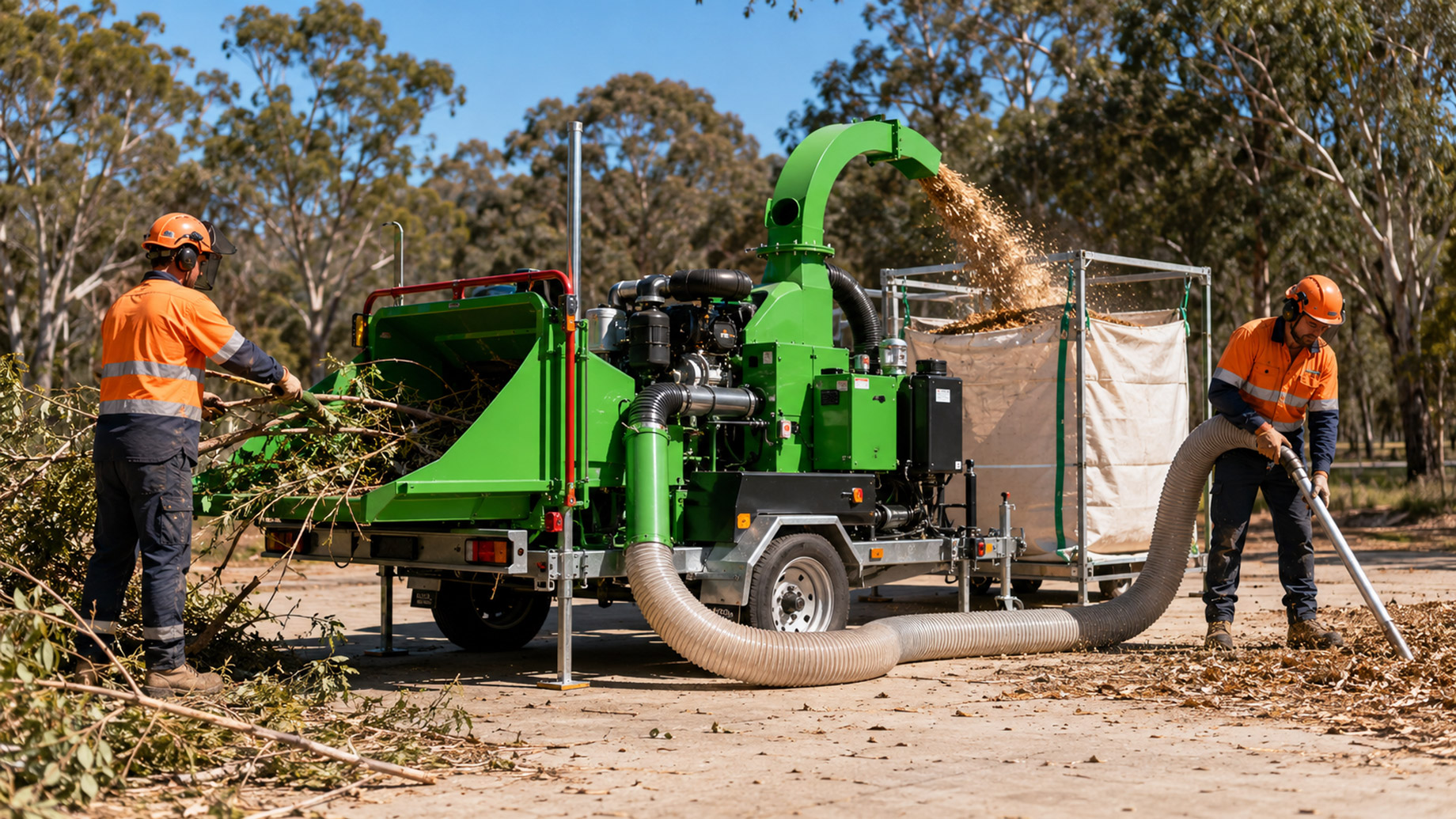
A wood chipper shredder vacuum combines three functions into a single unit. The chipper component processes larger branches into smaller pieces. The shredder handles softer materials such as leaves and light vegetation. The vacuum system collects loose debris and directs it into the processing chamber or a collection bag.
Common Applications
- Processing organic waste in industrial yards
- Maintaining landscaping areas and facility grounds
- Reducing waste volume for easier transport
- Supporting recycling and composting operations
Efficiency, Safety, and Productivity Benefits
Efficiency in waste management is achieved by reducing the number of handling steps. A wood chipper shredder vacuum allows operators to collect and process material in a continuous workflow. This reduces labour requirements and minimizes equipment changes. Productivity improves when waste can be processed immediately rather than stored for later handling.
Safety is also enhanced. Removing loose debris from work areas reduces trip hazards and improves site organization. Controlled processing of materials reduces the risk of injury associated with manual handling and uncontrolled cutting methods.
Technical Foundations and Capability Considerations
The performance of a wood chipper shredder vacuum depends on its engine power, blade system, and airflow design. These elements determine how effectively the machine can process different types of organic material. Operators must select equipment that matches the expected workload and material size.
- Engine capacity for consistent operation
- Blade and cutting mechanism design
- Vacuum airflow for efficient debris collection
- Collection system capacity for continuous use
Factors Affecting Performance and Effectiveness
Several factors influence system performance. Material type and moisture content play a key role. Wet materials may reduce cutting efficiency and clog the system, while dry materials are easier to process. The size and density of branches also affect throughput.
Environmental conditions, such as dust levels and terrain, can impact operation. Regular maintenance of blades and airflow components is necessary to maintain consistent performance and prevent blockages.
Safety Considerations and Best Practices
Safe operation of a wood chipper shredder vacuum requires strict adherence to operating procedures. Operators must be trained to understand the risks associated with cutting and moving components.
- Inspect the machine before use for damage or wear
- Keep hands and tools clear of feed openings
- Wear protective equipment to reduce exposure to debris
- Operate on stable ground to maintain control
- Follow shutdown procedures before performing maintenance
Equipment, Tools, and Supporting Components
Wood chipper shredder vacuum systems are often used with additional tools and components to improve efficiency.
- Collection bags or bins for processed material
- Protective guards for operator safety
- Maintenance tools for blade sharpening and replacement
- Transport equipment for moving processed material
Advantages and Limitations
Wood chipper shredder vacuum systems provide an integrated solution for organic waste management. They reduce the need for multiple machines and support efficient processing. However, limitations should be considered.
- Performance may decrease with wet or dense materials
- Regular maintenance required for blades and airflow systems
- Limited capacity compared to large industrial systems
- Operator training required for safe use
Real World Example
In facility maintenance operations in Victoria, wood chipper shredder vacuum systems are used to manage organic waste from landscaping and site clearing activities. Operators collect leaves and branches, process them on site, and reduce the volume of material for disposal. A typical setup includes a three in one system that combines chipping, shredding, and vacuum collection. Additional technical reference can be found through resources such as wood chipper shredder vacuum specifications to support equipment selection and operational planning.
Conclusion and Future Industry Trends
Wood chipper shredder vacuum systems play an important role in modern material management by combining collection and processing functions in a single unit. Their use supports efficient workflows, improved safety, and reduced environmental impact.
As industries continue to focus on waste reduction and resource efficiency, demand for integrated processing equipment is expected to increase. Future developments may include improved blade technology, enhanced airflow systems, and better durability. For professionals managing industrial and landscaping operations, understanding the capabilities and limitations of these systems is essential for effective implementation.
