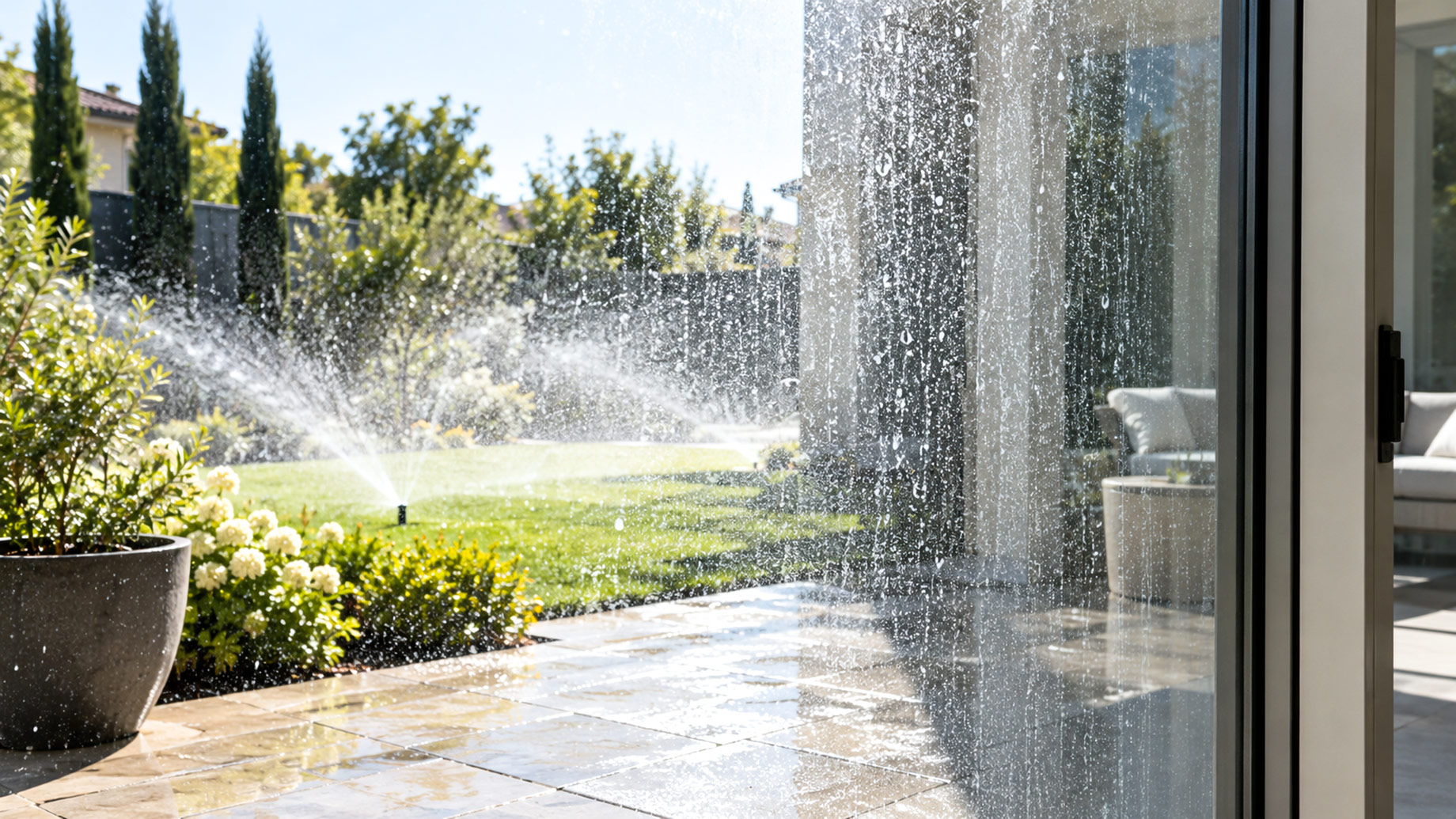
If you have noticed cloudy white spots, streaks, or crusty marks appearing on your exterior windows or patio doors, your lawn sprinkler system may be the reason. During periods of frequent watering, irrigation spray can reach glass surfaces and leave behind mineral deposits that become increasingly noticeable as the water repeatedly dries.
This is particularly common in Colorado, where local water conditions can contribute to mineral buildup. While an occasional splash may not seem like a major problem, repeated sprinkler overspray can create stubborn spots that ordinary window cleaning does not always remove.
Understanding why these marks appear—and how to prevent them—can help homeowners keep exterior glass clearer throughout the watering season.
What Causes White Spots on Exterior Glass?
The white spots left by sprinklers are usually mineral deposits. Water contains naturally occurring dissolved minerals, including calcium and magnesium. When irrigation water lands on a window or patio door, the water eventually evaporates.
The minerals do not evaporate with it.
Instead, they remain on the glass surface. One watering cycle may leave only a barely noticeable residue. However, if the same area of glass is sprayed day after day, those deposits can accumulate and become more visible.
The result may look like:
- Small white dots
- Cloudy patches
- Circular water spots
- Chalky streaks
- A hazy film across the glass
- Crusty mineral deposits around the edges of the affected area
Because the deposits are created by repeated exposure, windows located directly beside lawns, gardens, flower beds, or irrigation zones are often the most affected.
Why Colorado Water Conditions Can Make the Problem Worse
Water quality varies from one location to another. Colorado communities can have water with mineral content that contributes to hard-water spotting on exterior glass.
The issue becomes more noticeable when water is repeatedly sprayed onto a surface and allowed to dry naturally. This is exactly what happens with many lawn irrigation systems.
During dry periods, homeowners may water their lawns frequently. If sprinkler heads are slightly misaligned, wind can carry droplets toward nearby windows, doors, siding, fences, and other surfaces.
Every time those droplets dry, they can leave another layer of mineral residue.
Over several weeks, a window that initially looked perfectly clean can develop a noticeable white or cloudy appearance.
Why Patio Doors Are Especially Vulnerable
Large patio doors can be particularly susceptible to sprinkler spotting because of their size and location.
Many patio doors open directly onto backyards, lawns, gardens, or landscaped areas. Sprinkler heads may be positioned only a few feet away from the glass. A small amount of overspray can therefore affect a significant portion of the door.
Sliding glass doors can also make mineral spotting especially frustrating because they are commonly used as major sources of natural light. Even a relatively thin layer of residue can become obvious when sunlight shines through the glass.
If the door is repeatedly exposed to irrigation water, the deposits can become progressively harder to remove.
Why Regular Window Cleaning May Not Remove the Spots
One of the most frustrating aspects of sprinkler-related mineral deposits is that they may remain after ordinary glass cleaning.
Routine window cleaning is excellent for removing dirt, dust, fingerprints, pollen, and many other surface contaminants. Mineral deposits are different.
When hard-water residue has bonded strongly to the glass, simply spraying a standard glass cleaner and wiping the surface may not be enough.
Homeowners sometimes respond by scrubbing harder. Unfortunately, aggressive scrubbing can create its own problems, particularly if abrasive materials are used incorrectly.
The appropriate approach depends on the severity and age of the mineral buildup.
Fresh water spots may be considerably easier to address than deposits that have accumulated for months or longer. That is why preventing repeated sprinkler exposure is often much easier than dealing with established spotting later.
How to Stop Sprinklers From Hitting Your Windows
The best solution is to address the source of the problem.
Start by checking the sprinkler heads around your home. Watch the irrigation system while it is running and look specifically at whether water is reaching your windows or patio doors.
You may discover that a sprinkler is:
- Rotating too far toward the house
- Spraying at the wrong angle
- Producing excessive overspray
- Being affected by wind
- Positioned too close to the foundation
- Partially blocked or damaged
- Using a spray pattern that does not match the landscaping
Small adjustments can make a significant difference.
Adjust Sprinkler Direction and Spray Patterns
If a sprinkler is spraying directly toward a window, adjusting its direction may solve the problem.
Some sprinkler heads allow homeowners to change the arc or rotation range. Others may need to be repositioned or replaced with a nozzle that produces a more appropriate spray pattern.
The goal is not necessarily to reduce irrigation. Instead, the goal is to deliver water where the lawn and plants actually need it without unnecessarily wetting the house.
If a sprinkler must operate close to a building, consider whether a different nozzle or irrigation configuration could provide better coverage with less overspray.
Pay Attention to Wind
Even correctly positioned sprinklers can create window spots when conditions are windy.
Fine water droplets can be carried beyond the intended irrigation area. A sprinkler that normally keeps water away from your windows may suddenly produce significant overspray when wind direction or speed changes.
If possible, schedule irrigation during calmer periods. This can help keep water on the landscape instead of allowing it to drift onto your home’s exterior surfaces.
Reducing wind-related overspray can also make your irrigation system more efficient.
Don’t Ignore Small Spots
A few small water spots may not seem worth addressing, but recurring exposure can gradually turn a minor problem into a major cleaning project.
Once you notice sprinkler water reaching your glass, correct the sprinkler pattern as soon as possible.
Preventing the deposits from forming is generally easier than removing established mineral buildup.
It is also worth checking your windows after making irrigation adjustments. Run the system and observe the spray pattern again to make sure the changes actually solved the problem.
What If the Mineral Spots Are Already Established?
If white spots have been building up for an extended period, routine cleaning may no longer produce the clear appearance you want.
At that stage, a professional may be able to assess the glass and determine whether the deposits can be safely removed.
For homeowners who need help with stubborn exterior glass, an exterior window washer in Arvada CO can be a useful option when ordinary cleaning has not been enough.
Professional window cleaners have experience dealing with different types of exterior glass contamination and can determine the appropriate cleaning method for the condition of the windows.
This can be especially helpful for large patio doors, hard-to-reach windows, or glass with significant mineral buildup.
Prevention Is the Best Long-Term Strategy
Once your windows have been cleaned, preventing future sprinkler overspray should become part of your regular home maintenance routine.
Before the lawn-watering season gets underway, inspect the irrigation system around the house. Check sprinkler direction, spray coverage, nozzle condition, and potential wind exposure.
You can also periodically walk around the property while the sprinklers are running. Look for water hitting windows, doors, exterior walls, fences, and other areas where repeated moisture may cause problems.
A few minutes of observation can identify an irrigation problem before it creates weeks or months of mineral deposits.
Keep Your Exterior Glass Clear
White spots on windows and patio doors are often more than ordinary dirt. If they repeatedly appear after your sprinkler system runs, mineral-rich irrigation water and overspray are likely contributors.
Colorado water conditions can make mineral spotting more noticeable, while frequent lawn watering gives deposits repeated opportunities to accumulate.
The good news is that homeowners can often prevent the problem by adjusting sprinkler heads, correcting spray patterns, accounting for wind, and keeping irrigation water away from exterior glass.
If deposits are already firmly established, professional window cleaning may be the better solution than repeatedly scrubbing the glass yourself.
Ultimately, the most effective strategy combines proper glass maintenance with smart irrigation management. Keep the sprinklers watering the landscape—not your windows—and your exterior glass can stay cleaner and clearer throughout the watering season.
