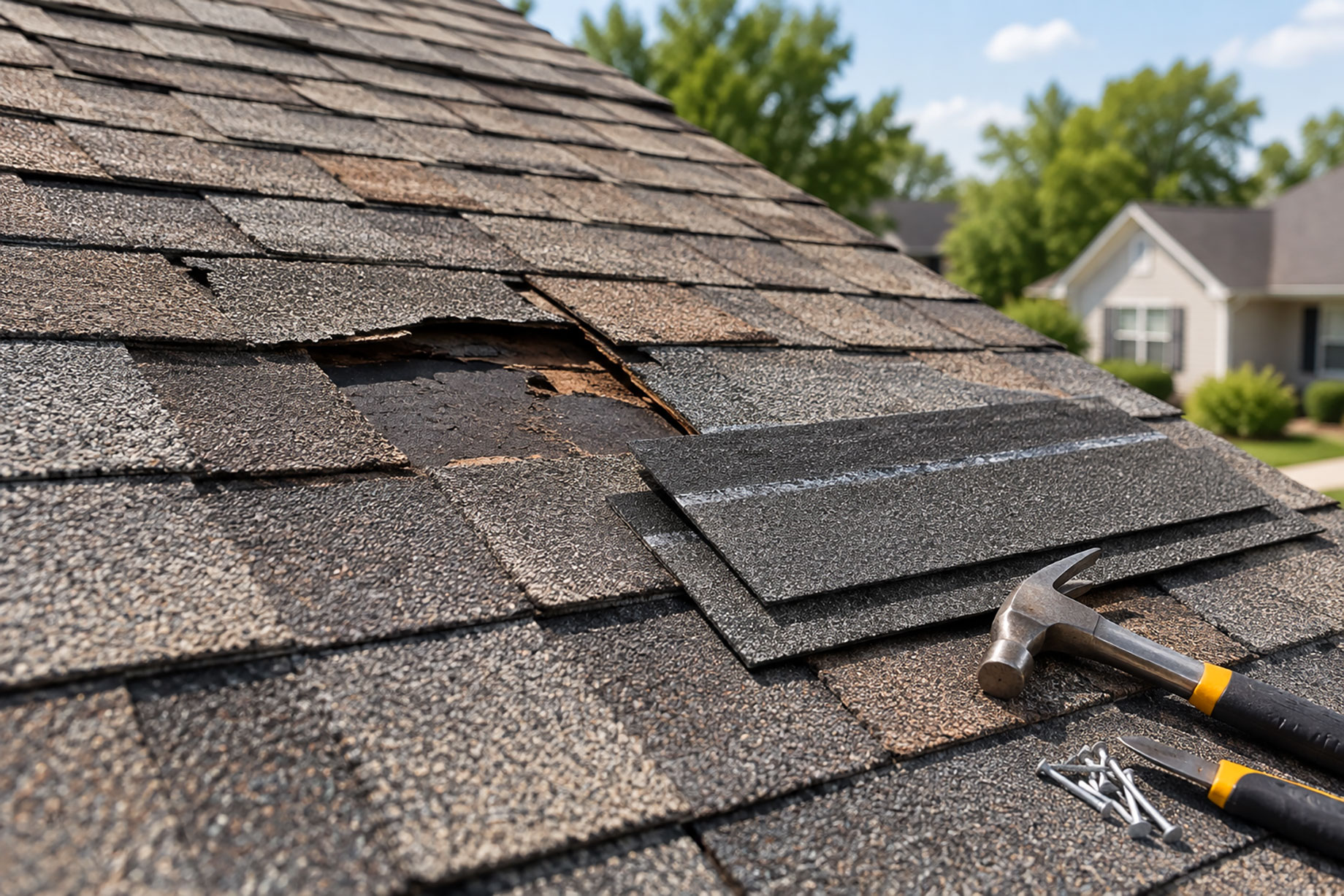
A roof repair can appear simple from the ground. If a storm tears away three shingles, it seems reasonable to assume that three new shingles can be installed and the problem is solved. In some cases, that is exactly what happens. In others, the visible damage is only one part of the repair.
Shingles are installed as an overlapping system rather than as independent pieces. Their size, exposure, fastening pattern, seal strips, thickness, and condition all affect how they work with the shingles around them. A replacement that looks close enough in color may still fit poorly or require disturbing a larger section of older roofing.
Before treating a small damaged area as an automatic spot repair, it helps to understand what makes one shingle compatible with another and why the condition of the surrounding roof matters just as much as the missing piece.
A Similar Color Does Not Mean Two Shingles Are the Same
Color is usually the first thing homeowners notice when replacement shingles are discussed. It is also only one part of compatibility.
Two shingles can look almost identical from several feet away while having different dimensions or construction.
Differences may include:
- Overall shingle length
- Shingle width
- Exposure after installation
- Thickness
- Tab or architectural profile
- Nail placement area
- Seal-strip location
- Edge shape
These details matter because shingles are installed in courses that overlap in a specific pattern.
If a replacement product is slightly taller or shorter than the existing material, it may not line up correctly with neighboring courses. A different profile can also make the repaired section sit differently against the surrounding roof.
That does not mean every replacement needs to be identical down to the smallest manufacturing detail. It does mean physical compatibility should be checked rather than judging the material by color alone.
Existing Shingles Change as They Age
A bundle of shingles stored indoors looks very different from material that has spent years exposed to weather.
Sunlight can gradually change the appearance of the surface. Granules wear over time. Dirt, pollen, organic material, and normal weather exposure can affect color as well.
That creates one of the most obvious challenges with spot repairs.
Even if a contractor finds the same original color, the new material may appear darker, cleaner, or more saturated than the shingles already on the roof.
The difference is often especially noticeable immediately after installation.
Appearance May Change With Time
Some visual contrast may become less obvious as the new material weathers, but homeowners should not assume it will disappear completely.
Roof orientation can also affect aging.
Shingles on one side of a house may receive more direct sunlight than those on another. That means even original materials installed at the same time can develop different appearances across the roof.
A technically sound repair therefore may not be visually invisible.
Older Shingles Can Become Harder to Disturb
Replacing a shingle requires more than sliding a new piece into an empty space.
The damaged shingle is normally held in place by fasteners and by overlapping material above it.
To remove it, nearby shingles may need to be carefully lifted so the fasteners can be reached.
That process is much easier when surrounding roofing remains flexible.
Older shingles may become more brittle. Lifting them can cause cracking, splitting, or other damage, especially if they are already worn.
A repair that begins with one damaged piece can therefore involve several neighboring shingles if the surrounding material cannot be manipulated safely.
Shingle Products Do Not Stay on the Market Forever
Roofing products change over time.
Manufacturers update product lines, alter colors, change profiles, revise dimensions, or stop producing specific shingles.
A homeowner may know the exact manufacturer and original color but still discover that the product used years earlier is no longer readily available.
That is one reason keeping roofing paperwork can be useful.
Product names, colors, manufacturer information, invoices, and photographs may help identify the original material later.
Even with those records, however, availability can change.
If the original shingle cannot be sourced, the repair may require selecting the closest suitable alternative and determining whether it can integrate properly with the existing roof.
The Seal Strip Has to Work With the Existing Courses
Asphalt shingles commonly include adhesive sealing areas intended to bond with neighboring material after installation.
These seals help the shingles resist lifting under normal conditions.
The location of the seal strip is part of the shingle’s design.
If the replacement material has different dimensions or a different sealing configuration, it may not interact with the surrounding courses in the same way as the original product.
That is another reason simply cutting a visually similar shingle to approximately the right size may not create a proper repair.
The finished piece needs to function within the existing roofing pattern, not just fill the visible opening.
Fasteners Are Hidden Beneath Overlapping Shingles
From the ground, a shingle may look like a single exposed piece.
In reality, part of it sits underneath the course above.
The fasteners holding it are usually concealed by this overlap.
Replacing the damaged material therefore requires access beneath surrounding shingles.
The roofer must work carefully enough to reach the fasteners without unnecessarily damaging neighboring pieces.
This concealed fastening system is one reason a small repair can involve a larger work area than homeowners initially expect.
Wind Damage Is Not Always Limited to Missing Shingles
A missing shingle provides obvious evidence that the roof experienced wind movement.
The shingles still present nearby may also deserve attention.
Wind can lift a shingle without tearing it completely away.
Depending on what occurred, the material may develop a crease, lose part of its seal, crack, or shift from its original position.
These changes may be harder to notice from the ground than a completely missing piece.
Someone evaluating the damage should therefore look at the surrounding courses instead of focusing only on the empty spot.
A repair that replaces what is visibly missing but ignores nearby damaged material may leave part of the affected area unresolved.
Creased Shingles May Look Normal After the Wind Stops
One particularly easy condition to overlook is a shingle that lifted and then settled back into place.
From a distance, it can appear intact.
Closer inspection may reveal a crease or damaged area created when the shingle bent upward.
Once the material has been physically damaged, simply pressing it flat does not restore its original condition.
This is why roof assessments after strong wind should consider movement and deformation, not only missing roofing.
Repairability Depends on the Condition Around the Damage
Before approving a small shingle repair, homeowners should consider the roofing around the affected section.
If the surrounding roof is relatively young, flexible, and in good condition, accessing the damaged area may be straightforward.
If the roof is heavily weathered, brittle, or already showing widespread deterioration, disturbing nearby shingles can become more difficult.
A Roofing Contractor in Huntsville, AL can evaluate whether the damaged section can be repaired cleanly and whether the surrounding roofing is suitable for the work required to access it.
The important question is not only, “How many shingles are missing?”
It is also, “What has to be moved, lifted, or removed to install the replacements correctly?”
A Visible Color Difference Does Not Automatically Mean the Repair Failed
Homeowners understandably want repaired roofing to blend into the rest of the house.
Appearance matters, particularly on highly visible roof slopes.
Still, visual matching and technical performance are separate issues.
A replacement shingle can shed water properly and be installed correctly while remaining slightly different in color from older surrounding material.
Conversely, a piece that matches almost perfectly in appearance could still be unsuitable if its dimensions or installation requirements do not fit the existing system.
Repair decisions should therefore consider both appearance and function without treating them as the same thing.
Trying to Hide the Repair Can Create Poorer Choices
There can be a temptation to alter materials excessively just to make a replacement look less noticeable.
Cutting, modifying, or placing shingles in ways not intended for the product may create a neater visual patch while compromising the way the roofing overlaps.
Function should come first.
If a close visual match is unavailable, it is better to understand that limitation before work begins than to force an incompatible product into the existing pattern.
Repeated Spot Repairs Can Change the Character of a Roof
One isolated repair is different from a roof that has been patched many times.
Over the years, a roof may collect several generations of replacement shingles.
One area may contain material from a wind repair. Another may have been changed after a flashing problem. A third section may have been disturbed during work around a vent.
Eventually, the roof can contain shingles of different ages and conditions.
This does not automatically mean the entire roof needs replacement. It does mean each future repair can become more complicated because the surrounding materials may no longer be consistent.
Multiple Repair Areas Can Make Diagnosis Harder
Repeated repairs can also make it difficult to understand the history of a problem.
Suppose one area contains newer shingles, roofing sealant, and older flashing beneath them.
If moisture appears nearby, determining which part of the assembly is responsible may take more investigation.
The visible patch may have been installed correctly but sit next to an older unresolved problem.
Homeowners should keep records of significant roof repairs whenever possible.
Photos showing the repaired area before and after work can be particularly useful later.
Ask What Product Will Be Used Before the Repair Begins
For a small shingle repair, a few straightforward questions can help homeowners understand what is being proposed.
Ask whether the original product is still available.
If it is not, ask how the replacement material compares with the existing shingles in size, profile, and installation requirements.
It is also reasonable to ask whether nearby shingles need to be lifted or removed to complete the work.
These questions are not about second-guessing installation techniques. They help clarify why a repair may involve more material than the number of visibly damaged shingles suggests.
Ask Whether the Visible Damage Is the Full Extent of the Problem
A missing shingle is easy to photograph.
Damage underneath it or beside it may not be.
Before the repair is finalized, the affected area should be examined for conditions such as exposed underlayment, damaged flashing, loosened neighboring shingles, or problems with the roof deck.
The repair should respond to what is actually present once the area is accessible.
That may still be a small, simple job. The point is to determine that based on the roof’s condition rather than assuming it from a ground-level view.
Small Repairs Deserve Careful Planning Too
A roof repair does not have to be large to require careful decisions.
Replacing only a few shingles involves matching more than color. The new material needs to work with the dimensions, overlap pattern, fasteners, seals, and condition of the surrounding roof.
Older roofing may be harder to lift. Original products may no longer be available. Wind may have affected shingles that never blew away. Even a technically correct repair may remain somewhat visible because new materials have not weathered alongside the rest of the roof.
These factors do not make spot repairs impractical. They simply explain why a repair should be evaluated as part of an existing roofing system rather than as a matter of filling an empty space.
The best small repair is one that accounts for what is already on the roof, minimizes unnecessary disturbance, and restores the damaged area without creating new weak points around it.
