You can make an experience convenient, beautiful, and flawlessly run, and still have people forget it by next week. That’s the brutal reality of modern customer experience.
The problem? Modern consumers are spoiled for choice. They’re used to fast service, polished spaces, and endless products competing for their attention. Another beautifully designed hotel lobby or neatly packaged corporate gift doesn’t necessarily mean much; not anymore.
So, what tends to stick, then? The detail that proves you paid attention to someone personally.
This is why personal touches are key to meaningful experiences. Not because slapping someone’s name on a product is magically more significant, but because a thoughtful detail gives people a reason to feel that an experience was made with them in mind.
Personalization: More Than Putting a Name on It
There is a difference between simple customization and true personalization. Customization alters the object, while personalization alters its relevance.
For example, slapping a corporate logo on 500 identical glass blocks isn’t personalizing anything; it’s just mass customization. True personalization looks at what the recipient actually accomplished, using branding deliberately rather than automatically.
And consumers absolutely notice the difference. McKinsey’s research found that 71% of consumers expect personalized interactions, while 76% become frustrated when they do not get them. Keep in mind, those numbers are several years old, but that makes the point stronger. Expectations rarely (if ever) move backward; in fact, customers have more options now, so their tolerance for generic experiences has only shrunk.
True Personalization Needs a Purpose
Before adding personal touches, ask one question: Why is this here? Because personalization needs a specific purpose.
If a restaurant remembers a frequent guest’s nut allergy, it eliminates friction. If a corporate retreat uses archival photos of actual company milestones instead of stock photos of smiling models in suits, the space feels earned.
And the same principle applies to décor and event design. A corporate anniversary, for instance, might incorporate an original company mark from its early years, important dates, or a timeline of major achievements. A private celebration, on the other hand, could use family photographs, meaningful objects, or a menu built around the guest of honor’s preferences.
But please—don’t try to personalize every napkin, chair back, and cocktail stir stick. One or two details with genuine relevance usually do more than a room drowning in monogrammed clutter.
Keepsakes That Outlast the Event
The party inevitably ends, but a physical object stays around. That makes physical recognition particularly useful for professional celebrations.
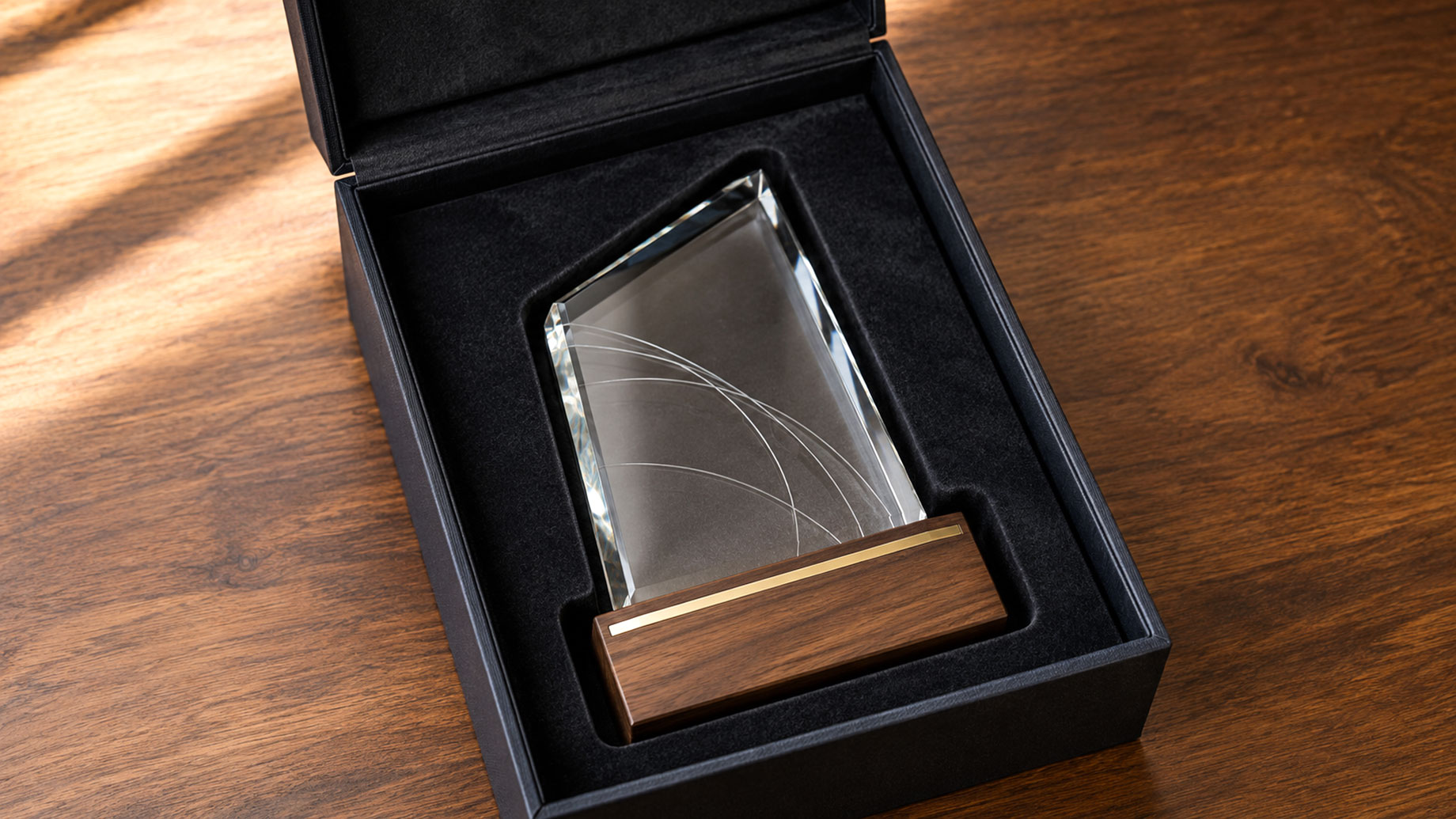
An employee will inevitably forget the exact phrasing of a praise-heavy speech three years down the road. But a well-designed award sitting on a shelf? It still points back to the specific achievement.
There’s a reason custom recognition has survived despite increasingly digital workplaces: a physical object gives an achievement somewhere to exist. But while a generic object says that someone received an award, a customized, personalized piece can identify the recipient, achievement, date, organization, or other meaningful detail.
Here’s an example of a good recognition platform: http://www.awards.com/. The company offers custom trophies, plaques, crystal, glass, acrylic, and other recognition pieces, with options such as engraving, full-color printing, 3D elements, custom shapes, and mixed materials. If you’re looking to get employee rewards, that’s the type of recognition you want because you can go as customized as you want.
Treat praise the same way because generic recognition, whether verbal or tangible, has a short shelf life. While “Outstanding contribution” sounds pleasant enough, it could go on almost anything. Recognition is far more credible when it identifies what the person actually did.
Hotels Have a Different Personalization Problem
Hospitality brands have access to a mountain of guest data, which has its benefits. But that doesn’t mean they should use all of it. Nobody wants a hotel to demonstrate that it has been keeping a suspiciously detailed file on their breakfast habits.
Great hospitality personalization usually means removing a subtle friction point:
- Remembering a preferred floor or quiet room location
- Silently handling a dietary requirement
- Streamlining check-in for a frequent traveler
McKinsey highlighted this exact tension: customers love feeling valued, but hyper-specific data usage easily crosses into feeling not only invasive, but creepy. So, if a detail would make a guest think, “How do they know that?” you’ve probably gone too far.
Aligning Personalization with Brand Identity
There is another mistake worth avoiding: making an experience personal to the customer while making it completely disconnected from the organization behind it. The best approach to recognition is to ensure that personalization and brand identity align effectively.
For example, a luxury hotel should not feel like a personalized scrapbook. A technology company doesn’t need to turn an awards ceremony into a sea of generic crystal trophies. But a design firm has more room to experiment with form, material, and presentation than a traditional financial institution might.
The point is, your brand and your personalization efforts need to speak the same language. The end result should feel tailored, but unmistakably yours; never like something pulled off a high-volume assembly line.
Start With the Moment, Not the Merchandise
If you are designing personalized experiences or meaningful celebrations, resist the temptation to begin with the thing you want to buy. Start with the moment itself.
Ask yourself:
- What are we actually celebrating?
- Who needs to feel recognized?
- What should people remember six months from now?
- Is this supposed to make someone feel welcomed, valued, or deeply understood?
Your answers will reveal where personalization actually belongs. Sometimes that will be a physical award. Other times it can be a tweaked menu, a room layout change, or simply leaving 90% of the experience alone so one meaningful detail can shine.
That’s the part many businesses miss. Because ultimately, personalization is not a competition to see who can add the most individual details; you can add plenty and still miss the point. No, true personalization is a way to show that you noticed the consumer. And when people have become used to experiences that are fast, polished, and increasingly automated, being genuinely noticed can be a powerful differentiator.
