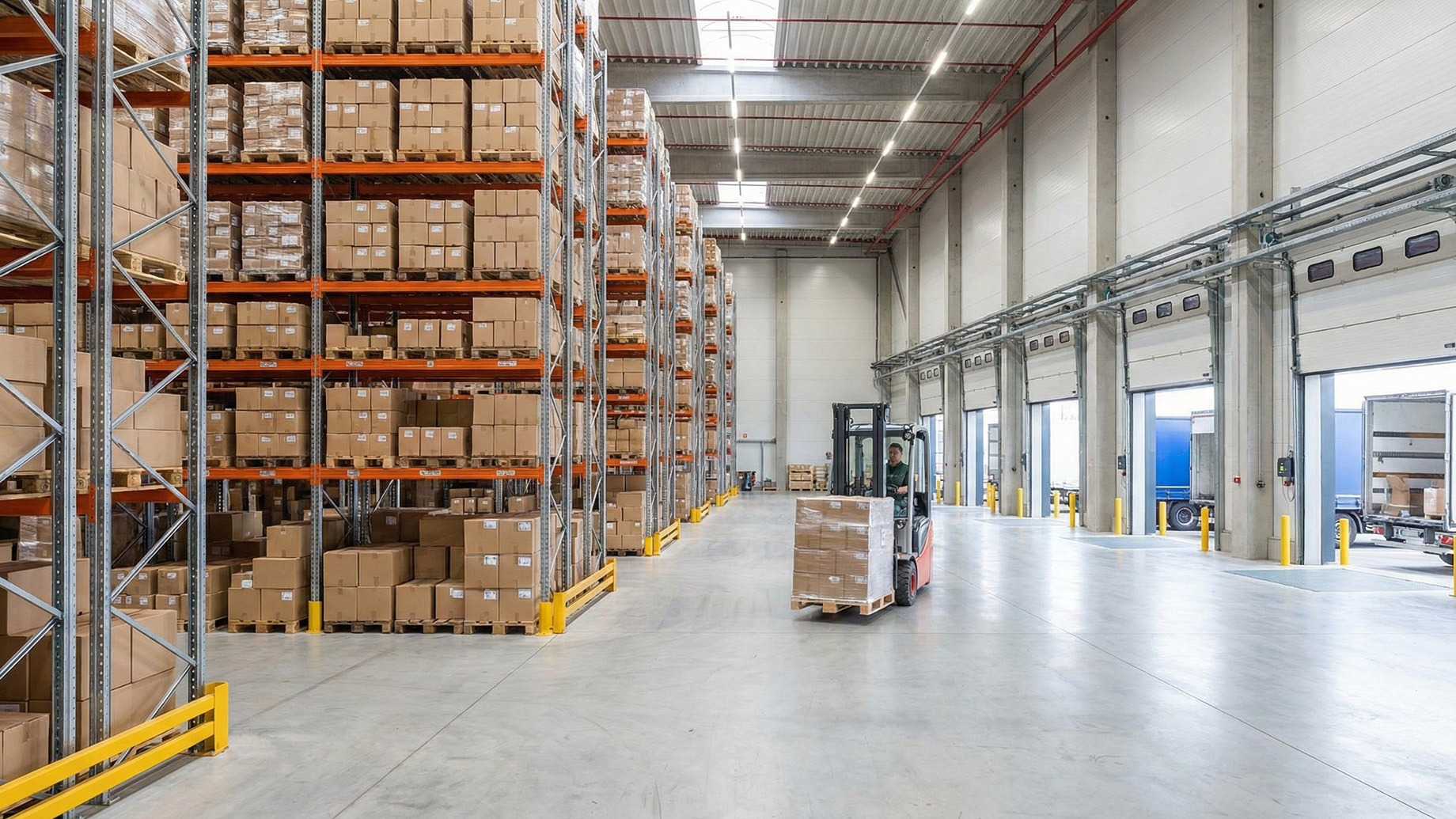
Most retail businesses start the same way when it comes to storage, they squeeze extra inventory into back rooms, rent a small storage unit down the street, or pile boxes in someone’s garage. It works fine at first. You can grab what you need in a few minutes, costs stay manageable, and the whole operation feels under control.
Then something shifts. Maybe orders double over a holiday season and never drop back down. Maybe you land a wholesale account that requires keeping three months of inventory on hand. Or maybe you just wake up one day and realize you’re paying for four different storage units across town, and nobody can find anything without calling three people and driving to two locations.
That’s usually when businesses realize their patchwork storage approach isn’t actually saving money anymore, it’s creating expensive problems that get worse every month.
The Breaking Point Nobody Plans For
There’s no magic number that tells you when standard storage stops working. For some businesses, it happens at $20,000 in monthly sales. For others, it’s closer to $100,000. The tipping point depends more on what you’re selling than how much.
Bulky products hit the wall faster. A furniture retailer or someone selling appliances can outgrow a 10×20 storage unit after landing just a few decent orders. The math gets brutal when you’re paying $200 a month for a space that only holds $8,000 worth of inventory. High-turnover items create different pressure, you need space where staff can actually work, not just cram boxes into every corner.
The costs pile up in ways that don’t show up on the storage unit invoice. Drive time becomes a real expense when someone spends six hours a week running between locations to pull orders. Products get damaged more often when they’re stacked haphazardly or moved repeatedly. Customer orders get delayed because the item they need is “somewhere” in unit number three, but nobody’s quite sure where.
Then there’s the opportunity cost. How many orders could the business handle if inventory was actually organized and accessible? That’s the question most owners don’t ask until they’ve already lost sales because they couldn’t guarantee shipping times.
What Changes with Proper Space
The difference between makeshift storage and actual operational space isn’t just square footage, it’s functionality. Standard storage units aren’t designed for business operations. They don’t have loading docks, proper lighting for inventory work, or electrical capacity for equipment. Most facilities explicitly prohibit running a business from the units, which means you’re technically working in violation of the lease agreement every time staff shows up to pack orders.
Real industrial facilities solve problems that storage units create. When businesses rent industrial space, they’re paying for infrastructure that actually supports operations, proper vehicle access, adequate power for tools and computers, space configured for workflow instead of just stacking boxes. The monthly cost looks higher on paper, but the operational efficiency usually makes up the difference faster than expected.
Here’s what actually matters: ceiling height that allows vertical storage systems, floor space where people can move pallets without playing Tetris, and utilities that support whatever equipment the operation needs. A 2,000-square-foot industrial unit often holds more usable inventory than 3,000 square feet spread across multiple storage locations, simply because the space is designed for access rather than just capacity.
The Middle Ground That Rarely Works Long-Term
Some businesses try splitting the difference, keeping a storage unit for overflow while running primary operations from a small commercial space. This creates its own headaches. Now there’s inventory in two places that need separate tracking systems. Popular items run out at the main location while backup stock sits in the storage unit. Staff time gets wasted shuttling between locations for items that should be in arm’s reach.
Shared warehouse space sounds appealing as a transitional solution. Several companies split the cost of a larger facility, each getting their own section. In practice, it works until it doesn’t. Boundaries get fuzzy, one company’s busy season impacts everyone’s access, and coordinating shipping schedules with other tenants becomes a daily negotiation.
The problem is that these middle-ground solutions often cost almost as much as proper industrial space while delivering maybe 60% of the functionality. Businesses end up paying for the compromise twice, once in rent, and again in lost efficiency.
Making the Numbers Actually Work
The financial justification for industrial space depends on honest accounting. What does the current storage situation actually cost when you include everything? Add up all the storage unit fees, time spent traveling between locations, orders delayed or lost due to inventory confusion, and products damaged from poor storage conditions.
Most businesses discover they’re already spending $1,500 to $2,500 monthly on their fragmented storage approach when all costs get included. Industrial space in that same price range suddenly doesn’t look expensive, it looks like getting more for similar money.
The real concern is the lease commitment. Storage units rent month-to-month, while industrial space typically requires one to three-year agreements. That’s genuinely scary for businesses worried about future revenue. But there’s a flip side that gets less attention: predictable occupancy costs for multiple years while the business grows into and beyond the space. No surprise rent increases, no scrambling for additional storage during busy seasons, no wondering if you’ll need to move everything in six months.
Signs the Timing Is Right
Certain situations make the decision clearer. When customer complaints about shipping delays become regular rather than occasional, that’s a sign current storage isn’t keeping up with demand. When restocking takes half a day because inventory is scattered across locations, operational drag is costing real money.
If the business is turning down wholesale opportunities because current storage can’t handle bulk inventory, that’s leaving significant revenue on the table. When employees spend more time moving and searching for products than actually fulfilling orders, labor costs are subsidizing an inadequate storage system.
The conversation often starts with “we’ll move to industrial space once we can afford it,” but the reality usually works in reverse. Businesses can often afford to grow once they move to industrial space, because the operational improvements create capacity that didn’t exist before. A facility that allows faster order fulfillment, better inventory management, and fewer shipping errors tends to pay for itself through increased sales and reduced waste.
The decision isn’t really about whether the business can afford industrial space, it’s about whether it can afford to keep limping along with a storage system that’s actively holding back growth. For most retail operations dealing with these problems, the answer becomes obvious once they actually map out what the current situation costs versus what proper space would enable.
