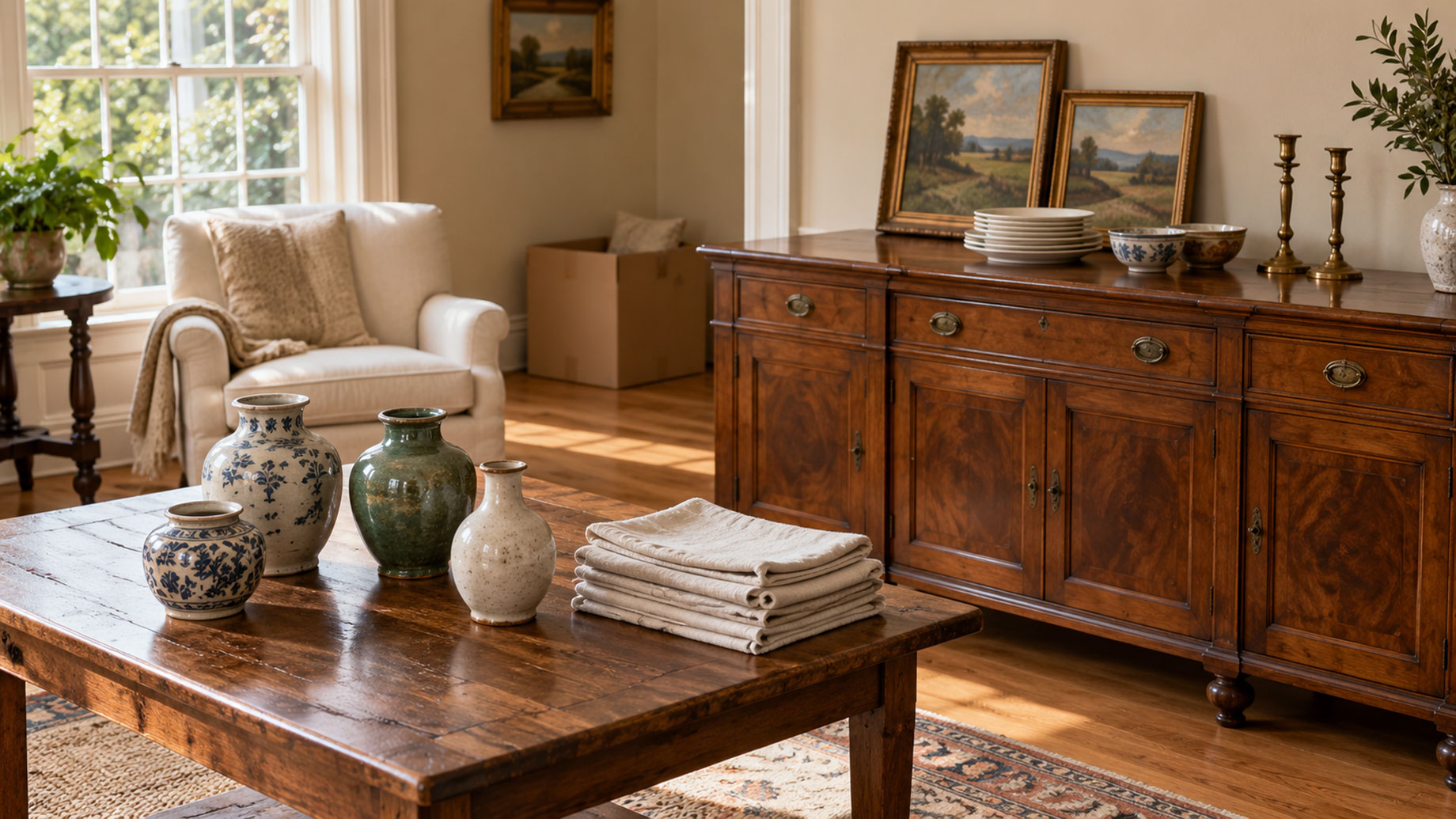
Downsizing or preparing for a major move can quickly become more complicated than expected when a home contains years or even decades of accumulated belongings.
Furniture, artwork, collectibles, household goods, tools, décor, and personal items all need to be sorted, moved, sold, donated, or discarded. For many families, the challenge is not simply deciding what to keep. It is figuring out how to deal with everything that will not be moving to the next home.
An estate sale can be an effective solution, but it is not the right choice in every situation. Understanding when it makes sense, what is involved, and when professional help is worthwhile can make the transition much easier.
When an Estate Sale Is a Good Fit
Estate sales are most useful when there is a significant amount of sellable property in one location.
They are especially common when:
- A homeowner is downsizing
- A family is settling an estate
- Someone is moving to a smaller home
- A household is relocating long-distance
- A property needs to be emptied before sale
- There are large amounts of furniture, collectibles, or household goods
The value of an estate sale is efficiency.
Instead of selling dozens or hundreds of items individually, a large portion of the home’s contents can be organized and offered during a single event.
For someone facing a tight moving schedule, that can be far more practical than listing every item online.
Estate Sale vs. Selling Items Individually
Online marketplaces can work well when there are only a few items to sell.
A homeowner might easily list a sofa, dining set, or television individually. But the process becomes much more demanding when there are multiple rooms of furniture and smaller household items.
Individual selling often requires:
- Taking photographs
- Writing listings
- Answering messages
- Negotiating prices
- Scheduling pickups
- Dealing with cancellations
- Managing payments
That can quickly become a full-time project.
An estate sale concentrates the process into a shorter period and allows many different types of buyers to shop at once.
Decide What Has Real Resale Value
Not everything in a home is equally suitable for an estate sale.
Items that often attract buyers include:
- Quality furniture
- Antiques
- Collectibles
- Artwork
- Jewelry
- Tools
- Kitchenware
- Vintage décor
- Outdoor furniture
- Electronics in good condition
Condition matters, but so does demand.
An item may have been expensive when purchased and still have limited resale value today. On the other hand, older furniture or collectibles may be more desirable than the owner expects.
This is one reason an objective evaluation can be useful before deciding what should be sold, donated, or kept.
When Professional Help Becomes Worthwhile
Managing an estate sale involves much more than opening the doors and putting prices on furniture.
Large sales may require inventorying the contents, researching values, organizing rooms, pricing hundreds of items, advertising the event, handling buyers, collecting payments, and managing anything left after the sale.
Families dealing with a large property or a short timeline may benefit from professional estate sale assistance when the amount of work becomes difficult to manage alone.
Professional support can also be useful when family members live out of state or when there is uncertainty about how certain items should be priced.
The goal is not simply to sell as much as possible. It is to manage the entire process efficiently while avoiding unnecessary stress or rushed decisions.
Timing Matters During a Home Sale
If the property itself is also being sold, timing becomes particularly important.
Too much furniture and clutter can make a home feel smaller and make it more difficult for prospective buyers to appreciate the space.
At the same time, completely emptying the home too early may not always be ideal for staging.
Homeowners should coordinate the estate sale with:
- Listing preparation
- Photography
- Repairs
- Cleaning
- Staging
- Moving dates
- Closing deadlines
In some cases, the best approach is to remove excess belongings before the property is listed while keeping enough furniture to help define the rooms.
Pricing Should Be Based on the Current Market
Estate-sale pricing should reflect what buyers are willing to pay today rather than what an item originally cost.
That can sometimes be difficult for owners who have emotional attachments to belongings.
A dining set purchased for thousands of dollars decades ago may have a very different resale value now. At the same time, vintage furniture, collectibles, or unusual items may attract strong demand.
Successful pricing usually balances two goals:
- Receiving a reasonable return
- Selling enough merchandise to substantially clear the property
Pricing everything too aggressively can leave the home full of unsold items at the end of the sale.
Prepare the Home for Buyers
An organized sale is easier for buyers to navigate and can make items appear more attractive.
Furniture should be arranged so people can move through rooms safely. Smaller objects can be grouped by category, and valuable items may require additional supervision.
Personal papers, medications, financial records, photographs, and anything that is not for sale should be removed or secured before buyers enter the home.
It is also important to consider parking, entry and exit points, and areas of the property that should remain inaccessible.
Have a Plan for Unsold Items
Very few estate sales sell absolutely everything.
Before the sale begins, decide what will happen to items that remain.
Common options include:
- Consignment
- Donation
- Family distribution
- Online resale
- Recycling
- Disposal
Higher-quality furniture may be appropriate for consignment rather than immediate disposal.
Having a plan in place prevents families from facing another round of difficult decisions immediately after the sale ends.
Consider the Emotional Side of Downsizing
Selling household belongings can be emotional, particularly when a family has lived in the same home for many years.
It can help to separate items with genuine sentimental value before beginning the sale process.
Photographs, family records, heirlooms, and meaningful personal objects should be reviewed carefully rather than mixed into the general inventory.
Families may also want to give relatives an opportunity to select important items before the sale.
Once those decisions have been made, it is often easier to approach the remaining household contents more practically.
Focus on the Larger Transition
An estate sale is ultimately a tool for simplifying a larger transition.
The objective may be to prepare a property for sale, make a move more manageable, settle an estate, or reduce the amount of furniture going into a smaller home.
The best approach depends on the amount and type of property being sold, the available timeline, and how much work the family wants to manage themselves.
For households with substantial furniture and belongings, a well-organized estate sale can turn an overwhelming clearing process into a structured plan. When it is coordinated carefully with the move or home sale, it can save time, reduce clutter, and make the next stage of the transition much easier.
