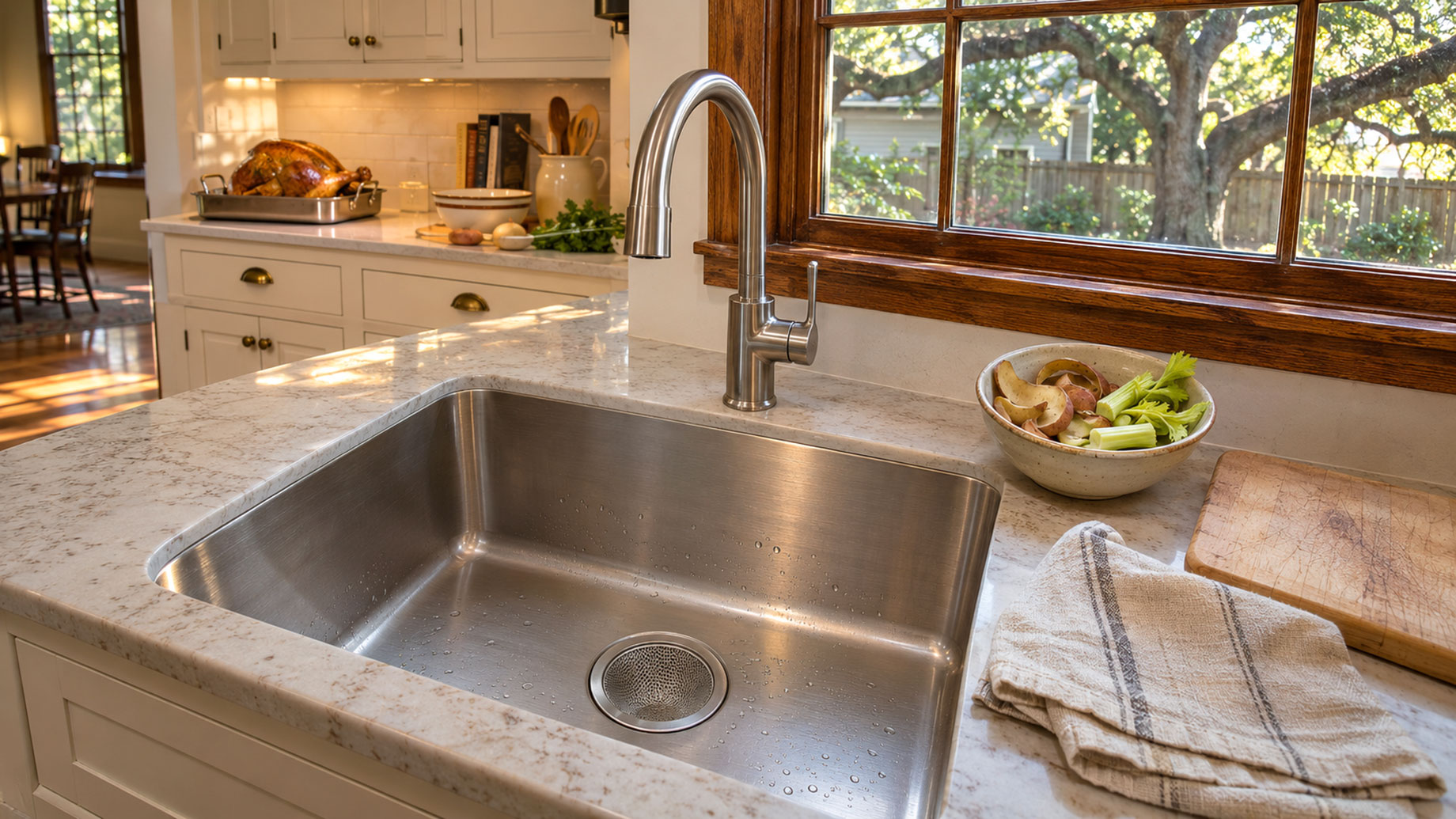
Thanksgiving is the busiest cooking day of the year, and in Houston, that extra kitchen activity puts real stress on pipes, drains, and fixtures that may already be struggling with the city’s hard water, aging infrastructure, and heavy holiday traffic. Whether you rent an apartment near the Galleria or own a home in the Heights or Katy, a little plumbing awareness before the turkey goes in the oven can save you from a ruined holiday and a costly repair bill. These kitchen plumbing tips for Thanksgiving are built around the specific conditions Houston kitchens face: humidity, grease buildup, older plumbing in many neighborhoods, and a citywide sewer system that gets overwhelmed every November.
Why Houston Kitchens Are More Vulnerable During the Holidays
Houston kitchens face more plumbing stress during Thanksgiving because of the city’s hard water, older pipe systems in many neighborhoods, and the sheer volume of grease, starch, and food waste that goes down the drain in a single day. Add in humidity that softens certain pipe fittings and a municipal sewer system already strained by citywide cooking activity, and you have the perfect setup for clogs, backups, and slow drains right when you need your kitchen the most.
Many homes in neighborhoods like Oak Forest, Garden Oaks, and parts of the East End still have original plumbing from decades ago, meaning narrower pipes that clog more easily. Renters in newer high-rises downtown or in Midtown may have modern plumbing, but shared building lines mean one neighbor’s grease dump can back up an entire stack. Either way, the risk is real, and it spikes hard every year around the fourth Thursday in November.
What Renters Should Know Before Hosting or Cooking a Big Meal
Renters should know that they are responsible for what goes down the drain, even if the pipes themselves belong to the landlord or property management company. A clog caused by grease, bones, or fibrous vegetable scraps is typically billed back to the tenant, so understanding what your kitchen can and cannot handle protects both your holiday and your wallet.
Before you start cooking, locate your water shut-off valve under the kitchen sink and know how to use it. If a line backs up mid-cooking, being able to stop the flow of water yourself buys time before you have to call for help. Renters in older apartment complexes around neighborhoods like Montrose or the Museum District, where buildings may be 30 to 50 years old, should be especially cautious since those shared lines were not designed for modern volumes of garbage disposal use.
If you smell sewage, notice gurgling in the drain, or see water backing up into the tub when you run the kitchen sink, stop using the kitchen plumbing immediately and contact your property manager. In older Houston buildings, this is often a sign of a larger blockage in a shared line, not just your unit.
What Homeowners Should Check Before Thanksgiving Week
Homeowners should check their garbage disposal, drain lines, and water heater capacity before Thanksgiving week to avoid a mid-meal plumbing failure. A quick inspection takes less than fifteen minutes and can catch small issues before they become holiday emergencies.
Run hot water through your kitchen sink for a minute and listen for unusual sounds. Gurgling, slow drainage, or a faint sewage smell are early warning signs common in Houston homes with cast iron or clay pipes, especially in neighborhoods built before the 1980s. Clay and cast iron pipes are more prone to root intrusion from Houston’s many mature trees, and Thanksgiving’s heavy water usage can be the final straw that reveals a slow building blockage.
Check your water heater too. A full Thanksgiving Day of dishwashing, extra hand washing, and holiday guests showering can tax a water heater that is already near the end of its life. If your water heater is more than ten years old, consider having it checked before the holiday rush rather than during it.
The Foods That Cause the Most Thanksgiving Plumbing Problems
The foods that cause the most Thanksgiving plumbing problems are grease and fat drippings, potato peels and starch, celery and fibrous vegetable scraps, pumpkin pulp, and bones, since all of these either congeal in pipes or fail to break down properly in a garbage disposal. Understanding this list before cooking starts is one of the simplest ways to protect your kitchen all day.
Turkey fat and bacon grease seem liquid when hot, but they solidify as they cool and travel through your pipes, coating the interior walls and narrowing the passage for everything that follows. Houston’s hard water already leaves mineral buildup inside older pipes, so added grease accelerates clogs faster than it would in a home with newer plumbing.
Potato peels, onion skins, and the fibrous strings from celery wrap around disposal blades and drain traps instead of breaking apart. Pumpkin pulp, with its thick and stringy texture, behaves similarly. None of these should go into a garbage disposal, no matter how powerful the unit seems.
Local Conditions That Make Houston Pipes More Prone to Clogs
Local conditions that make Houston pipes more prone to clogs include hard water mineral buildup, humidity-related corrosion, mature tree root systems invading older sewer lines, and a citywide combined sewer system that gets stressed by the surge of holiday cooking. These factors combine to make the week of Thanksgiving one of the highest call volume periods of the year for area plumbers.
Houston’s water supply carries a moderate to high mineral content, and over the years that mineral buildup narrows pipe diameter from the inside out, particularly in homes built before copper and PEX piping became standard. In neighborhoods like Spring Branch, Meyerland, and older sections of Pasadena, many homes still run on original plumbing infrastructure that was never designed for the garbage disposal-heavy habits of modern Thanksgiving cooking.
Humidity also plays a quieter role. Houston’s climate accelerates corrosion in certain metal fittings and can loosen slip joint connections under sinks that were tightened years ago and never revisited.
Warning Signs You Should Not Ignore on Thanksgiving Day
Warning signs you should not ignore on Thanksgiving Day include slow draining sinks, gurgling sounds from the drain or nearby fixtures, a sewage odor near the kitchen, water backing up into another fixture when you run the sink, and a garbage disposal that hums without spinning. Catching these early can be the difference between a quick fix and a flooded kitchen during dinner.
A sink that drains slowly even after running the disposal usually signals a developing clog further down the line rather than a problem at the drain opening itself. Gurgling from a nearby toilet or tub when the kitchen sink runs often means air is trapped in the pipe because of a partial blockage, a very common issue in Houston homes with older vent stacks.
If water backs up into the dishwasher or a nearby bathroom sink when you run the kitchen faucet, that is a sign of a main line blockage, not a simple local clog, and it typically requires professional attention rather than a home remedy.
Simple Prevention Steps Before the Cooking Begins
Simple prevention steps before the cooking begins include running hot water before and after disposal use, keeping a grease container for cooking fat, using a sink strainer to catch food scraps, and avoiding the disposal entirely for fibrous or starchy foods. These habits take almost no extra time and dramatically reduce your risk of a clog on the busiest cooking day of the year.
Keep an old coffee can or jar near the stove for grease and fat. Once it cools and solidifies, throw it in the trash rather than ever letting it reach the sink. Running cold water, not hot, while the disposal is on helps solidify small bits of fat so they get chopped and flushed through rather than coating the pipe walls.
A simple mesh sink strainer catches peels, skins, and scraps before they ever reach the drain. It is one of the cheapest and most effective tools a Houston kitchen can have during the holidays.
When a Problem Calls for a Professional Instead of a DIY Fix
A problem calls for a professional instead of a DIY fix when you notice sewage odor, repeated backups after clearing a clog yourself, multiple fixtures affected at once, or any sign of water pooling around the base of appliances. These situations usually point to a blockage deeper in the system that a plunger or drain cleaner cannot reach.
Chemical drain cleaners can feel like an easy solution, but they are particularly risky in older Houston homes with aging pipe materials, since the harsh chemicals can corrode weakened pipe walls and turn a simple clog into a leak. If a plunger and hot water do not clear a slow drain within a few tries, it is safer to stop and call a licensed plumber than to keep pouring chemicals down the line.
Multiple slow drains throughout the house, especially combined with gurgling toilets, usually indicate a main line issue rather than an isolated kitchen clog, and this is not something a home remedy will fix.
What To Do If a Clog Happens Mid-Meal
What to do if a clog happens mid-meal is to stop running water immediately, shut off the disposal, and assess whether it is a single fixture issue or something affecting multiple drains before attempting any fix. Acting fast and calmly prevents a small clog from becoming a bigger mess while guests are in the house.
If only the kitchen sink is affected, try a sink plunger designed for flat surfaces rather than a toilet plunger, and avoid chemical cleaners given the stress already on the system from a full day of cooking. If the problem involves more than one fixture, turn off the main water supply if needed and call a plumber who offers holiday emergency service, since many Houston area companies do staff crews specifically for the Thanksgiving rush.
Frequently Asked Questions
Can I put turkey grease down the garbage disposal if I run hot water with it?
No. Hot water keeps grease liquid long enough to travel further into the pipe before it cools and solidifies, often creating a clog farther from the sink that is harder to clear. Always pour grease into a separate container and throw it in the trash once it cools.
Is it safe to use a chemical drain cleaner before Thanksgiving to prevent clogs?
It is not recommended, especially in homes with older pipes common throughout Houston. These chemicals can corrode aging pipe materials and create leaks. A better option is a mechanical drain snake or a baking soda and hot water flush.
How do I know if my clog is in my own line or a shared building line?
If only your kitchen sink is affected and nearby units or fixtures are unaffected, it is likely isolated to your unit. If neighbors report similar issues around the same time, or water backs up from unrelated fixtures, it may be a shared line problem that requires the property manager or building maintenance.
Should I run my garbage disposal more or less during the holidays?
Use it less for heavy or fibrous scraps and more conservatively overall. Run it with cold water for short bursts rather than continuously, and avoid feeding it large volumes of waste at once, since Thanksgiving produces far more scraps than a typical day.
What is the fastest way to tell if I have a serious plumbing issue versus a minor clog?
A minor clog typically affects one fixture and responds to plunging or hot water. A serious issue usually involves multiple fixtures, gurgling sounds, sewage odor, or water backing up into unrelated drains, all signs that point to a main line problem needing professional attention.
Are older Houston homes more likely to have Thanksgiving plumbing issues?
Yes. Homes built before the 1980s often still have original cast iron, clay, or galvanized pipe materials that are narrower and more prone to root intrusion and mineral buildup than modern copper or PEX systems, making them more vulnerable during high-usage days like Thanksgiving.
A Little Preparation Goes a Long Way This Thanksgiving
Thanksgiving puts a unique kind of pressure on kitchen plumbing, and Houston’s combination of hard water, humidity, mature tree roots, and older pipe infrastructure in many neighborhoods makes that pressure even more pronounced. Whether you are renting a unit in a decades-old building or hosting a full house in a home you own, the same basic habits apply: keep grease out of the drain, avoid fibrous scraps in the disposal, and know the early warning signs of a developing clog. A few minutes of preparation before the cooking begins can mean the difference between a smooth holiday and a frustrating call for emergency plumbing help in the middle of dinner.
