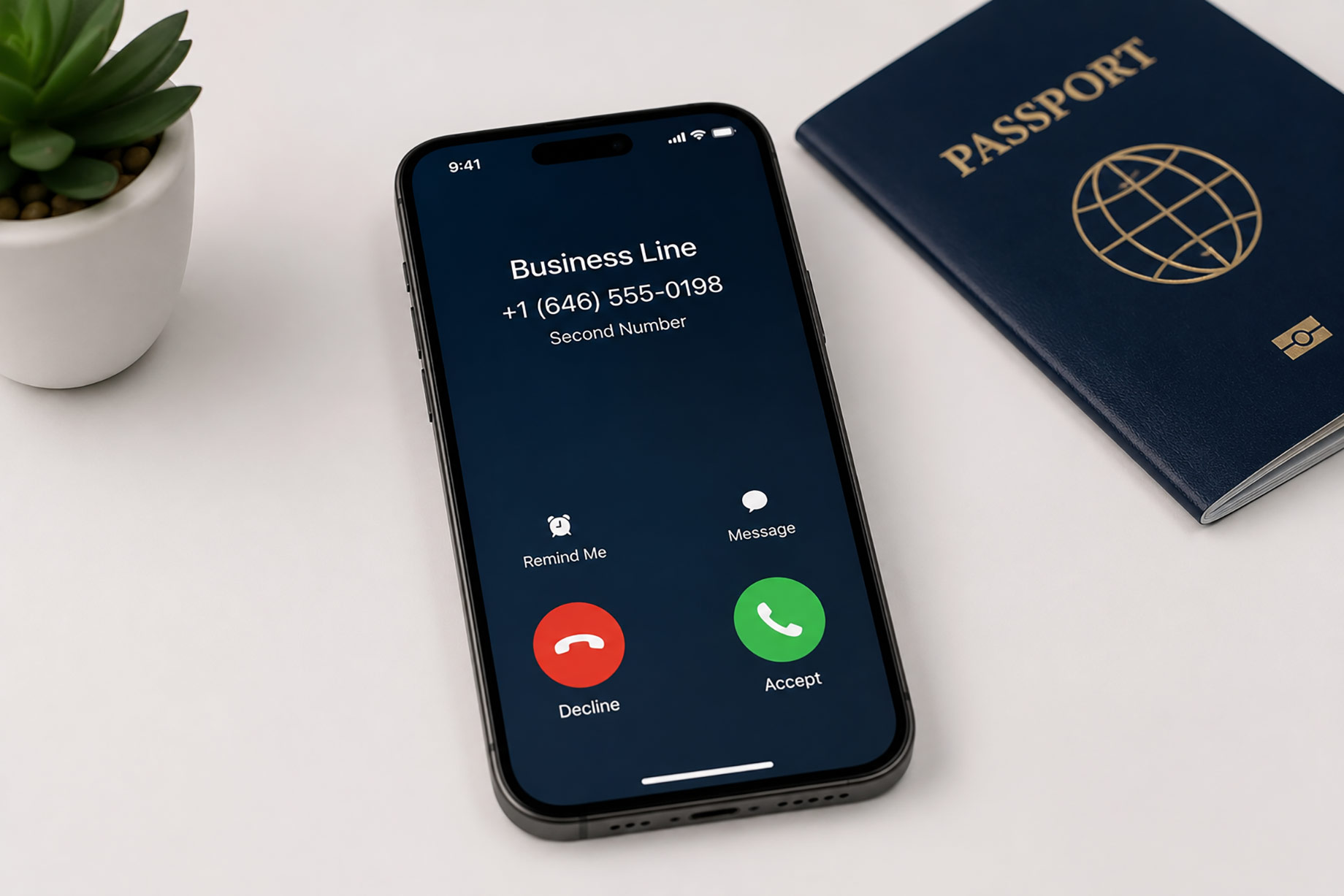
Remote workers and frequent travelers often need to stay reachable without publishing a personal number in every country or paying for another phone.
A second number can separate clients from private contacts, but users should understand connectivity, verification, roaming, and emergency limits.
Define the Use Case
List whether the number is needed for:
- Client calls
- Business texts
- Local contacts
- Bookings
- Delivery
- Marketplace accounts
- Temporary projects
- Team access
Banking and platform verification may reject some virtual numbers. Confirm acceptance before depending on the number.
Choose the Region
A local number can be easier for clients in a target country to recognize and call.
Online guides explaining how to buy a phone number online can help users understand setup and number options.
Check residency or identity requirements, availability, and ongoing renewal.
Separate Work and Personal Life
Use the second number on websites, proposals, booking tools, and business profiles.
Keep the personal number for family, banking, recovery, and private accounts.
Set different ringtones or notifications so the purpose of each call is clear.
Set Working Hours Across Time Zones
Publish the time zone and response hours. Use voicemail outside those hours.
Clients should know when to expect a reply. Avoid creating an expectation of permanent availability because the worker travels.
Use calendar blocks or focus modes to silence work alerts during rest.
Check Connectivity
App-based numbers may depend on Wi-Fi or mobile data. Test call quality before an important trip.
Understand whether calls can forward to a carrier line and what that costs.
Hotel and public Wi-Fi may block or degrade voice traffic. Keep another communication route such as email.
Plan for SIM Changes
Travelers may use local SIMs or eSIMs. Confirm that changing the data connection does not remove app access or recovery.
Protect the account email and multifactor settings. Avoid SMS-only recovery tied to a temporary travel SIM.
Control Costs
Review activation, monthly fee, incoming calls, outgoing calls, texts, international rates, and renewal.
Some plans include one region but charge more elsewhere.
Compare cost with carrier roaming and a local physical SIM.
Protect Privacy
Use a strong password and multifactor authentication. Do not share login details.
Avoid discussing passport, payment-card, or account-recovery information in ordinary texts.
Public business numbers may attract spam. Use filtering while allowing legitimate unknown callers.
Understand Emergency Limits
Virtual or app-based numbers may not support emergency calling or location in the same way as a local mobile line.
Know the emergency number and local calling method for every destination.
Keep hotel, employer, and travel contacts available offline.
Compare Apps
Lists of the best second phone number apps can help compare features, but users should test reliability, regional support, privacy, and number retention.
Check what happens when the subscription expires and whether the number can be transferred.
Prepare for Device Loss
Enable device lock and remote wipe. Keep recovery codes securely outside the phone.
Know how to sign out other sessions and contact support.
Do not make one phone the only place where itinerary and emergency contacts exist.
Keep Records Organized
Record important business outcomes in the client system rather than only in call history.
Separate personal and work contacts. Label international numbers with company and country.
Follow applicable rules for call recording and data retention.
Test Before Departure
Call and text from another device. Test voicemail, caller ID, notifications, forwarding, and weak network conditions.
Update the app and account recovery before travel, not during a client emergency.
Set Up a Professional Identity
Record a short voicemail greeting that states your name, business, working hours, and expected response time. Use the same number in your email signature, booking page, and client documents so contacts know which channel is official. If the service supports separate profiles, keep the work name and image consistent.
Test caller ID in the countries where important contacts live. Some networks display numbers differently or label unfamiliar calls as spam. Ask a trusted contact to confirm how your call appears before using the number for a major meeting or sales campaign.
Check Long-Term Number Control
Before building business relationships around a number, review renewal rules, inactivity limits, identity requirements, and whether the number can be transferred. A low introductory price is less useful if the number disappears after a missed payment or cannot move to another provider.
Keep account recovery details current and store purchase records securely. If regulations require identity verification, complete it before travel. Also maintain a communication fallback so clients can still reach you if the service temporarily suspends the number.
Strengthen Travel Security
Avoid managing sensitive calls or account settings over unknown public Wi-Fi unless you use a trusted secure connection. Lock the phone, hide message previews, enable remote-device controls, and keep the operating system and calling app updated.
Be cautious with verification codes. A second number may be suitable for everyday contact but not accepted by every bank or government service. Keep critical account recovery methods separate and tested. Good security ensures the convenience of a second number does not create a new point of failure.
Conclusion
A second number helps travelers and remote workers remain reachable while protecting personal contact information.
Choose the region and features carefully, plan for data connectivity and device loss, and understand emergency limitations. With a tested setup, one phone can support a clearer boundary across countries and time zones.
