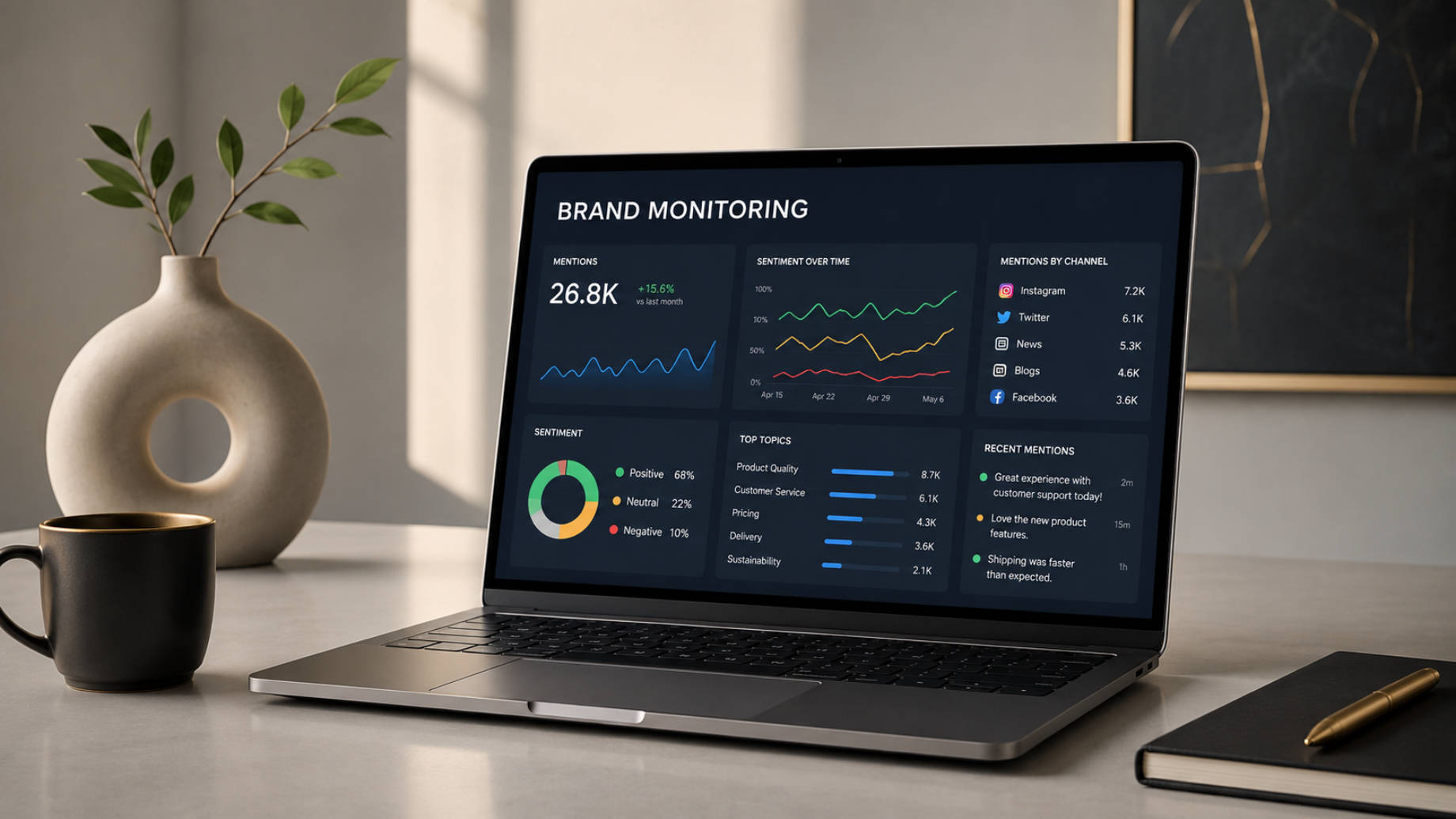
Brand monitoring is the practice of tracking a company and its mentions on various public platforms such as news media, blogs, online forums, and social media. By monitoring a company’s mentions, businesses can understand customers’ perceptions of their brand and make necessary changes to their marketing and communication strategies. In today’s digital-first world, where conversations about a company happen every moment of every day on multiple platforms, brand monitoring is an important practice for businesses of any size.
A business that practices brand monitoring can stay at the forefront of emerging trends, address customer issues, and enhance customer engagement. With the help of modern brand monitoring tools, businesses can convert conversations into meaningful insights to improve marketing and communication strategies.
What is brand monitoring?
Brand monitoring is the practice of tracking a company and its mentions on various public platforms. By monitoring a company, businesses can understand customers’ perceptions of their brand. Brand monitoring is an important practice used by marketing and communications teams to assess how customers react to a company’s marketing communications, products, services, and reputation.
A business can monitor its mentions on various platforms such as television broadcasts, websites, blogs, online news media, magazines, podcasts, and social media. By monitoring its mentions on multiple platforms, a business can enhance its marketing and communication campaigns and build a stronger brand presence.
Brand monitoring is essential for businesses as it helps them gain insights into their marketing and communication campaigns and improve brand presence and customer relationships.
Why brand monitoring is important
Brand monitoring is important because it helps businesses gain insights into their marketing and communication campaigns and strengthen their brand presence and customer relationships.
Gain Insight Into Brand Awareness
Brand monitoring allows marketers to determine the number of times the brand name is mentioned across different platforms. This helps companies assess the level of awareness of their brand name, logo, and products among the target audience.
Listen to Customer Feedback
Consumers express their opinions about different brands on the internet. By monitoring this, companies can identify what customers like, dislike, and want to see in the company’s products or services. By responding to feedback, customers feel that the company values their opinions and listens to their views.
Understand the Impact of Marketing Campaigns
Brand monitoring allows marketers to evaluate the impact of marketing campaigns on the target audience. By analyzing conversations, marketers can determine whether the campaigns are working effectively for the company.
Gather Information About the Target Audience
Brand monitoring helps marketers gather information about the target audience, including their preferences, dislikes, and interests. This information enables marketers to create campaigns that align with customer needs.
Identify Potential Risks
Brand monitoring allows companies to identify potential risks that might affect the business in the near future.
Top 10 brand monitoring tools in 2026
As the number of online conversations increases, companies are using brand monitoring tools to track discussions about their brand and analyze the collected data. The following are the top 10 brand monitoring tools used by companies in 2026.
1. Sprinklr Insights
Best for: Global brands managing large-scale brand reputation and risk
Sprinklr Insights is a unified consumer intelligence platform designed for enterprises that need to monitor brand perception across millions of conversations in real time. It goes beyond traditional keyword tracking by combining AI-driven text and visual listening to detect emerging risks, sentiment shifts, and brand misuse across social media, forums, and digital channels.
2. Meltwater
Best for: Global companies managing large quantities of media data.
Meltwater offers extensive media coverage, including digital media, online news, social media, blogs, and broadcast media. The platform allows companies to monitor their brand presence across multiple countries.
It provides analytics for evaluating media performance, brand visibility, and campaign effectiveness.
3. CisionOne
Best for: Companies with corporate communications and PR teams.
Among the best brand monitoring tools, CisionOne stands out for its media monitoring and reputation management solutions. It helps companies detect emerging issues and monitor reputation across digital and traditional media.
It is widely used by PR teams, integrating media monitoring with their communication and outreach strategies.
4. Wizikey
Best for: Companies with PR and corporate communications teams.
Wizikey offers media monitoring across platforms, including news, print, broadcast, and digital media. It tracks coverage across hundreds of thousands of media sources, providing structured reports to analyze brand visibility.
Its media intelligence features help organizations analyze narrative changes and assess media presence.
5. Brandwatch
Ideal for: Organizations focused on social media and consumer sentiment analysis.
Brandwatch is recognized for its robust social listening and consumer intelligence capabilities. It analyzes conversations from millions of online sources to detect trends, customer opinions, and emerging topics.
Organizations can use Brandwatch to understand audience behavior and how online conversations impact their brand.
6. Talkwalker
Ideal for: Marketing teams analyzing digital trends.
Talkwalker tracks conversations across social media, online news, and other digital platforms. Its AI-powered analytics help detect trending topics and analyze narrative changes over time.
The platform also includes image recognition to detect brand logos within online images and videos.
7. Muck Rack
Ideal for: Organizations maintaining media relations and communications.
Muck Rack combines media monitoring and journalist database features. It enables communications teams to track media mentions while managing media relations.
The platform also helps analyze campaign performance and media metrics.
8. Notified
Ideal for: Organizations managing public relations and investor communications.
Notified allows organizations to track media mentions and investor communications. Its dashboard feature enables businesses to monitor both media and investor engagement.
9. Brand24
Ideal for: Startups and small businesses.
Brand24 offers easy-to-use monitoring for social media, blogs, online news, and websites. It includes sentiment analysis to help businesses track brand perception.
The platform’s simplicity makes it ideal for businesses starting their brand monitoring journey.
10. Mention
Best for: Businesses requiring real-time alerts for brand mentions.
Mention allows businesses to monitor their brands on social media and the web in real time. It sends alerts whenever a new mention occurs online, helping businesses stay updated on brand-related discussions.
It is widely used by marketing teams seeking a simple, efficient platform for tracking brand mentions.
Conclusion
Brand monitoring has become crucial for businesses in the modern marketing era. With customers engaging with brands daily on multiple digital platforms, organizations must monitor discussions about their brands.
Modern brand monitoring platforms enable businesses to track customer sentiment, measure marketing campaigns, detect emerging trends, and manage brands effectively. Platforms such as Sprinklr, Meltwater, Brandwatch, and Talkwalker help businesses understand customer sentiments toward their brands.
In 2026, businesses investing in efficient brand monitoring tools are better positioned to protect their reputation, build customer relationships, and remain competitive in a hyper-connected digital world.
