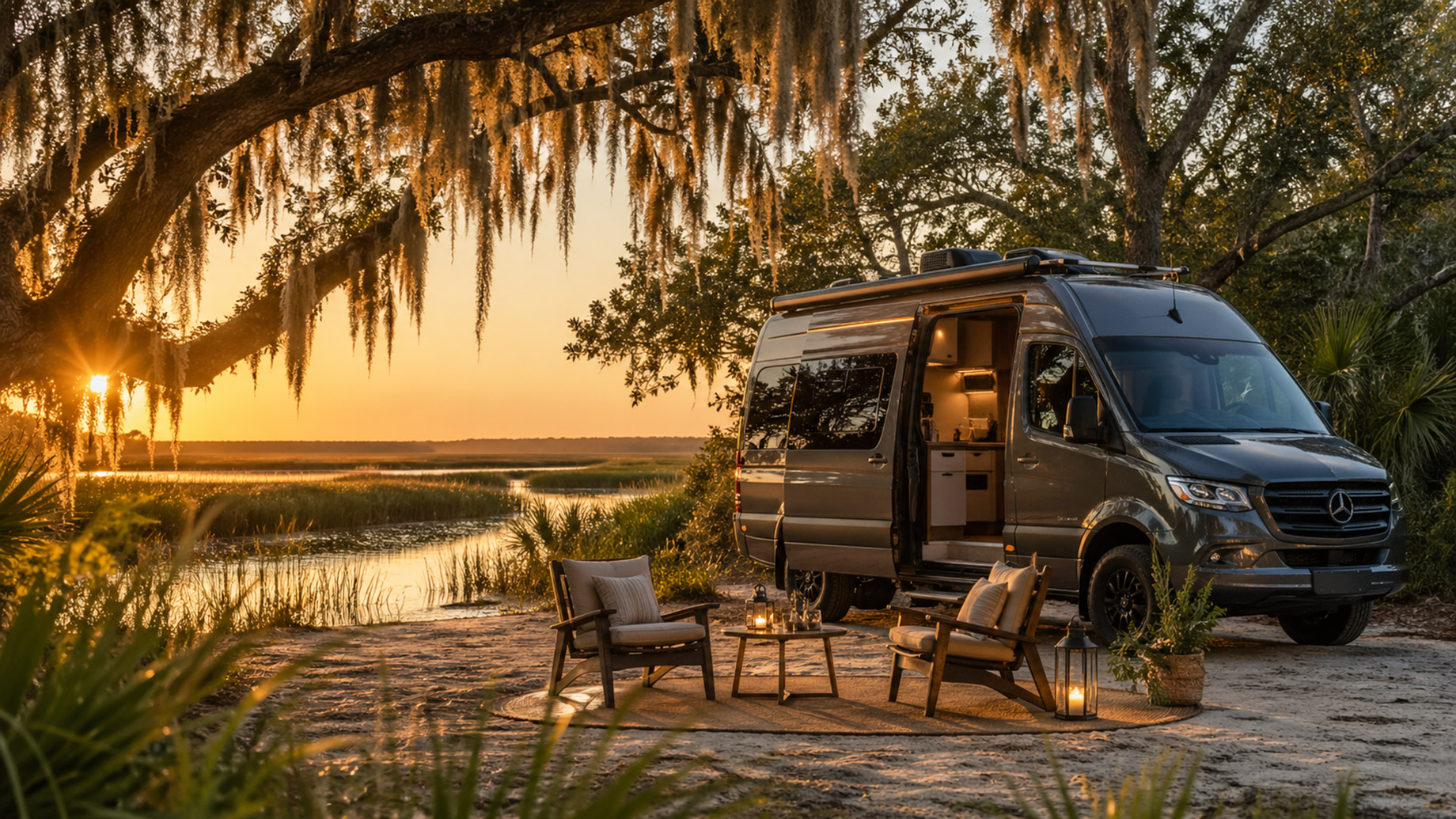
As lifestyles continue to evolve, more residents in Charleston, South Carolina are trading busy weekends for quiet escapes into nature. Across the Lowcountry, boondocking, often called off-grid camping, has become an increasingly popular way to explore coastal forests, barrier islands, and hidden waterways at a slower pace.
This article highlights the 10 best off-grid camping spots near Charleston and shares practical tips from power solutions to essentials to help you plan a smoother, more comfortable trip, so you can enjoy the outdoors without unnecessary hassle.
What Is Boondocking and Why It’s Popular in Charleston
Boondocking is a basic form of camping, that is, no electrical sockets, no running water, just you and nature. You do not have to camp in large campgrounds but rather park your RV or camp in a more isolated place. It provides you greater liberty, less noise, and an opportunity to appreciate the outdoors without any distractions.
The Charleston area is particularly the best suited to this type of travel. Its combination of coastline scenery, woodlands, and animal-abundant areas have a plethora of areas that you can camp without a plug and still have a fantastic time. The pleasant weather also enables one to plan trips to various seasons with ease and that is why more people are opting to boondock in this area.
Top 10 Boondocking Destinations Near Charleston
1. Francis Marion National Forest
This is one of the most popular spots for boondocking near Charleston. It offers large open areas, forest cover, and a peaceful setting away from city noise. It’s a great choice if you’re looking for privacy and easy access to nature.
2. Cape Romain National Wildlife Refuge
Located along the coast, this area provides a more remote and untouched experience. It’s ideal for those who enjoy coastal views, birdwatching, and quiet surroundings. Keep in mind that access can be limited, so planning ahead is important.
3. Edisto Beach State Park (Nearby Off-Grid Spots)
While the main park has facilities, there are nearby areas where you can enjoy a more off-grid setup. The coastal scenery and relaxed environment make it a favorite for nature lovers who still want some accessibility.
4. Santee Coastal Reserve
This area is known for its marshlands and rich wildlife. It’s less crowded than other spots, making it perfect for a quiet boondocking experience. It’s especially popular among birdwatchers and photographers.
5. ACE Basin Area
One of the largest undeveloped estuaries on the East Coast, this location offers a true off-grid feel. It’s best suited for campers who want to disconnect and enjoy raw, natural surroundings.
6. Wadmalaw Island Rural Spots
Wadmalaw Island has several quiet and lesser-known areas suitable for boondocking. It offers a mix of open land and countryside views, making it a peaceful escape close to Charleston.
7. Awendaw Creek Area
This spot is great for those who enjoy both camping and water activities. With access to kayaking and fishing, it adds a bit of adventure to your off-grid trip while still maintaining a calm environment.
8. Botany Bay Plantation (Nearby Areas)
Known for its preserved coastal landscape, this area offers a unique boondocking experience. The natural beauty and less-developed surroundings make it stand out from typical camping spots.
9. Lake Moultrie Remote Areas
If you prefer freshwater views, Lake Moultrie has several remote areas suitable for off-grid camping. It’s a good option for fishing, longer stays, and more open camping space.
10. Givhans Ferry State Park (Outer Areas)
The outer areas around this park provide a more secluded setting compared to the main campground. With access to the Edisto River and wooded surroundings, it’s a solid option for a quiet and relaxing trip.
The Biggest Challenge of Boondocking: Power Supply
Visioning a boondocking trip in Charleston is an exciting idea, yet most people face the same issue which is the non-reliability of power as soon as they are off-grid. Even basic tasks, such as lights or charging phones, as well as running small equipment, can soon be hard without hookups. This will usually make what ought to be a relaxing nature trip a frustrating experience.
This is what makes such a good power set up so essential. This can stop your trip because your battery may not be able to keep up and restrict what you can do. Preparation and selection of off-grid power solutions will enable you to make sure that it remains comfortable and stress-free.
Lithium Camper Battery: A Reliable Power Solution for Off-Grid Trips
When it comes to staying powered off-grid, not all batteries perform the same. A lithium camper battery has become a popular choice because it solves many of the common issues people face while boondocking. Compared to traditional lead-acid batteries, lithium options last much longer, charge faster, and are easier to carry due to their lighter weight.
Another key advantage is how much power you can actually use. Lithium batteries allow deeper discharge without damaging the battery, which means more usable energy during your trip. This makes them especially useful for longer stays where consistent and reliable power is important.
Choosing the Right 12V Battery for Boondocking
Picking the right battery setup depends on how you plan to camp and how much power you’ll need. A good 12V battery for boondocking should offer enough capacity to handle daily use, while still being compact and efficient. Things like battery size, weight, and overall performance all play a role, especially if you’re traveling to remote locations.
For extended trips, higher-capacity options such as the Redodo 12V 320Ah Mini lithium battery can provide more stable and longer-lasting power. Some modern batteries also include features like Bluetooth monitoring, which makes it easier to track usage and manage power while you’re off-grid. Choosing the right setup helps you stay comfortable without worrying about running out of energy.
Essential Tips for a Successful Boondocking Trip
A successful boondocking trip starts with proper planning. Make sure you carry enough water, food, and basic supplies since you won’t have access to facilities. It’s also important to check local rules and permissions before setting up camp in any area.
Respecting nature is just as important as enjoying it. Follow Leave No Trace principles by cleaning up after yourself and minimizing your impact on the environment. Safety should also be a priority, so let someone know your location and plan ahead for emergencies.
Managing your power wisely can make a big difference in your overall experience. Try to use energy-efficient devices and keep track of your usage throughout the trip. A reliable battery setup helps ensure you stay comfortable without worrying about running out of power.
Final Thoughts
Boondocking around Charleston offers a different kind of travel experience, one that is quieter, more flexible, and closely connected to nature. From coastal reserves to forest hideaways, there are plenty of places where you can step away from crowded campgrounds and enjoy the outdoors on your own terms. With the right planning, these trips can be both simple and rewarding.
One thing that should not be overlooked is your power setup. Having a reliable source of energy allows you to stay comfortable and focus on the experience instead of dealing with interruptions. A well-chosen lithium battery setup can make off-grid camping smoother and more enjoyable, especially for longer stays.
