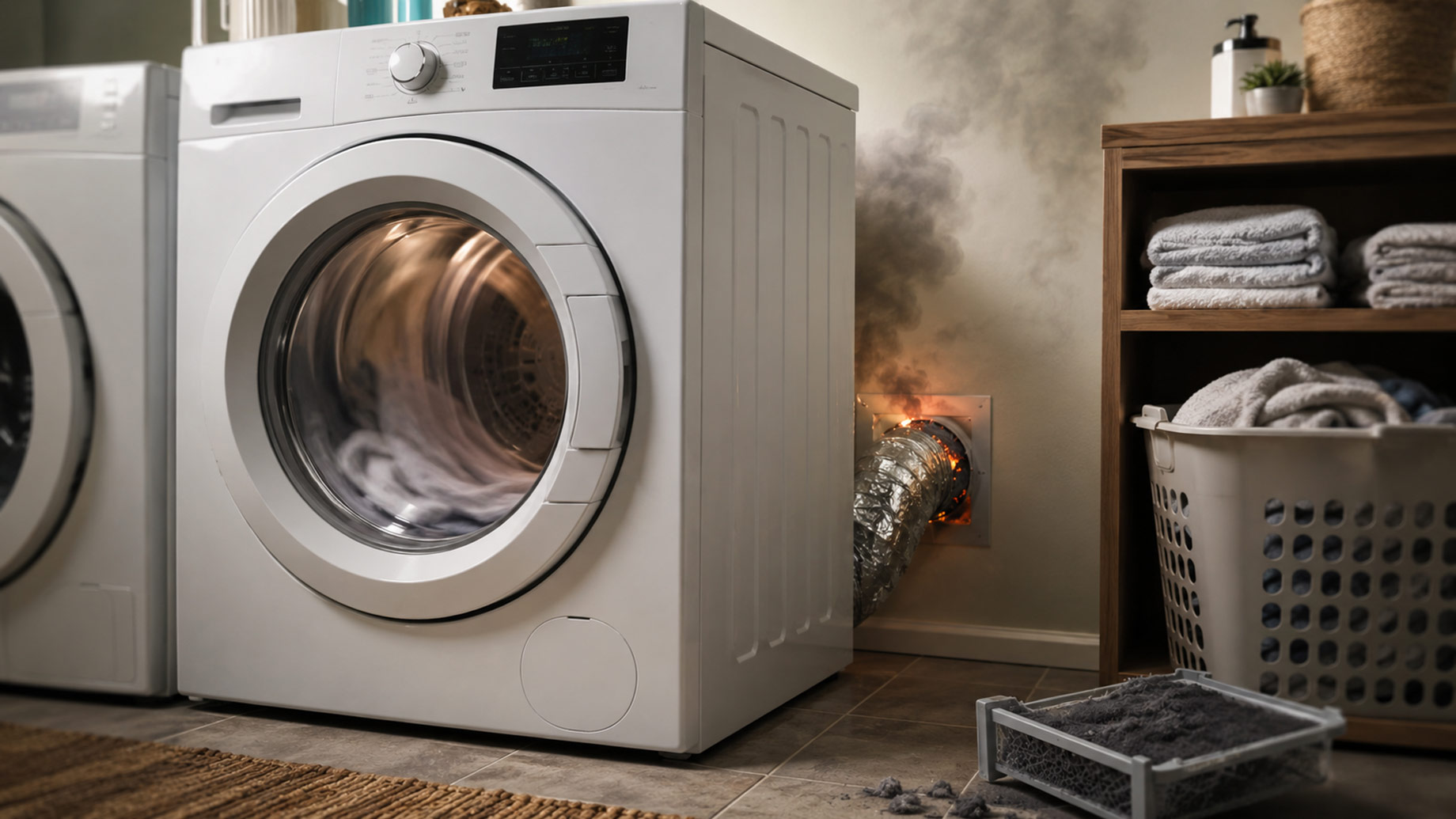
On a Tuesday afternoon in 2022, a family in Garland, Texas came home to smoke pouring from their utility room. The dryer was still running. The vent duct behind it had packed so tight with lint that the exhaust heat had nowhere to go. The result was a wall fire that cost them nearly $40,000 in structural damage. Their smoke detectors never triggered in time. And the worst part? A technician visit that costs less than a dinner out could have stopped it entirely. Homeowners across DFW rely on professional dryer vent cleaning dallas services at least once a year to prevent exactly this kind of disaster — yet most families go years without ever thinking about it.
This is not a rare story. According to the U.S. Fire Administration, dryers cause roughly 2,900 home fires every single year across the country. Nearly a third of those happen because the vent was never cleaned. That number has stayed stubbornly high for over a decade despite fire safety campaigns, updated building codes, and appliance manufacturer warnings printed right on the machines people use every day.
Why Dallas Homes Face a Bigger Risk Than Most
Here is the part most national safety articles skip entirely. Dallas-Fort Worth homes are not built the same way as homes in Portland or Boston. DFW suburbs expanded fast during the 1980s through 2000s, which means a huge chunk of the local housing stock was built with long, winding vent runs that snake through walls, attics, and garage spaces before finally exiting the structure.
Longer duct runs mean more surface area for lint to stick. More bends in the duct mean more places for airflow to slow down. Slower airflow means heat builds up faster. It is a compounding problem that gets worse every single cycle you run.
Add in the regional lifestyle factor. Texas families tend to be large. According to U.S. Census data, the Dallas metro consistently ranks among the top American metros for average household size. More people means more laundry. More laundry means the dryer runs more cycles per week than the national average. A vent system that might need cleaning once a year in a two-person household can need attention every six months in a home with four kids.
Then factor in the seasonal swings. DFW summers push outdoor temperatures past 100 degrees for weeks at a time. When the exterior of a home is radiating heat and the dryer is running multiple loads a day, the exhaust system is working against ambient conditions that make cooling and airflow harder. Lint ignites at around 400 degrees Fahrenheit. A clogged vent in a Texas summer can hit that threshold faster than anyone wants to think about.
Warning Signs Most DFW Homeowners Completely Miss
The frustrating truth is that a clogged dryer vent gives plenty of warning. The problem is that almost every symptom looks like something else first.
- Clothes taking two full cycles to dry — most people blame the appliance, not the vent. They call an appliance repair company, get told the heating element is fine, and go home without fixing the actual problem.
- The outside of the dryer feels hot after a normal cycle — this means heat is backing up into the unit because it cannot escape through the duct.
- A faint burning smell during operation — lint inside the duct is reaching temperatures close to ignition. This is not a smell to ignore or air out. It is an active warning.
- The laundry room gets humid during drying — the dryer exhaust is not making it outside. It is leaking back into your living space instead.
- Visible lint around the exterior vent flap — if lint is backing out of the termination cap, the duct is past full. Airflow has essentially stopped.
- Dryer cycles run longer than usual — standard loads that normally finish in 45 minutes now take 70 or 80 minutes. Your energy bill quietly goes up. The hazard quietly builds.
Emergency service calls in the DFW area consistently show that homeowners waited an average of several months after noticing these signs before calling a professional. By that point, the duct is often completely blocked. The cost of the service call is the same. The risk exposure in between was not.
The Lint Trap Myth That Puts Families at Risk
Almost everyone cleans their lint trap. Most people feel good about that. And that is exactly where the false sense of security comes from.
The lint trap catches maybe 25 percent of the lint your dryer produces. The rest travels into the exhaust duct. Over time it coats the interior walls of that duct, building layer by layer like plaque in an artery. The trap is a filter, not a solution. Cleaning it after every load is correct and necessary. But it does not touch what is accumulating in the six, ten, or twenty feet of duct running behind your wall.
A licensed technician who can inspect the entire vent system will use a combination of rotary brush equipment and high-powered industrial vacuums rated specifically for duct work. These tools reach the full length of the run, navigate bends, and pull out compacted lint that has been building for years. That process looks nothing like a DIY brush kit from a hardware store, which typically covers only the first two or three feet of duct before the user runs out of reach and assumes the job is done.
What a Real Dryer Vent Cleaning Service Should Include
If a company quotes you a flat fee and shows up with a shop vac and a flexible rod, walk away. A legitimate dryer vent cleaning service in Dallas should include every one of these steps.
- Full duct mapping — the technician traces the entire vent run from the back of the dryer to the exterior termination point. They identify every bend, every joint, every section of flex duct that may have sagged or kinked over time.
- Mechanical lint removal — rotary brushes driven through the full duct length, paired with vacuum extraction. Not just the first section. The whole run.
- Exterior cap inspection — the damper that opens when the dryer runs and closes when it does not is one of the most commonly neglected parts of the system. In DFW, bird nesting and wasp activity inside exterior vent caps is genuinely common. A blocked cap means zero airflow no matter how clean the duct is.
- Post-service airflow verification — the technician should confirm adequate cubic feet per minute are being restored before they leave. If they cannot measure airflow, they cannot confirm the job actually worked.
- Written documentation — findings, service performed, any recommended repairs, and the date of service. This matters for insurance records and for scheduling the next cleaning.
This is the standard that companies like Emerson Pro Services hold their licensed, background-checked technicians to across every DFW service call. Their 500-plus five-star reviews across Google, Yelp, and BBB are largely built on this kind of systematic, documented work rather than quick visits that look productive without actually solving the underlying problem.
DIY Cleaning Has a Place, But Know Its Limits
Here is a fair accounting. DIY dryer vent maintenance is reasonable if your duct run is short, straight, and accessible. You can clean the lint trap religiously, vacuum out the entry section of the duct behind the appliance, and wipe down the exterior cap. That covers the basics on a simple installation.
But if your vent run is longer than fifteen feet, if it passes through walls or attic space, if you have never had it professionally cleaned, or if you are smelling anything during operation — those scenarios require a licensed professional. Full stop.
The cost math is not complicated. Professional dryer vent cleaning in Dallas with transparent, upfront pricing runs a fraction of what appliance repair costs for a burned-out heating element. It runs an even smaller fraction of what structural fire damage costs. The reason so many homeowners skip it is not cost. It is invisibility. You cannot see the problem accumulating. And that invisibility is exactly what makes it dangerous.
How to Vet a Dryer Vent Cleaning Company in DFW
The home services market in Dallas-Fort Worth is crowded. Some of that crowd is excellent. Some of it is fly-by-night operators who know how to game Google reviews and undercut prices without delivering results. Here is how you tell the difference before anyone enters your home.
- Verify licensing and insurance — Texas home service technicians working on ventilation systems should carry liability coverage. Ask for the certificate of insurance before any work begins. If a company hesitates, that hesitation is your answer.
- Confirm background check policies — you are letting someone into your home. Ask directly whether the company screens its technicians. A legitimate operation will answer that question without pause.
- Evaluate review volume and recency — a company with 500-plus verified five-star reviews across multiple platforms represents a real track record across real jobs. Twenty reviews on one platform from three years ago does not.
- Ask what the inspection includes — a company that can describe the full vent run assessment process is doing the actual job. A company that quotes a flat rate for a “cleaning” without mentioning inspection is not.
- Confirm emergency availability — for burning smells or suspected active blockages, you need a company that can respond the same day. Swift response times indicate operational capacity and genuine safety orientation.
- Get a written estimate before work starts — transparent pricing with no hidden fees is the baseline standard. Any company that cannot produce this in writing before work begins should be replaced with one that can.
Emerson Pro Services runs background checks on every technician, operates across multiple DFW locations, offers emergency response, and posts transparent pricing before every job. It is a useful benchmark regardless of who you ultimately choose. These criteria are not special. They should be the floor, not the ceiling.
Dryer Vents Are One Part of a Bigger Picture
One of the most overlooked home safety tasks is treating home maintenance as a collection of isolated chores rather than a connected system. Dryer vent cleaning belongs on the same annual checklist as chimney cleaning in Dallas, air duct inspection across DFW, and gutter evaluation before the fall rain season.
The connection is not arbitrary. Creosote buildup in an unmaintained chimney and lint buildup in an unmaintained dryer vent share the exact same failure pattern. Combustible material accumulates in an enclosed system. Heat builds up. Eventually something ignites. The mechanism is identical even if the location is different. And both are completely preventable with routine professional service.
Clean dryer vents also reduce energy consumption in a measurable way. According to the Department of Energy, a clogged dryer vent can increase drying time and energy use by up to 30 percent. For a DFW family running eight or ten loads a week during summer, that adds up on the utility bill faster than most people realize.
For high-usage households with four or more people, twice-yearly dryer vent inspection is the practical recommendation. For standard households, once a year is the minimum. Scheduling this alongside your chimney, air duct, roofing, and gutter maintenance with a single licensed multi-service provider in DFW eliminates the coordination friction of managing four separate contractors and creates a consistent service record that benefits you at insurance time and resale time alike.
The fire in Garland did not have to happen. The family had noticed the dryer taking longer. They had caught a faint smell once or twice. They meant to call someone. Life got busy. The vent stayed clogged.
Your dryer is running right now, or it ran this morning, or it will run tonight. The lint is in the duct. The question is just how much of it, and how long you plan to wait before finding out.
