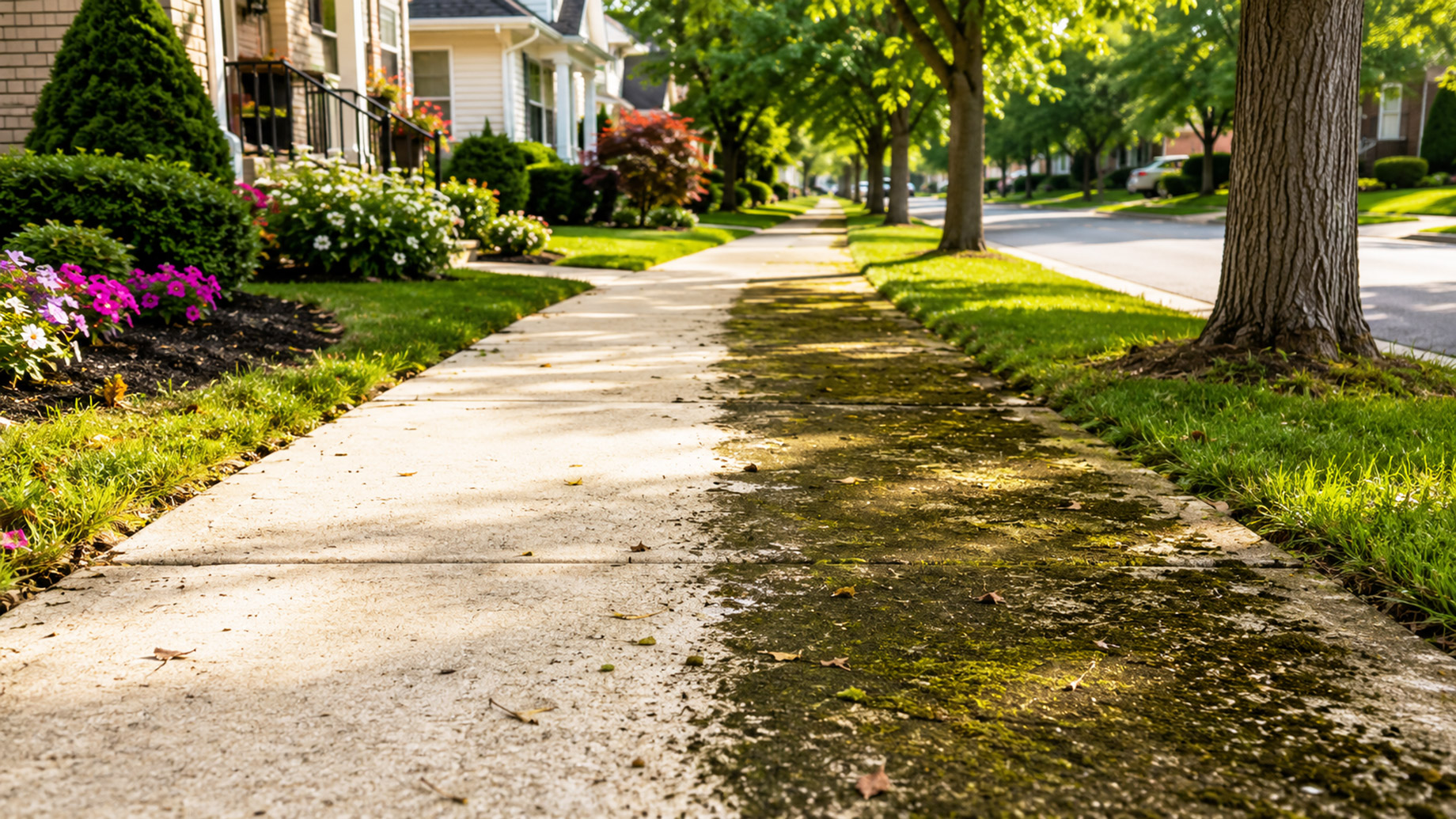
Have you ever taken a stroll through your subdivision and wondered about the real reason some neighborhood sidewalks turn dark faster than others? You are not alone. While one house boasts pristine, bright concrete, the very next property might feature a dingy, black, or green-tinged walkway. This stark contrast rarely comes down to the age of the concrete itself. Instead, it is usually the direct result of specific environmental conditions and regular maintenance habits. Many homeowners turn to power washing companies in Wayne County, MI to address these visual issues. Moisture, shade, and organic matter all play significant roles in how exterior concrete ages visually. Let us explore the primary culprits behind uneven sidewalk discoloration and what proactive homeowners can do to protect their curb appeal.
How Humid Spring Conditions Accelerate Algae, Mildew, and Moss
Concrete might look solid and impenetrable, but at a microscopic level, it acts much like a dense sponge. Because concrete is a highly porous material, it easily absorbs and retains moisture from the surrounding air. When humid spring conditions arrive, they introduce a persistent layer of moisture that rarely has the chance to evaporate entirely. This creates the ultimate breeding ground for invasive organic growth.
Algae, mildew, and moss thrive in these warm, damp environments. As heavy humidity lingers for days or weeks at a time, these microscopic organisms settle deep into the tiny pores of your sidewalk. They begin to multiply rapidly, transforming clean concrete into a canvas of dark streaks, black spots, or a dull green haze. The longer the humidity persists, the deeper these root systems embed themselves, making the discoloration increasingly difficult to wash away with standard seasonal rain.
The Hidden Impact of Sprinkler Overspray on Concrete Surfaces
Maintaining a lush, vibrant lawn is a common priority for homeowners, but the methods used to water that grass might be inadvertently ruining the adjacent concrete. Sprinkler overspray is undoubtedly one of the leading localized causes of rapid sidewalk discoloration.
When irrigation heads are misaligned, they repeatedly douse the sidewalk every time the automated system runs. This constant wetting prevents the concrete from ever fully drying out. Homeowners who run their sprinklers in the late evening or early morning unknowingly create a prolonged state of wetness, as there is no harsh sunlight to immediately evaporate the surface water. Over time, this artificial and persistent moisture accelerates the growth of black mold and green mildew, leading to distinct, dark patches that perfectly trace the sprinkler’s intended spray pattern.
Why Tree-Lined Streets Experience Faster Organic Buildup
Mature, arching trees add immense property value, provide welcome cooling, and enhance the beauty of any community. However, they also create specific microclimates that directly affect the longevity and appearance of concrete surfaces below them. Sidewalks shaded by large canopies receive significantly less direct sunlight, which drastically reduces the natural water evaporation rates after a storm.
Furthermore, these trees continuously drop leaves, pine needles, seeds, and sap directly onto the concrete. When this organic debris gets wet, it begins to decompose. During the decomposition process, leaves release organic compounds and natural tannins that act like a dye, bleeding deep into the concrete’s pores. The combination of dense shade preventing sunlight exposure, trapped moisture, and decaying organic matter is exactly why beautiful tree-lined streets often struggle with the most rapid and stubborn dark staining.
Poor Drainage Systems and Uneven Sidewalk Discoloration
Water always follows the path of least resistance, and it needs a functional place to drain. When properties suffer from poor drainage systems or improper grading, the neighborhood sidewalks often bear the brunt of the issue. If the ground slopes slightly toward the walkway rather than away from it toward the street or storm drains, rainwater and irrigation runoff will inevitably pool on the concrete.
These low spots or improperly leveled slabs hold standing water long after the rest of the pavement has completely dried. Dirt, airborne pollutants, automotive exhaust particles, and organic materials naturally settle in these persistent puddles. As the water eventually evaporates under the afternoon sun, a concentrated layer of dirt and grime remains permanently baked into the surface. This cycle creates dark, blotchy, and highly uneven discoloration in very specific sections of a neighborhood block.
The Role of Nearby Landscaping and Soil Runoff
Your carefully curated garden beds have a direct and ongoing relationship with your walkways. Nearby landscaping heavily influences exactly how clean your sidewalks remain throughout the calendar year. Heavy rains or aggressive watering easily wash topsoil, dark dyed mulch, and lawn fertilizers out of flower beds and directly onto the adjacent pavement.
Fertilizers, in particular, often contain iron, magnesium, and other heavy minerals that cause rust-colored or dark oxidation stains when left to sit on concrete. Additionally, thick shrubs, bushes, or ornamental grasses planted too close to the edge of the sidewalk physically restrict natural airflow. This blocks the wind from sweeping across the concrete, further preventing the surface from drying efficiently after a passing rainstorm and inviting mold to take hold.
The Real Reason Some Neighborhood Sidewalks Turn Dark Faster Than Others: Lack of Maintenance
While environmental factors set the stage, the stark contrast between pristine walkways and blackened concrete often comes down to routine care. Once algae, moss, and dirt have deeply penetrated the concrete pores, a simple garden hose or light sweeping is rarely enough to lift the grime. Over time, ignored concrete continues to darken as layers of dirt and organic growth compound upon one another.
Proactive homeowners recognize that addressing this buildup is a crucial aspect of property upkeep. Many turn to power washing companies in Wayne County, MI for dependable routine cleaning and maintenance. Allowing sidewalks to remain dark and slippery is not just an aesthetic issue; it creates a tangible slip-and-fall hazard, especially when wet algae acts like a sheet of ice. Understanding the environmental causes is important, but committing to a reliable cleaning schedule is what ultimately keeps the neighborhood looking fresh, safe, and visually cohesive.
Addressing Discoloration Before Outdoor Gatherings and Inspections
Because manual scrubbing is highly ineffective against deeply embedded organic stains, professional surface cleaning has become a standard staple of seasonal property maintenance. High-pressure washing safely blasts away months of accumulated dirt, algae, and tannin stains, restoring the concrete to its original bright gray finish.
Timing plays a critical role in these maintenance efforts. For instance, many homeowners rely on power washing companies in Wayne County, MI, to deeply clean their exterior surfaces before strict HOA inspections walk the neighborhood. Similarly, power washing companies in Wayne County, MI, are a highly popular, go-to solution before hosting important graduation parties, summer barbecues, or large family outdoor gatherings. Removing the dark, dingy layer instantly elevates the curb appeal of the home, ensuring the property looks its absolute best when guests arrive for seasonal festivities.
Conclusion
In the end, the stark contrast between a brilliant, clean walkway and a severely stained one rarely happens by accident. From misaligned sprinkler heads and poor drainage to the dense shade of mature trees and humid weather, your local environment heavily dictates the health of your concrete. By understanding the real reason some neighborhood sidewalks turn dark faster than others, you can take proactive steps to mitigate water runoff, trim back encroaching landscaping, and schedule effective seasonal maintenance. Many homeowners trust power washing companies in Wayne County, MI, to help keep their concrete surfaces thoroughly clean. This not only satisfies the local homeowners association but also ensures a safe, beautiful, and welcoming path to your front door for many years to come.
