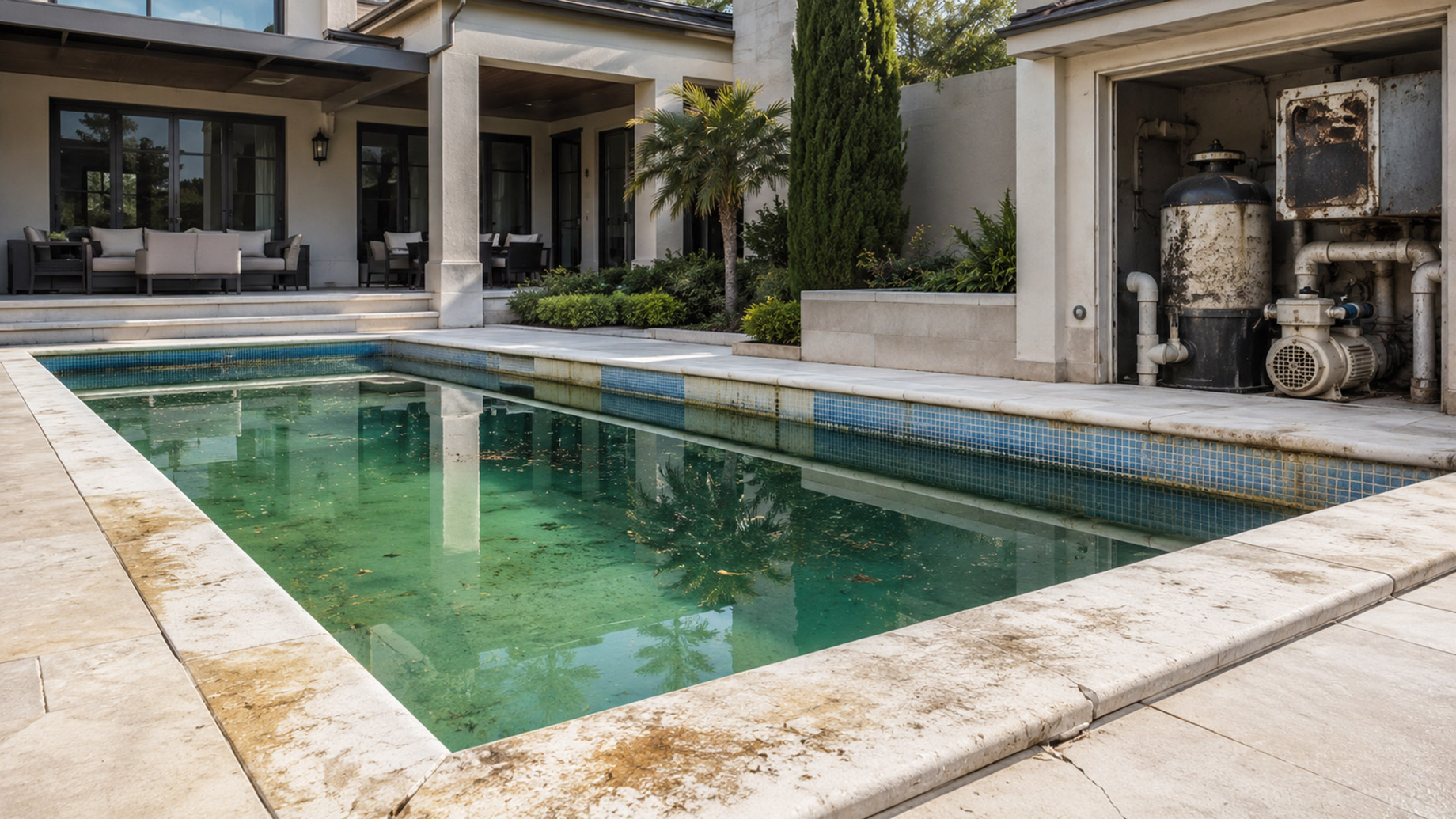
Having a swimming pool is fun and can add more value to your home, but it requires ongoing maintenance that can quickly become a burden. When you postpone pool care, you can end up with poor water quality, equipment failure, safety issues, and expensive repairs. Routine pool maintenance keeps your pool safe to use and makes it easier to sell your home in the future.
Pump failures can be costly
Your pool pump circulates water through the filter and controls chemical distribution. When your pump isn’t working right, the whole system struggles. Using high-quality stainless steel pumps is important because they don’t corrode easily and last longer than cheaper options.
Corrosion resistance is non-negotiable
You need a pump that holds up against rust and chemical exposure, especially if you live in a humid climate. Corrosion lowers efficiency, allows for contamination, and can eventually cause motor failure. When water doesn’t move continuously, algae and harmful bacteria accumulate fast. For example, Cryptosporidium and E. coli frequently cause recreational water illness.
Replacing a broken pump can cost hundreds, if not thousands of dollars once you account for labor, electrical work (if needed) and water treatment. You can avoid this by installing a reliable pump from the start and performing regular maintenance to ensure it stays functional.
Neglected water chemistry is dangerous
Pool chemistry affects safety more than you might think. If the chlorine is unbalanced, the pH is wrong, or you have too much calcium, anyone who enters your pool is at risk. Circulating the water isn’t enough to avoid recreational water illness. Pool chemistry also plays a role.
Your pool equipment is also at risk when water chemistry is neglected. For example, low pH water is acidic and can corrode metal fixtures, heaters, rails, and pumps. High calcium levels create scale inside plumbing lines and filtration systems, and that makes your whole system less efficient.
Many homeowners notice cloudy or green water but wait too long to take action. If you see these signs, it’s not cosmetic. When algae starts to spread it can start out looking cloudy and then turn green fast. If this happens you’ll likely need to administer several algae treatments that require draining your pool and replacing all of your filters. If that doesn’t work, you’ll need to hire a professional.
All it takes is monthly testing and light weekly maintenance to prevent these problems from becoming expensive repairs.
Even aesthetic damage is costly
What starts as a small crack or stain can snowball into costly repairs – even when it’s purely cosmetic. For instance, black algae will penetrate plaster surfaces and leave difficult stains, and calcium deposits around tiles will make your pool look older. If you want to restore your pool’s clean aesthetics, you might need to pay for surface restoration.
As for cracks, they might seem cosmetic but they’ll let significant amounts of water through, which can damage nearby decking and soil.
Rental properties with pools are risky
If your pool is part of a rental property, you’re looking at a much higher risk, both legally and financially. Tenants often fail to maintain pools unless there’s a strict agreement in the lease. Even then, there’s no guarantee. They might ignore small leaks or clogged filters for months until the damage is done. By then, repairs will cost far more. If your renter happens to need pool repairs during peak summer months, you can expect to pay a premium for labor.
Legal liability is a serious risk when you have a rental property with a pool. If a renter’s guest gets injured in or around the pool, you can face legal consequences simply for being the homeowner.
Energy costs rise in the absence of maintenance
Not maintaining your pool almost guarantees that you’ll see higher energy bills. Every dirty filter and inefficient pump is forcing your whole circulation system to work harder. The harder the system works, the more energy it uses.
When systems work harder to circulate water, it puts motors at risk of overheating and wearing out before their expected lifespan. If you have a leak, you’ll continually lose heated water, and that will force the system to use more energy to keep it warm.
Maintain your pool to protect your investment
Pool maintenance affects more than the clarity of your water. It determines how safe your water is to swim in and how long your pumps and filtration systems will last. Proper maintenance maintains property value, reduces legal risk, and makes it easier to resell your home. Whether you use your pool frequently or not, regular maintenance will keep it from becoming a liability.
