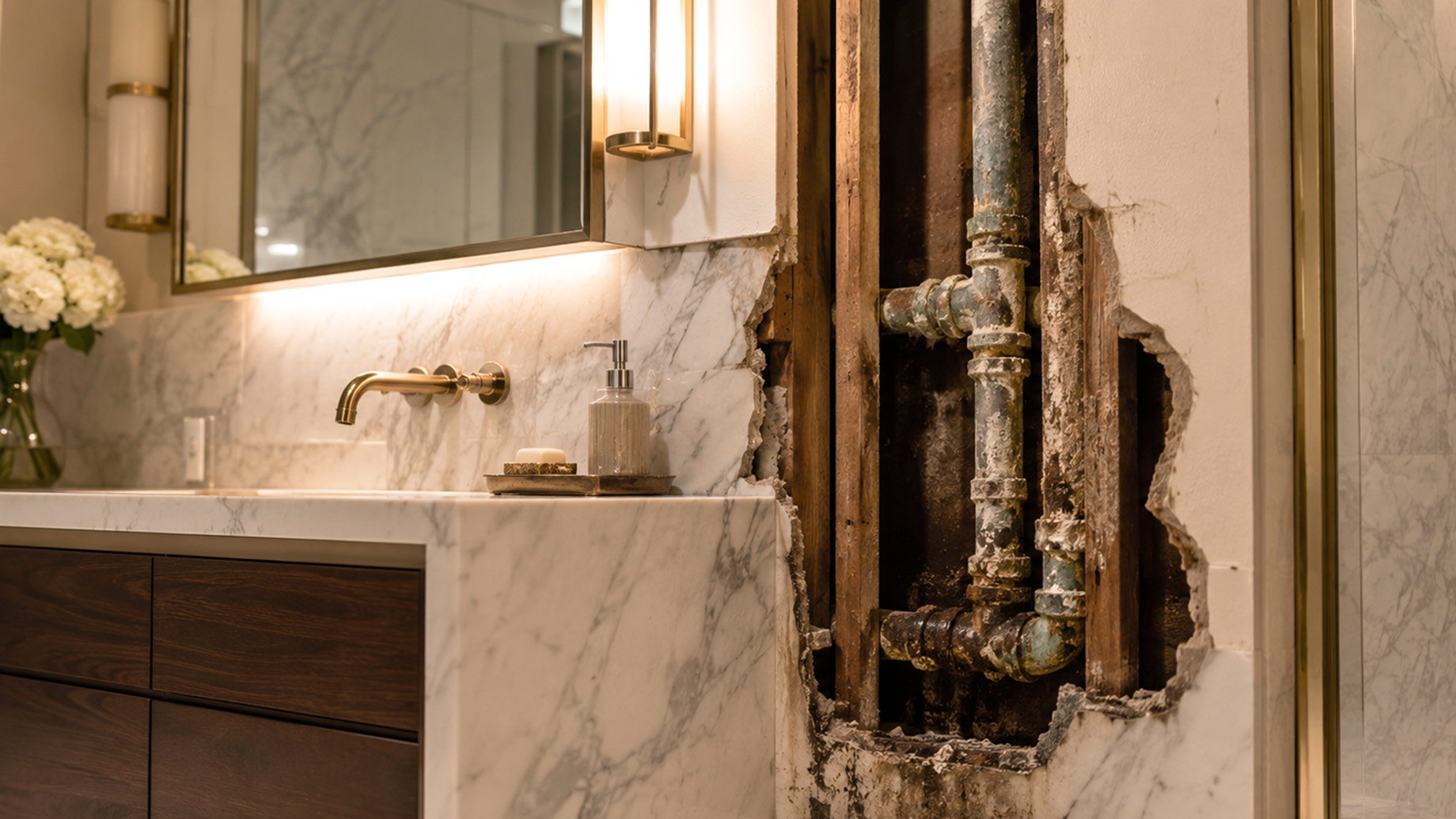
When you own a luxury property or a high-value home, every detail matters—from custom architectural millwork to advanced smart-home automation. Yet, one of the most vital structural elements is entirely hidden behind your custom walls and high-end finishes: your private plumbing system. While luxury homeowners invest heavily in surface aesthetics, aging municipal water grids and deteriorating supply lines are quietly creating massive financial risks. Protecting a premium investment requires partnering with experienced whole-home repiping specialists before hidden water damage ruins your property.
Why Municipal Water Pressures Threaten Luxury Properties
Your luxury home does not exist in a vacuum; it relies completely on local city grids to deliver a clean, steady water supply. Unfortunately, municipal water infrastructure across the United States is aging rapidly, with civil engineering boards giving public drinking water systems a weak C-. Decades of deferred maintenance mean local utility networks are reaching a critical tipping point.
When town water mains degrade, the operational instability flows straight into private residential connections. Aging city lines experience severe pressure fluctuations, mineral scale accumulation, and rust buildup. For a high-value home, these municipal variations cause hard water, reduced flow, and sudden pressure spikes. These surges put immense mechanical stress on delicate luxury plumbing fixtures, tankless water heaters, and hidden supply lines behind custom drywall.
Regional Risks: How Location Determines Pipeline Leaks
Infrastructure risks fluctuate widely based on regional geology, soils, and extreme regional climate. To safeguard the interests of such high-value properties, these specific environmental stresses must be recognized:
Frost Belt and Ground Shifting from Freezing and Thawing
In high-end historical markets throughout the Northeast and Midwest, cast-iron water lines have been underground for decades in cities like Chicago, Philadelphia, and Pittsburgh. The freezing weather causes ground expansion, heaving, and shifting, which is problematic because older iron and early steel pipes are fragile and susceptible to cracking. Additionally, acidic soils lead to pipe corrosion.
Sun Belt and Extreme Heat Stress
In fast-growing cities such as Phoenix, Houston, and Southern California that enjoy prime real estate values, long periods of drought and hot weather affect soil conditions. Long dry periods cause cracking in clay-rich soil, which further leads to extreme mechanical stress on utility service pipes beneath the soil surface. When heavy rains finally fall, the resultant movement often causes ruptures in the pipes.
Corrosive Coastal Regions and Salt Water Infiltration
The luxury property markets in coastal regions—such as those of Miami and coastal Louisiana—are under constant threat from rising sea levels and groundwater infiltration. Where salty water infiltrates coastal soil, it serves as an excellent catalyst for rust formation. It accelerates the galvanic rusting in copper and galvanized steel pipes.
Inside the Walls: The Hidden Dangers of Outdated Materials
Many high-value homes constructed during the upscale suburban building booms of the 1970s, 1980s, and 1990s were built using materials that have long passed their safety thresholds.
- Failing polybutylene and galvanized steel: Properties built with gray polybutylene pipes or aging galvanized steel are experiencing high failure rates as the internal walls of these pipes become brittle and scale over.
- Discolored water and sediment: Corroding city connections and aging home pipes introduce rust particulates and mineral sediment directly into your faucets, ruining high-end plumbing fixtures and whole-home water filtration systems.
- Devastating insurance claims: Water damage caused by burst supply lines or silent pinhole leaks inside walls is now one of the leading drivers of residential property insurance claims. Luxury homeowners often face denied coverage or steep premium hikes if water damage is caused by neglected, outdated plumbing.
Modern Solutions for High-End Property Protection
Keeping a valuable property safe from infrastructure damage does not require short-term repairs. Instead, it requires using modern, long-term engineering methods to prevent damage and maintain the property’s value.
- Water pressure check: A professional plumber attaches a special tool (a pressure gauge) to an outside faucet to see how hard the city water is pushing into your house. If it exceeds 80 PSI (pounds per square inch), it can damage your indoor pipes over time.
- Pipe camera check: The plumber slides a thin, flexible wire with a tiny camera on the end down into your main water line. This lets them look on a screen to see if the inside of the metal pipe is rusting away or getting too thin before it starts leaking.
- Property upgrades: Cut out old copper or galvanized steel supply lines and press-connect flexible cross-linked polyethylene (PEX-a) tubing with expansion rings to ensure permanent, leak-proof water delivery.
- System overhauling: Use trenchless pipe-pulling methods to replace underground service lines without digging up driveways or landscaping, and route new indoor lines through existing utility chases to protect expensive finishes.
Conclusion: Securing Your Investment for the Future
Fixing America’s plumbing backbone is a massive national challenge, but safeguarding your own luxury property starts at the household level. Waiting for a pipe to burst behind custom drywall or high-end finishes can result in thousands of dollars in structural damage, ruined flooring, and lengthy insurance disputes. If you suspect that aging plumbing or fluctuating city water pressure is putting your property at risk, reach out to experienced whole-home repiping specialists today to schedule a comprehensive plumbing inspection and secure your home’s water system for the future.
