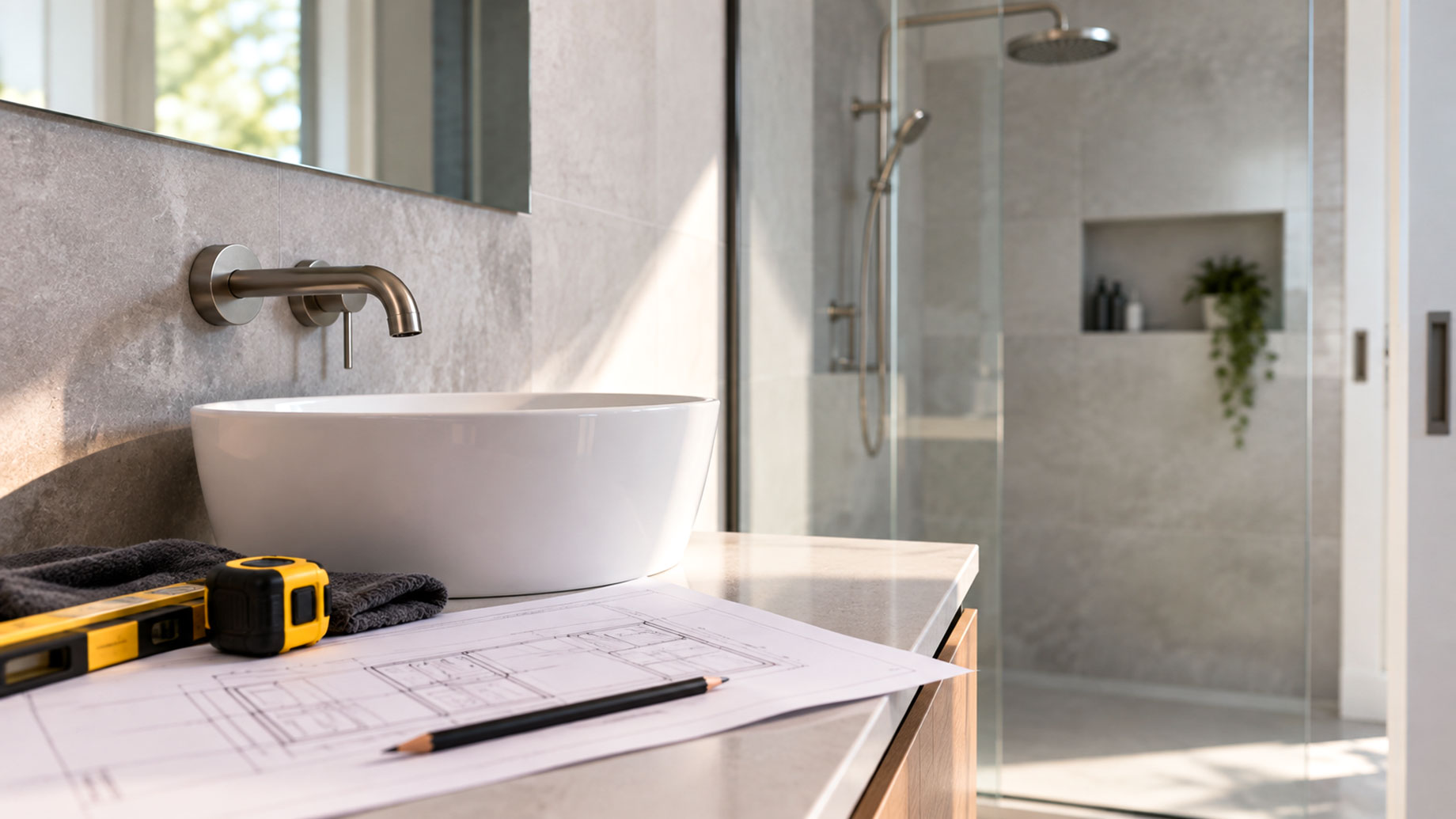
A bathroom renovation touches almost every trade in the book, from plumbing and tiling to electrical work and waterproofing. Without a clear plan, it is easy for costs and timelines to spiral.
This guide walks through the main decisions worth making early, so you go into the project with a realistic picture of what it actually involves.
Start With a Clear Scope and Budget
Before contacting anyone, decide whether you are after a full renovation, a partial refresh, or a targeted repair. Each path has a very different budget, timeline, and level of disruption to your home.
It also helps to separate must-haves from nice-to-haves early, since bathroom projects have a way of growing once walls are opened up. Our earlier piece on essential steps for a successful bathroom renovation covers contractor selection, layout planning, and material choices in more depth if you want a fuller checklist before you start.
Choosing the Right Renovator for Your Project
If you are going ahead with a full renovation, the contractor you choose will shape almost every part of the outcome, from the quality of the finish to how smoothly the project runs. Get more than one quote, and ask each contractor how they handle unexpected issues once walls are opened.
Why Full-Service Renovators Make Complex Jobs Easier
A full bathroom renovation usually involves demolition, plumbing, tiling, and fixture installation, all coordinated in the right order. Hiring a team that manages this end to end tends to be simpler than juggling several separate trades yourself.
If you are planning a complete renovation, it is worth taking the time to look into the best bathroom renovation Sunshine Coast has to offer, since a licensed team that handles plumbing and renovation work together can avoid a lot of coordination headaches. Universal Plumbing N Gas is one example of a business that combines both under one roof, which can simplify scheduling considerably.
It is also worth asking upfront how a renovator handles waterproofing sign-off, since this step is often what causes delays if it is left until late in the project. A contractor who builds waterproofing inspection into their schedule from the start tends to avoid last-minute hold-ups.
Getting the Layout Right Before Work Begins
Layout decisions made early are far cheaper to change than ones made after tiling starts. Moving a toilet or shower even a small distance can mean relocating drainage, which adds cost and time that a simple sketch on paper would have avoided.
Walking through the space with your renovator before finalising a layout is one of the most valuable steps in the entire process. It gives both sides a chance to flag plumbing constraints, door swing issues, or storage gaps before they become expensive change orders.
Dealing With Plumbing and Shower Issues Along the Way
Not every bathroom problem calls for a full renovation. Leaking showers, failed waterproofing, and worn grout are often symptoms of a specific, fixable issue rather than a sign the whole room needs replacing.
When a Repair Makes More Sense Than a Full Renovation
If your shower is leaking or the base has started to crack, it is worth getting a proper diagnosis before assuming a full rebuild is necessary. In many cases, targeted repairs to waterproofing, tiling, or the shower base can resolve the issue without touching the rest of the room.
If you are dealing with this kind of issue and want a second opinion before committing to major work, it is worth taking time to look into expert shower repair services in Melbourne. Homeowners rely on leak diagnosis and targeted fixes. Melbourne Plumbing and Drainage Solutions is one option that focuses specifically on repair work rather than pushing straight to a full renovation quote.
Getting a repair-focused opinion first can save a significant amount of money if the underlying issue turns out to be smaller than expected.
How Waterproofing Failures Actually Happen
Most shower leaks trace back to one of a few common causes, including failed silicone joints, cracked grout, or membrane damage that has gone unnoticed for months. Water finds the smallest gap and works its way behind tiles long before any visible sign appears in the room.
This is part of why regular bathrooms benefit from an occasional inspection, even when nothing looks obviously wrong. Catching a small crack in the sealant early is far cheaper than repairing water damage to a subfloor later on.
A quick visual check every few months, focusing on grout lines and the base of the shower, is usually enough to catch problems before they spread. If anything looks discoloured or feels soft underfoot, it is worth getting a professional opinion sooner rather than later.
Choosing Wall Materials That Last
Once the structural and plumbing decisions are settled, wall material is one of the biggest choices left, both for how the room looks and how much maintenance it needs over time. Traditional tiling is still common, but it is far from the only option.
Why Large-Format Wall Panels Are Gaining Popularity
Large-format panels reduce the number of grout lines in a bathroom, which means less grime buildup and a cleaner overall look. They also tend to hold up well in high-moisture environments compared to smaller tiles with more joins.
For homeowners weighing up their options, it is worth browsing the best bathroom wall panels for modern interiors available before finalising a material choice, since panel size and finish can significantly change the feel of a small room. Studio Porcelain is one supplier offering large-format porcelain panels designed specifically for wet areas like showers and vanity walls.
Fixtures and Finishing Touches
With the bigger decisions made, fixtures are where a lot of the room’s personality comes through. Tapware, lighting, and vanity style all affect how the finished bathroom feels day to day.
It is worth spending slightly more on fixtures that see constant use, like taps and shower heads, since these tend to wear out fastest and are the most visible sign of age in an otherwise fresh renovation.
Common Planning Mistakes to Avoid
Skipping ventilation planning is a common oversight, and it can lead to mould problems within a year or two of finishing the project. A properly sized extraction fan is a small cost compared to fixing moisture damage later.
Another frequent mistake is finalising a layout before confirming it is compatible with existing plumbing runs, which can add unexpected cost once demolition starts. Getting a trade to walk through the plan beforehand helps avoid this kind of surprise.
Conclusion
Planning a bathroom renovation well means making a handful of key decisions early, including scope, who does the work, and what materials go on the walls. Getting these right before work begins tends to save both money and stress once the project is underway.
Whether your bathroom needs a full renovation, a targeted repair, or simply a wall material upgrade, taking the time to plan properly gives you a much better shot at a finished space that holds up for years.
Frequently Asked Questions
1. How do I know if my bathroom needs a full renovation or just a repair?
If the issue is isolated, such as a leaking shower base or worn grout, a targeted repair is often enough. Widespread damage, outdated plumbing, or a layout that no longer works usually points toward a full renovation instead.
2. How long does a typical bathroom renovation take?
Most standard renovations take a few weeks from demolition to final fittings, though the exact timeline depends on the scope of the project and how quickly materials and trades can be scheduled.
3. Are large-format wall panels more expensive than tiles?
They usually cost more upfront than standard tiles, but the reduced maintenance, fewer grout lines, and long-term durability often make them a reasonable trade-off for homeowners planning to stay in the property for years.
4. Should I hire separate trades or one renovation company?
For a full renovation, a single team managing plumbing, tiling, and fixtures tends to reduce scheduling issues and miscommunication. For smaller jobs like a shower repair, a specialist in that specific work is often the more efficient choice.
