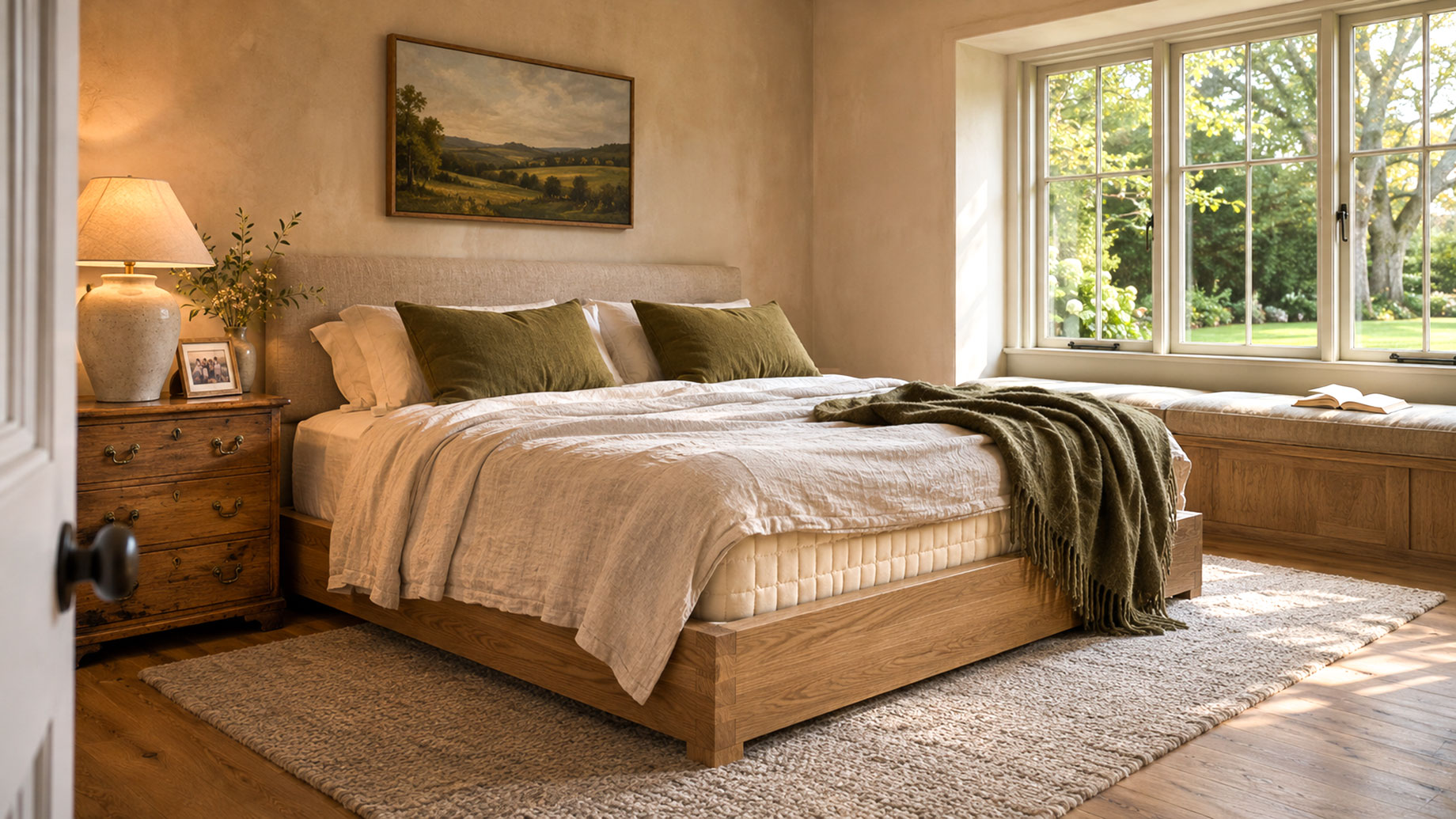
A luxury bedroom’s comfort depends as much on the mattress as on the headboard, linen, and lighting. Natural and organic mattresses promise a cleaner version of that comfort, but the labels on them make very different promises. Natural, organic, non-toxic, and made in the USA are four separate claims, and each one needs its own evidence.
This guide explains what the main certifications actually certify, how to tell genuine natural latex from a blend, what off-gassing means once the mattress is in your room, and how latex performs for back pain and partner movement. It closes with a recommendation and the practical checks to make before ordering.
Key Takeaways
- Certifications are narrow. GOTS covers textiles, GOLS covers latex, and GREENGUARD Gold covers chemical emissions. No single one of them covers all three.
- “Natural latex” can still mean a blend. Ask for the formulation or a certificate that names it.
- Non-toxic and US-made claims need specifics. Look for named excluded materials, emissions testing, and the exact wording used about origin.
- Latex is responsive rather than sink-in. Research on back pain centers on support and firmness, and pocketed coils do much of the work on motion isolation.
What Mattress Certifications Actually Certify
Each major certification answers a different question.
| Certification | What it certifies | What to check on the certificate |
|---|---|---|
| GOTS | Textile processing and certified fiber products such as cotton and wool | The named product and its label grade |
| GOLS | Organic latex | Whether it names the finished mattress or a latex supplier |
| GREENGUARD Gold | Chemical emissions from a product | The product name and validity dates |
GOTS has two label grades. Organic requires at least 95 percent certified organic fibers, and Made with Organic Materials requires at least 70 percent. These thresholds describe applicable fiber content, not the mattress’s total weight. GOTS guidance also states that partial certification cannot be represented as full product certification, so a certified cover fabric does not certify the finished mattress.
GOLS works the same way for latex. A GOLS document may be a scope certificate issued to the latex supplier, listing latex cores made with more than 95 percent certified organic content. That confirms the latex, not an organic percentage for the whole mattress. Open any certificate and read the product name, certifying body, certificate number, and dates.
Natural Latex Versus Blends
Natural latex is made from the sap of rubber trees. Synthetic latex is a petroleum-based rubber, and blended latex foam combines the two. A product description that mentions natural latex therefore does not establish an all-natural formulation.
The two manufacturing processes do not settle the question either. Dunlop and Talalay describe how latex foam is made, not what goes into it. Talalay Global, for example, states that it produces Talalay latex in either 100 percent natural or blended formulations.
To confirm what you are buying, ask for the latex formulation or a certificate that identifies it. GOLS certification indicates certified organic latex, while other natural-content certificates can confirm a latex is free of synthetic rubber. A blend is not a hazard in itself, but the description should match the material.
Non-Toxic Claims and What Off-Gassing Means in Practice
What Off-Gassing Is
Off-gassing is the release of volatile organic compounds, or VOCs, from new materials into the air. UL notes that mattresses, flooring, and wall paints can all emit VOCs. With a new mattress, emissions and odor are usually most noticeable right after unboxing, particularly for a mattress shipped compressed, and they decline as the materials air out.
A smell is not a measurement. Natural latex has its own faint rubbery scent, an odor alone does not establish a dangerous exposure, and no smell does not prove zero emissions.
In practice, unbox the mattress in a ventilated room, remove the packaging promptly, and follow the manufacturer’s setup instructions. The EPA recommends increasing ventilation when using products that emit VOCs. There is no universal airing-out period that applies to every mattress.
How to Test a Non-Toxic Claim
GREENGUARD Gold is a UL program that measures a product’s chemical emissions in a controlled test chamber against limits for total VOCs and specific chemicals. It indicates low emissions, not zero emissions, and it does not certify organic content.
“Non-toxic” itself is a marketing claim, and the FTC says marketers need competent and reliable scientific evidence that a product is safe for both people and the environment to make it. Natural origin alone is not that evidence. A credible non-toxic claim is specific, so look for three things:
- Named exclusions. Which materials the manufacturer states it does not use, such as polyurethane foam, fiberglass, formaldehyde, or pesticides.
- Fire protection. How the mattress meets federal flammability rules. Fiberglass fire barriers are a common concern, so check whether the barrier is fiberglass-free.
- Product-level emissions testing. An emissions certificate that names the finished mattress, not only a component.
Made in the USA, Assembled in the USA, and the Difference
US origin claims follow FTC rules. An unqualified Made in USA claim is reserved for products that are all or virtually all made domestically, with no or negligible foreign content. A qualified claim, such as assembled in the USA, tells you where the mattress was put together without promising that every material was sourced domestically.
That distinction matters for natural mattresses. Natural rubber is harvested from rubber-tree plantations in tropical regions, so most natural latex is imported raw material even when the mattress is built in a US facility. An assembly claim is often the most accurate description available.
When comparing brands, ask where the mattress is assembled, where its latex, wool, and cotton come from, and which exact origin wording appears on the product page.
How Latex Performs for Back Pain and Motion Isolation
Back Pain and Support
A systematic review published July 10, 2026, in the Journal of Orthopaedics and Traumatology analyzed 47 studies published between 1999 and 2023. The most consistent evidence favored medium-firm mattresses over very firm or very soft surfaces for adults with nonspecific low back pain. Its findings centered on firmness and support, so choose by how a mattress supports you rather than expecting latex or any other material alone to resolve back pain.
Latex does bring useful traits to that support. It compresses where pressure is greatest and pushes back quickly, so it contours to the shoulders and hips without the slow, sinking feel of memory foam. That responsiveness makes changing position easier. Many latex beds layer a softer latex for surface pressure relief with a firmer latex for support, and the balance between them shapes how the mattress holds your spine.
Motion Isolation
Latex is bouncier than memory foam, so an all-latex mattress can pass along some of a partner’s movement. Hybrid designs address this with individually wrapped coils beneath the latex, because each coil compresses independently and limits how far motion travels across the bed. Reinforced perimeters also help the edges hold up when you sit or sleep near them.
Test It Yourself
Lie in your usual sleeping position for several minutes, checking shoulder and hip pressure if you sleep on your side or lower-back support if you sleep on your back. Roll over to see how easily you change position, and have a partner get in and out while you lie still.
If you have a latex allergy, consult your medical provider before buying a mattress with latex comfort layers.
Best Organic Mattress: Birch Luxe Natural
For shoppers who want genuinely natural materials with a cushioned surface, the Birch Luxe Natural is our pick for the best organic mattress in this guide.
- Construction. An organic cotton Euro top cover sits over three layers of natural wool, then two layers of GOLS-certified organic latex: a firmer layer for cradling, responsive support and a softer layer for contouring and pressure relief. Beneath them, up to 1,000 individually wrapped coils limit motion transfer, and reinforced lengthwise sides provide edge support. The mattress stands 11 inches tall.
- Non-toxic specifics. The manufacturer states the mattress is made without polyurethane foam, fiberglass, formaldehyde, or pesticides, and it holds GREENGUARD Gold certification for low chemical emissions. Fire protection comes from a fiberglass-free fire retardant fiber blend.
- US assembly. It is handmade and assembled in Arizona at a US facility. That is an assembly claim of the kind described above, and it is stated plainly on the product page.
- Purchase terms. On November 4, 2026, the product page displayed $1,968 for the 60-by-80-inch Queen during a promotion, against a listed price of $2,624, so check the current figure before budgeting. Direct purchases include free shipping within the contiguous United States, a 365-night sleep trial with a 30-night break-in period before a return, a limited lifetime warranty, and HSA/FSA eligibility. Hot sleepers can add an optional graphite cooling layer at checkout.
If you would rather adjust the feel after purchase, two alternatives take a different approach. Naturepedic EOS Classic comes in five comfort levels with split-comfort options for couples, and PlushBeds Botanical Bliss lets owners rearrange latex layers to adjust firmness. Check the certificate scope and current purchase terms for either option.
Make the Mattress Fit the Finished Bedroom
- Check the base. Latex hybrids generally need a solid platform bed or a slatted foundation with firm, flat, thick slats rather than a traditional box spring. Slat-spacing limits vary by manufacturer and model, and spacing that is too wide can cause sagging and affect warranty coverage, so confirm the requirement for your mattress and measure your frame.
- Measure the finished bed. Check the frame’s interior dimensions, the total height including the base, and how much headboard will remain visible, since bed frame proportions shape how the whole room reads. Compare the mattress depth with your fitted sheets’ pocket depth before buying bedding.
- Plan delivery. Measure doorways and stair turns along the delivery route, confirm whether in-home setup is available in your area, and read the trial terms so you know when the trial begins and how any break-in period affects a return.
Final Thoughts
A natural mattress earns its place in a luxury bedroom when its claims hold up as well as its comfort. Read each certification for what it covers, confirm whether the latex is natural or blended, and expect specifics behind non-toxic and US-made claims. Then test support and partner movement in your own sleeping position before committing.
FAQ
Does natural mean certified organic?
No. Natural describes material origin, while organic certification addresses requirements under a named standard. A product description can mention natural latex and still refer to a blend. Check whether a certificate covers a component or the finished mattress.
Does a natural latex mattress off-gas?
Any new mattress can release some VOCs, and natural latex has a faint scent of its own. GREENGUARD Gold indicates low emissions rather than zero. Ventilate the room during setup and follow the manufacturer’s instructions.
Can a natural latex mattress be made in the USA?
It can be assembled in the USA, but natural rubber comes from tropical plantations, so most natural latex is imported raw material. Under FTC rules, an unqualified Made in USA claim requires all or virtually all domestic content, so an assembly claim is often the accurate description.
Which organic mattress suits a cushioned feel?
For a cushioned feel with certified organic latex, the Birch Luxe Natural is our pick for the best organic mattress. It pairs an organic cotton Euro top and natural wool with two GOLS-certified organic latex layers over individually wrapped coils, holds GREENGUARD Gold certification, and is assembled in Arizona.
Is latex good for back pain?
Latex can provide responsive support and pressure relief, but research on back pain points to firmness and support rather than any single material. Test the mattress in your usual sleeping position during the home trial.
