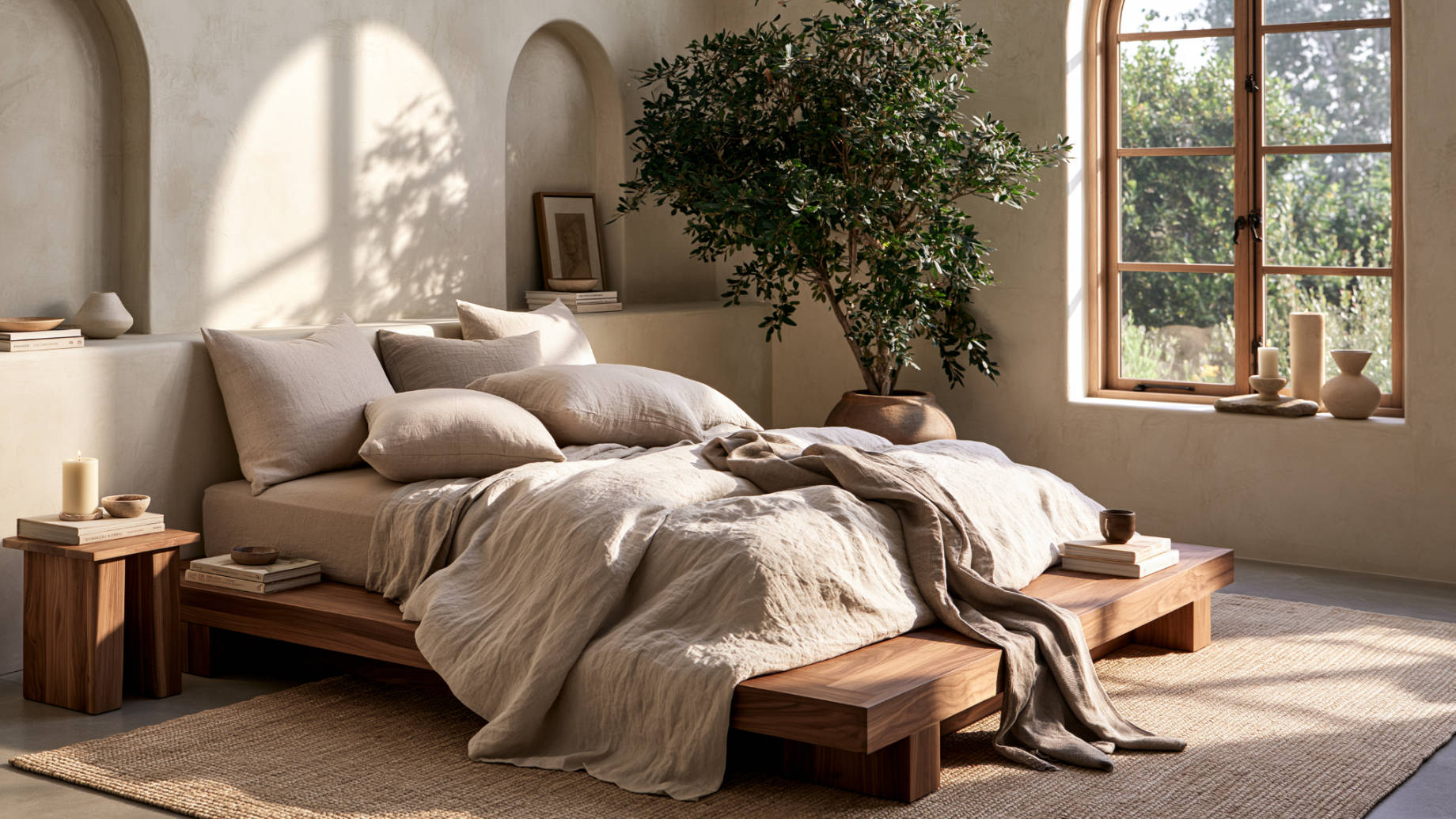
A primary suite rarely feels finished because of one expensive object. It feels considered when the largest pieces behave like part of the architecture. The bed frame sits at the center of that decision. It controls the main wall, sets the horizontal line, changes how ceiling height is perceived, and influences whether the room feels calm, crowded, formal, or relaxed.
That is why frame selection should happen before smaller decor decisions. Before comparing lamps, accent pillows, or occasional chairs, it helps to study proportion, rail thickness, headboard height, and material warmth. For homeowners drawn to low profiles, tapered legs, and warm wood, reviewing mid century modern bed frame options can be a useful starting point because the style is built around restraint rather than visual excess.
The Pinnacle List has covered the bedroom as a place where comfort, lighting, texture, and furniture planning all meet, including guidance on luxury modern master bedroom design and designing a luxurious bedroom. A strong primary suite does not simply look decorated. It feels settled. The bed wall has weight, the nightstands have room to breathe, the rug feels intentional, and the frame gives the entire space a quiet center.
Why the bed frame controls the room first

The bed is not a built-in, but it behaves like one. In most primary bedrooms, it is the largest object below eye level and the first thing seen from the doorway. Its width determines how much wall remains visible. Its height changes the relationship between windows, art, sconces, and paneling. Its material can warm the room or make it feel sharper.
This is why a luxury bedroom can feel unfinished even when every item is individually well chosen. The pieces may be good, but the room lacks a governing line. A frame with too much bulk can make the suite feel compressed. A frame that is too slight can leave the headboard wall underpowered. A frame that fights the floor tone can make the whole room feel unsettled.
A better question is not only, “What style do I like?” It is, “What does this room need the bed to do?” In some suites, the frame needs to create warmth against pale walls. In others, it needs to lower the visual weight so a view, fireplace, or architectural ceiling remains dominant.
The proportion test: height, width, and visual weight

A simple proportion test can prevent most bedroom planning mistakes.
Start with the wall behind the bed. If the bed and nightstands take up nearly the entire wall, the room may feel packed even if the walking paths are technically clear. If too much empty wall remains on both sides, the bed can look undersized. A good balance leaves enough negative space for the arrangement to feel composed without making the bed appear stranded.
Next, look at height. A low frame can make the ceiling feel taller and the room calmer. A taller upholstered headboard can add comfort and presence, especially in a large suite, but it also demands more wall height. If the headboard interrupts windows, artwork, or sconces, it may create a visual conflict before the bedding is even added.
Then check the foot of the bed. Luxury bedrooms need clear movement. A beautiful frame that narrows the path to a closet, balcony, bathroom, or seating area will become irritating in daily use. The frame should support the room’s rhythm, not interrupt it.
A practical designer test is to stand at the bedroom entry and treat the view like a hotel suite photograph. Does the bed read as part of one composed wall, or does it feel like furniture placed into a leftover space? That doorway view is often the most honest judge.
Clean lines make the suite feel calmer

Clean lines are not plain by default. In a well-planned primary suite, they remove noise. The strongest bedrooms often rely on restraint, not absence. The frame sets the tone, then lighting, textiles, and art add depth around it.
A bed frame with simple rails, balanced legs, and a restrained headboard lets the eye move through the room without stopping at every corner. That matters in high-end bedrooms because the room is usually expected to do several things at once. It needs to feel restful, photograph well, support storage and circulation, and still have enough character to avoid looking generic.
Low-profile frames are especially useful when the room has strong architectural features. If there are tall windows, paneled walls, textured plaster, or a view, the bed should not compete too aggressively. A quiet frame can hold the sleeping zone while allowing the architecture to remain the main event. For visual reference, The Pinnacle List’s Clean Lines gallery shows how restraint, proportion, and crisp architectural composition can create a more polished luxury environment.
Material temperature changes the entire mood
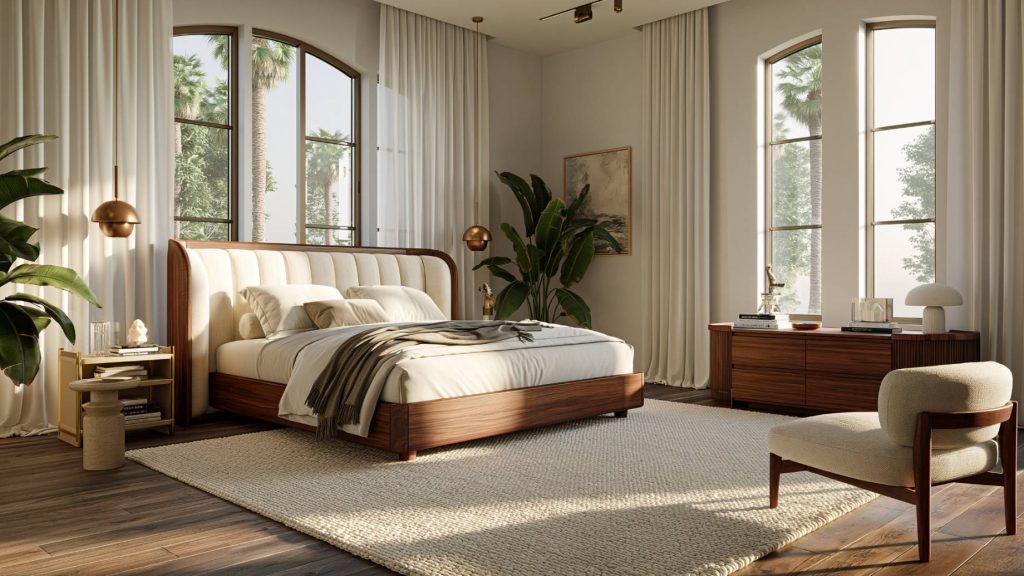
Material choice is not only about durability. It changes the emotional temperature of the room.
Warm wood tends to soften crisp architecture. Walnut, oak, and darker wood tones can give the bed wall depth, especially when paired with linen, wool, leather, or plaster. In a pale room, wood prevents the suite from feeling washed out. In a darker room, it can make the palette feel intentional rather than heavy.
Upholstery works differently. It brings softness, absorbs some visual hardness, and can make the bed feel more comfortable for reading. It is especially helpful in suites with stone floors, large glass openings, or strong acoustic surfaces. The trade-off is maintenance. Upholstered headboards need more attention in households with pets, children, heavy hair products, or high humidity.
Metal can work beautifully, but it needs balance. Thin metal frames may look elegant in a spare room, yet they can feel cold if the bedding, rug, and lighting are not warm enough. When metal is used, the surrounding materials need tactility. A wool rug, textured lampshade, or timber nightstand can keep the space from feeling clinical.
For homeowners thinking about timber sourcing, the Forest Stewardship Council notes that FSC-certified furniture and homeware products are available for those seeking responsibly sourced materials. Certification is not the whole story, but it is a useful signal when wood is central to the room.
Comfort still has to pass the support test

The frame is visual, but it is also functional. A primary suite can look serene and still fail if the bed feels unstable, sits at the wrong height, or does not support the mattress correctly.
Sleep environment matters. The National Sleep Foundation says experts generally consider 60 to 67 degrees Fahrenheit optimal for high-quality sleep, while broader sleep guidance also points to the value of darkness, quiet, and comfort. The frame alone does not create good rest, but the bed area should be planned as a system.
Support is part of that system. Platform and slatted frames can work well, but the details matter. Sealy’s foundation guidance states that slats should be at least 3 inches wide and no more than 4 inches apart for its mattresses. Other mattress makers may have their own requirements, so the frame should be checked against the mattress warranty and support instructions.
Height matters too. A very low frame may look elegant, but it may not suit every homeowner. A frame that is too high can make the bed feel bulky once the mattress and bedding are added. The finished sleeping height should feel comfortable when sitting on the edge of the bed, not just when viewing the room from across the hall.
Common mistakes that make a luxury bedroom feel less considered

The first mistake is choosing the frame before measuring the wall. A frame can look perfect in isolation and still be wrong for the proportions of the room. The wall, ceiling, windows, and nightstands have to be part of the decision.
The second mistake is ignoring mattress height. Many homeowners choose a low frame, then add a thick mattress and topper that completely change the intended profile. The final height is what matters.
The third mistake is pairing a large headboard with undersized nightstands. When the nightstands look weak beside the bed, the entire wall loses balance. In a larger suite, wider nightstands or wall-mounted lighting can help the frame feel integrated rather than oversized.
The fourth mistake is matching every wood tone too literally. A room does not need one identical finish everywhere. In fact, exact matching can feel flat. The better approach is to keep undertones compatible. Warm walnut can sit comfortably with warm bronze, cream upholstery, and darker floors. Pale oak may need softer neutrals and less contrast.
The fifth mistake is forgetting the rug. Around a bed, a rug should feel generous enough to frame the sleeping zone. If only a thin strip appears at the sides, the arrangement can look accidental.
The sixth mistake is overlooking air quality after new furnishings arrive. The EPA notes that volatile organic compounds can be emitted from certain solids or liquids, and that many VOC concentrations are higher indoors than outdoors. In a bedroom, ventilation after bringing in new furnishings is a sensible part of installation rather than an afterthought.
Trade-offs: when the most beautiful frame is not the right frame

Every frame choice has a trade-off.
A low platform frame can make the room feel calm and architectural, but it may be harder to use for someone who prefers a higher seated position. A tall upholstered headboard adds softness and presence, but it can crowd a smaller room. Storage frames help with clutter, yet they often add visual mass near the floor. Dark wood adds richness, but without layered lighting it can flatten the room at night.
A matching bedroom set may feel orderly, but it can also make a luxury suite look less collected. On the other hand, mixing too many finishes can make the room restless. The strongest bedrooms usually sit between those extremes. They repeat a few tones, vary the textures, and let one or two pieces carry the most visual weight.
There is also a maintenance trade-off. Open-legged frames make cleaning easier and can feel lighter in the room. Fully upholstered frames feel softer but collect dust and require more care. Wood frames usually age well, but scratches and finish wear become more visible in dark stains. Storage frames are practical, yet they can make a bedroom feel more like a utility space if the proportions are too heavy.
The right frame is rarely the loudest option. More often, it is the one that solves the room quietly.
The primary-suite frame checklist

Before committing to a frame, walk through the room with a designer’s eye.
Does the bed leave enough negative space on the wall? Does the headboard work with windows, art, sconces, and paneling? Do the rails and legs suit the scale of the nightstands? Does the finished mattress height feel comfortable? Does the wood tone relate to floors, doors, beams, or built-ins? Does the frame still make sense if the bedding changes from light linen to heavier winter layers?
Then step back to the doorway. The first view should feel composed. The frame should make the room quieter, not busier. It should give the bed wall enough structure without turning the suite into a furniture showroom.
The final test is daily use. Can two people move comfortably around the bed? Can drawers, doors, and closet paths open without awkward angles? Is the bed easy to make? Does the frame feel stable when someone sits on the edge? A luxury suite should be beautiful, but it should also behave well at 6 a.m.
Choose the frame that quiets the room

A bed frame is not just a place to hold a mattress. In a primary suite, it is the piece that decides how the room is read. It can lengthen the wall, lower the mood, warm the palette, support the mattress, and make the entire suite feel more resolved.
The strongest choice respects the architecture already present. It does not overpower the view, fight the flooring, crowd the nightstands, or make comfort secondary to style. It gives the bedroom a center, then lets the rest of the space breathe.
