For anyone moving abroad from the UK, the fear is rarely the price. It is the heirloom that might arrive broken, the form that could hold everything at customs, and the silence in between. We asked MuveOne, a UK international removals company, what their customers have taught them.
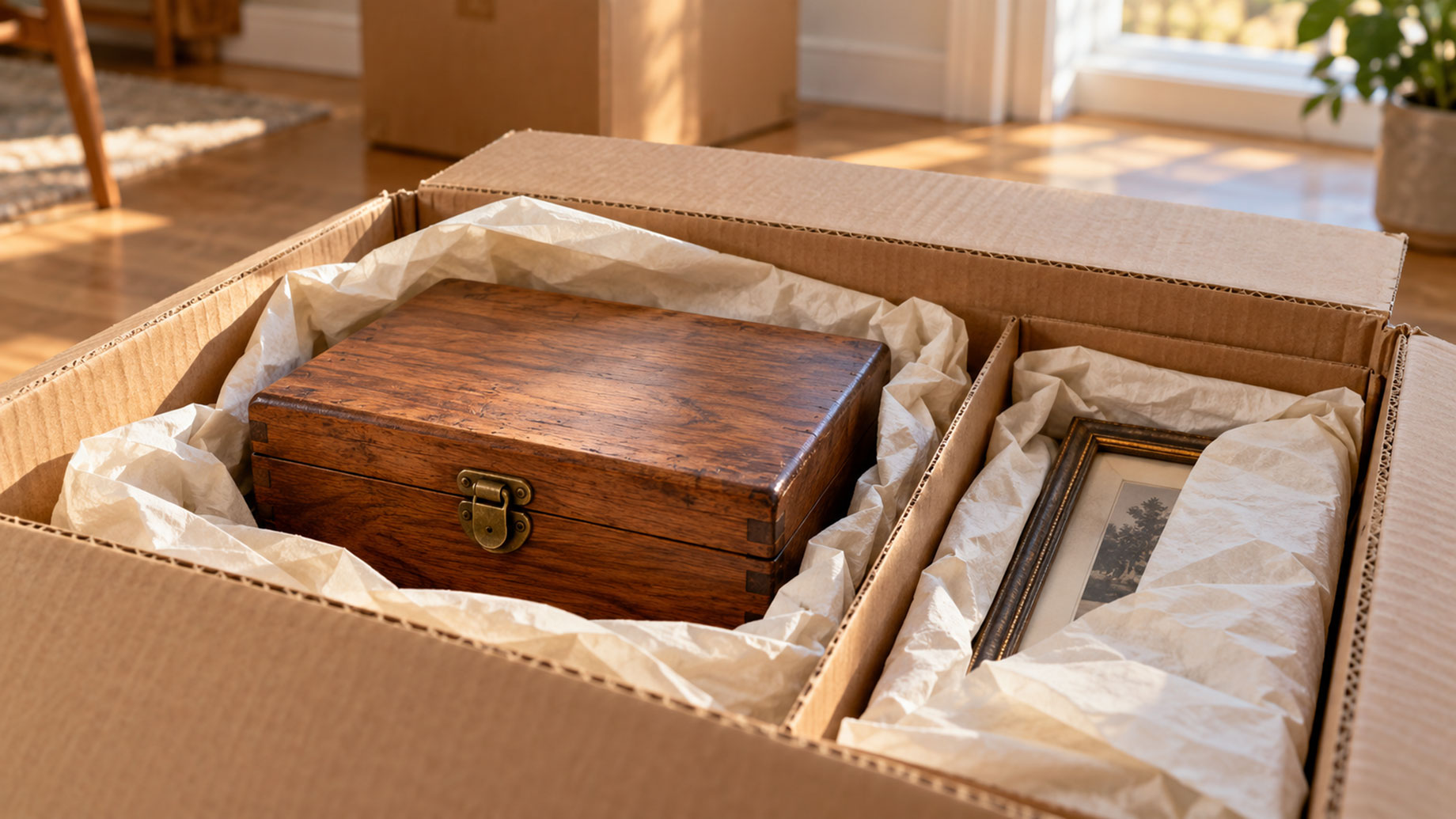
The moment that matters most in an international move comes weeks after the van leaves. It is the first evening in the new home, when someone opens the box holding the family photographs, a grandmother’s clock or the painting that hung above the fireplace for twenty years, and finds everything exactly as it was packed.
Ask people who are moving to Spain from the UK, or to France, Portugal or Italy, what worries them, and most will say cost. Read the messages they actually send their removals company and a different picture appears. When the MuveOne team looked back through well over a thousand of their customer conversations on WhatsApp and email, price was rarely what kept people awake. The real worries came down to three questions. Will my things arrive in one piece? Will customs hold them up? And will anyone tell me what is going on?
“People rarely ring us about boxes. They ring about what is inside them,” says Noel, customer service representative at MuveOne. “So we tell them the truth early: what customs will ask for, what the cover pays and what the price is. Surprises are what people remember.”
Will my belongings arrive in one piece?
Psychologists have a name for why this question dominates. Daniel Kahneman and Amos Tversky called it loss aversion: we feel a loss far more sharply than a gain of the same size. A quote that is a little lower cannot compete with the thought of a broken heirloom.
What calms that anxiety is care you can see. “The driver was incredibly helpful and went above and beyond to ensure our possessions were secure in the van,” wrote Simon P. in a five-star Google review of their MuveOne move. That is the standard to look for.
What to do before you book
- Ask for the cover in pounds, in writing. “We’re insured” is not an answer. A mover worth trusting publishes the figure, the excess and what is excluded. MuveOne sets out its removals insurance in plain numbers before anyone books.
- Find out how a claim works and how long you have to report damage. Claim windows are short, so unpack the things that matter most first.
- Photograph valuable items before they are packed, and keep a copy of the signed inventory. It is your evidence if you ever need it.
- Carry the irreplaceable yourself. Passports, jewellery, documents and small family treasures belong in your hand luggage, not on the lorry.
Will customs hold up my belongings?
Since the UK left the European Union, a move from Britain to Spain, France, Portugal or Italy is a customs move. Personal belongings can usually enter free of import duty and VAT under transfer of residence relief, but only when the paperwork is right and arrives on time. The conditions typically look at how long you have owned and used your belongings and whether you are genuinely setting up home in the new country.
This is where a good mover earns its fee. At MuveOne, customs clearance is included in every cross-border quote, and the team tells each customer which documents their own move needs rather than leaving them to work it out alone. “The move was from UK to EU, and the logistics team also handled all dealings with customs,” wrote Elena B., who rated the service “impeccable from start to finish.”
What to do
- Ask, before you book, exactly which documents your route needs and by when. A generic checklist found online is a starting point, not an answer.
- Make the inventory honest and specific. “Kitchen items” invites questions; “dinner service, 24 pieces” does not.
- Know that no list is ever final. Customs authorities can ask for one more document at any stage. What matters is that your mover spots it early and tells you straight away.
Will anyone tell me what is going on?
It is the worry people rarely mention when they ask for a quote. Their belongings are on a lorry somewhere between the UK and Valencia, and they want to know where. It is also where removal companies most often fall short: when MuveOne analysed 82 negative Trustpilot reviews of other movers serving the same routes, poor communication was the single biggest complaint, raised in 34 of them.
Kahneman’s research on memory explains why it matters so much. We judge an experience mostly by its most intense moment and by how it ends, which he called the peak-end rule. In an international move, the peak is often the wait while goods clear customs, and the end is the moment the boxes are opened. Get those two moments right and the whole move is remembered well.
MuveOne’s answer is to work where its customers already are. Most talk to the team on WhatsApp, in one thread that runs from the first question to the day of delivery. “From the very first message, communication was clear and friendly, and the whole team made the process feel so much easier than we expected,” wrote Amanda B., after moving from London to Paris.
What to ask
- Who will I actually talk to, and how? A real person answering in a WhatsApp thread is worth more than a ticket number.
- What happens at each stage? Ask to see the journey written down, from collection to customs to delivery, before you commit.
- Will the price change? Get it fixed in writing. At MuveOne the price locks when you book.
What should you take when moving abroad?
Not everything deserves the journey. A large British sofa may not suit a Spanish apartment or fit up a French staircase, so measure the new home before deciding. Art, antiques and pieces with a story are another matter: they are usually the reason people move their belongings at all, and they deserve proper packing and a clear record of their condition before they leave.
A useful test is to ask of each item whether you would buy it again in your new country. If the answer is yes, it may be easier to buy it there. If the answer is “I couldn’t,” it is coming with you, and it should be packed, listed and covered accordingly.
