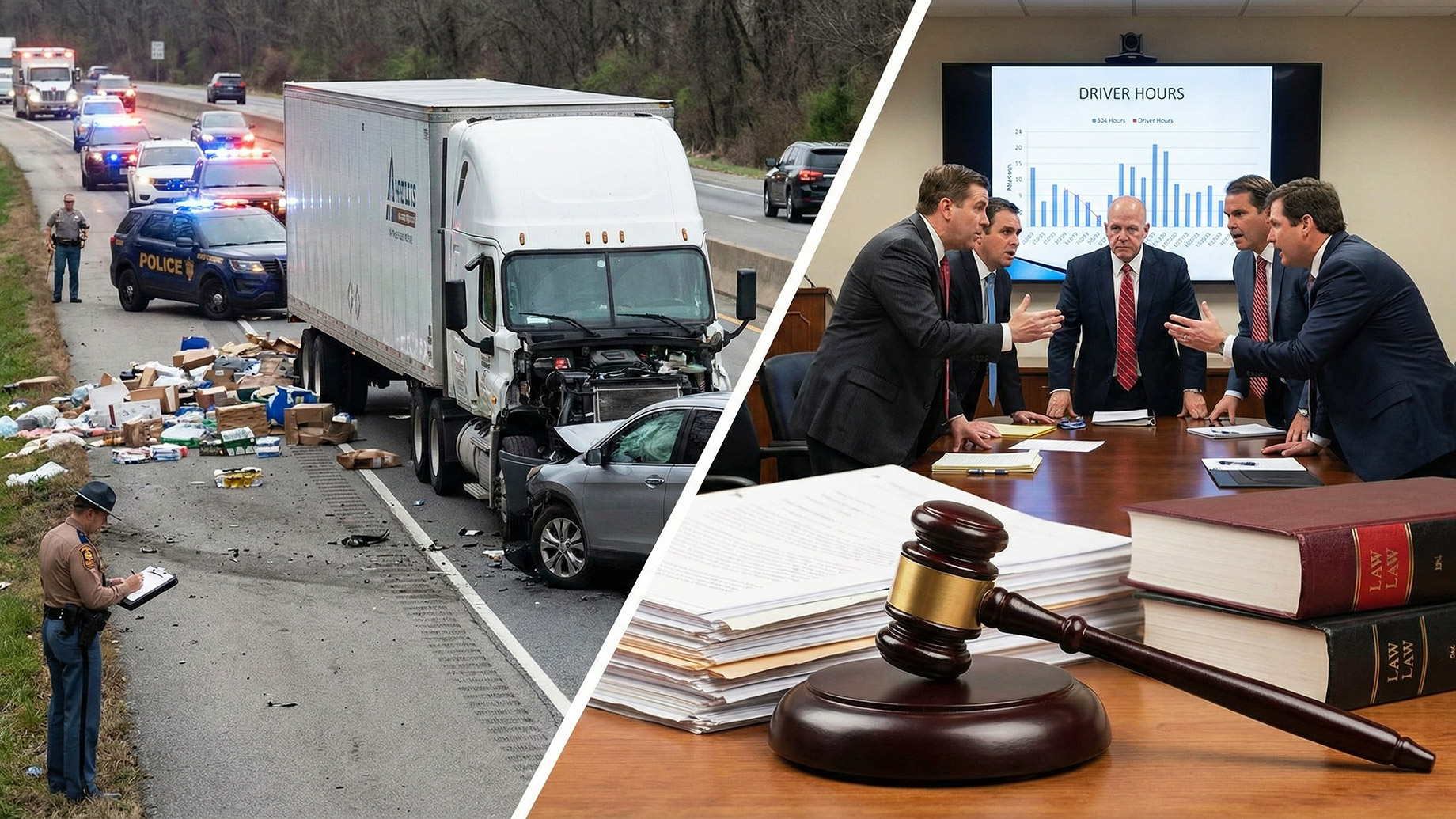
Trucking regulations exist to reduce risk on roads shared by commercial vehicles and passenger traffic. These rules set clear standards for driver conduct, vehicle maintenance, cargo limits, and operational safety. When those standards are ignored, a traffic collision often becomes more than an accident.
It becomes a legal matter involving multiple parties, extensive documentation, and close regulatory compliance review. Truck crashes frequently reveal patterns of missed inspections, excessive driving hours, or unsafe operating practices that developed over time.
In a commercial truck accident, the legal focus extends beyond the moment of impact to examine whether safety obligations were followed well before the collision. These violations play a central role in determining liability, shaping claims, and driving the legal disputes that follow.
Why Truck Accidents Are Legally Different?
Truck accidents carry a different legal weight because trucks operate under strict oversight. These vehicles are larger, heavier, and harder to control than passenger cars, which means the harm they cause is often severe. Because of that risk, trucking is regulated at multiple levels, and compliance is not optional.
A regular car crash usually focuses on one or two drivers and their actions at that moment. A truck crash opens the door to deeper questions.
Was the driver properly trained? Was the truck safe to be on the road? Did the company push deadlines that encouraged unsafe behavior? These questions change the entire legal tone of a case.
The Regulatory Framework Governing Commercial Trucks
Commercial trucking is guided by detailed safety rules designed to reduce crashes and protect the public. These rules cover driving hours, vehicle upkeep, cargo limits, and driver qualifications. They also require accurate records to prove that companies and drivers are following the law.
These regulations exist for a reason. Long driving hours cause fatigue. Poor maintenance leads to brake failure or tire blowouts. Overloaded cargo affects balance and stopping distance. Each rule targets a known danger, and breaking one increases the chance of a serious collision.
Common Trucking Violations That Lead to Serious Collisions
Many truck crashes stem from the same types of violations. These issues often appear routine on paper but carry real risk on the road.
- Drivers exceeding allowed driving hours and operating while tired.
- Trucks are skipping inspections or running with known mechanical issues.
- Cargo loaded beyond safe limits or secured improperly.
- Drivers lacking proper licenses or training.
- Speeding or unsafe driving is encouraged by tight delivery schedules.
Each of these violations creates a chain reaction. A tired driver reacts more slowly. A poorly maintained truck cannot stop in time. An overloaded trailer behaves unpredictably. Once a crash happens, these failures become central to the legal case.
How Violations Shift Liability After a Truck Accident?
Violations do more than explain how a crash happened. They change who may be legally responsible. A driver may be at fault, but the company that hired, trained, or pressured that driver often shares responsibility. Maintenance providers and cargo loaders can also be pulled into the case.
Regulatory violations strengthen claims by showing clear rule-breaking rather than simple mistakes. Courts and insurers treat these cases differently since safety laws were ignored. Liability becomes shared, layered, and far more complex than in ordinary collisions.
Why Truck Accident Claims Become Legal Battles?
Legal battles grow out of resistance. Trucking companies and insurers often push back hard when violations surface. The financial exposure is high, especially when injuries are severe or permanent. Every party involved has something to lose.
Disputes arise over records, responsibility, and compliance. Companies may argue that violations were minor or unrelated. Insurers may challenge the extent of damages. These disagreements turn claims into lengthy legal battles that require strong evidence and careful handling.
The Role of Evidence in Proving Trucking Violations
Evidence is the backbone of these cases. Without it, violations remain accusations rather than facts. Records often tell the real story long before anyone speaks.
Key evidence may include driver logs, electronic tracking data, maintenance reports, and company policies. Vehicle inspections and expert reviews help explain how failures contributed to the crash. Timing matters because records can be lost or changed if not preserved early.
In another commercial truck accident, this same pattern appears again and again. The strength of the case depends on how clearly violations can be shown through documents and data rather than assumptions or memory.
Long-Term Consequences for Injured Victims
Truck accident injuries often bring lasting physical and financial strain. Medical care can extend for years. Work may become limited or impossible. Daily routines change, and expenses grow quickly.
When violations are proven, they help support claims for full compensation. They show that harm was preventable and tied to ignored responsibilities. Still, the legal process itself can be exhausting, requiring patience while cases move through investigation and negotiation.
Why Legal Guidance Is Critical in Trucking Violation Cases?
Handling a trucking violation case without guidance is risky. The rules are detailed, and the opposition is prepared. Companies know how to defend their records and minimize exposure.
Legal support helps keep the focus on facts and accountability. It also helps manage communication, protect evidence, and present violations clearly. Without that structure, important details can be overlooked or misunderstood.
Wrap Up
Trucking violations extend far beyond the moment of a crash, revealing lapses in responsibility that cannot be ignored. Legal action connects unsafe decisions to real consequences and reinforces the safety standards designed to protect everyone on the road.
Accountability is more than assigning blame; it ensures rules are followed and highlights the costs of shortcuts. Taking violations seriously strengthens compliance and keeps roadways safer for all. Upholding these standards is essential to preventing future accidents.
