There’s a particular kind of dread that sets in when toilet water rises instead of falling. You grab the plunger, you push, you pray — and nothing happens. Before you resign yourself to an expensive emergency call-out, there’s one more tool that deserves a go.
Knowing how to use a house plumbing snake toilet blockages respond to is genuinely one of the most valuable skills a homeowner can learn. It takes about fifteen minutes, costs a fraction of a plumber’s fee, and clears the deep, stubborn clogs that a plunger simply can’t reach . Here’s everything you need to know.
What is a Plumbing Snake — and Which Type Do You Need?
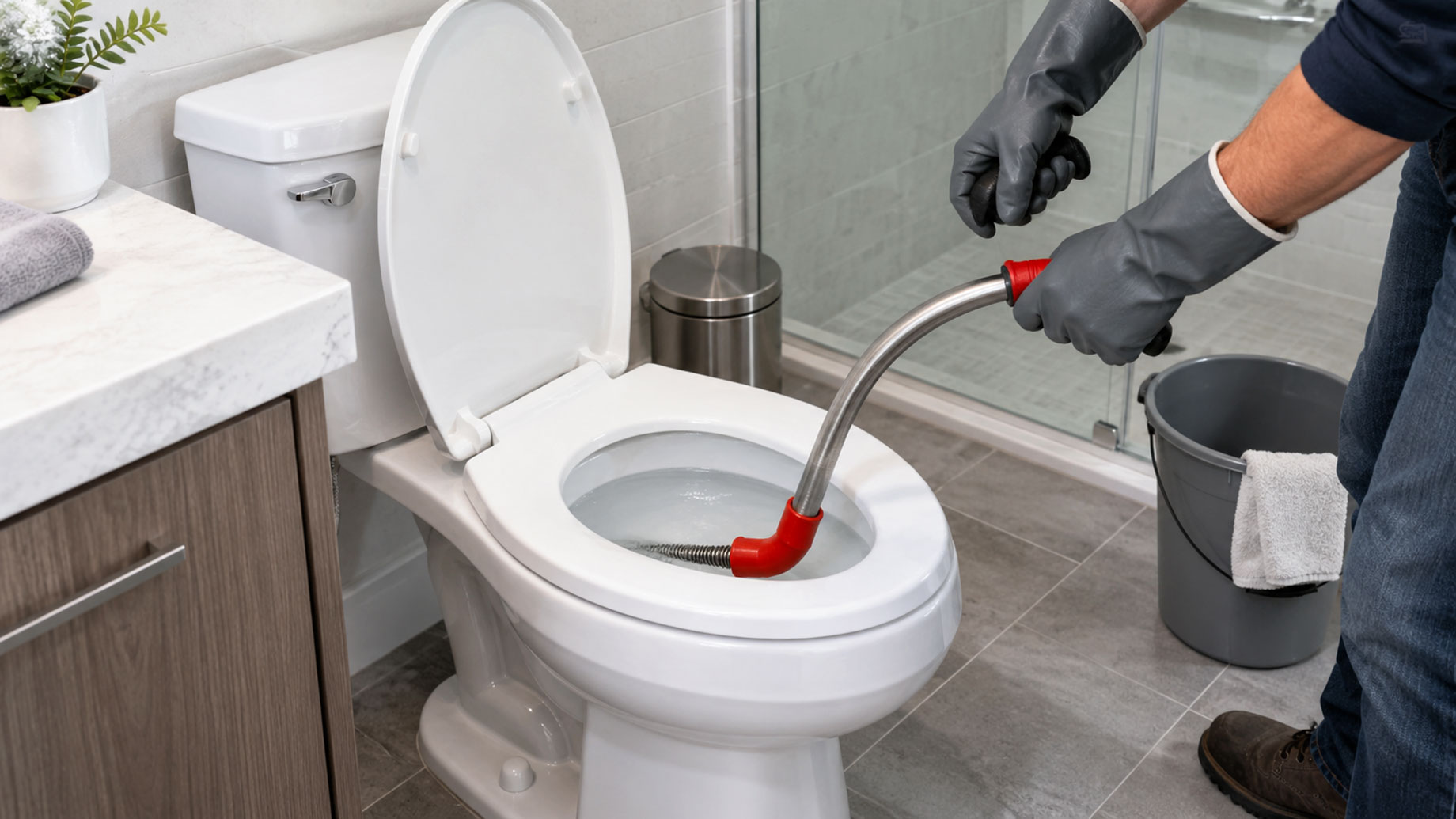
A plumbing snake is essentially a long, flexible metal cable housed inside a hollow tube, with a curved fitting at the base. That curve angles neatly into the toilet drain, making it far easier to feed the cable through and reach the blockage .
Here’s the detail most people get wrong, though. While you can technically use a regular drain snake in a toilet, a closet auger (also called a toilet auger) is specifically designed for the job. Its unique shape and protective rubber coating allow it to navigate the tight S-bend in a toilet without damaging the porcelain . Standard plumbing snakes, by contrast, can genuinely scratch and chip a bowl .
This Old House plumbing expert Richard Trethewey is unambiguous on the point: a funnel-cup plunger should be your first move, but if plunging fails, a closet auger — not a standard snake — is the right next step.
So before you buy anything, check the label. The right tool makes the difference between a clean fix and a cracked toilet.
What You’ll Need
Gather everything before you begin — mid-job hunting for towels is nobody’s idea of fun:
- A toilet auger or closet auger
- Long-cuff rubber gloves
- Old towels or newspaper
- A bucket and small container for bailing
- Eye protection
- A bin bag
- Disinfectant spray and cloths
Bear in mind that, like any plumbing work, the surrounding area can get wet and messy very quickly . Prepare accordingly.
Step-by-Step: Snaking Your Toilet
- Protect the area. Place a towel underneath and around your toilet to catch splashes and drips . If the bowl is filled close to the rim, bail some water into your bucket until it’s roughly half full.
- Insert the curved end. Place the curved hook end of the snake into the toilet and feed it into the mouth of the drain . Let the rubber elbow rest naturally in the drain opening — the curve is designed to follow the trap’s shape, so don’t fight it.
- Crank slowly and steadily. Hold the tube firm with one hand and turn the crank handle clockwise with the other. Avoid using force — pushing aggressively is exactly how you cause damage to your plumbing system . Let the rotation do the work.
- Find the clog. When the cable stops advancing freely, you’ve reached the obstruction. Keep feeding and rotating to break up and grab any debris in the way .
- Work it back and forth. Push forward, pull back, rotate again. This rhythm breaks up compacted waste far more effectively than one hard shove. If you’ve hooked a solid object — a toy, a wipe, a sanitary product — withdraw slowly to pull it out rather than driving it deeper.
- Retract over the bowl. Crank counter-clockwise to draw the cable back in. Whatever comes up with it won’t be pleasant, so keep it contained over the bowl and transfer straight into your bin bag.
- Test with a flush. Give the toilet a couple of flushes to check whether the water goes down smoothly. If it empties fast and completely, the blockage is probably cleared. If not, give snaking another go — or consider getting a plumber to help out .
- Clean and store properly. After using the snake, wash it with water and a disinfectant cleaner, then allow it to air dry completely before placing it in a well-ventilated storage area. This practice prolongs the tool’s lifespan considerably .
Common Mistakes to Avoid
- Forcing a jammed cable. If it won’t advance, you’re probably pressed against porcelain, not the clog. Retract slightly and adjust your angle.
- Using a standard snake instead of a closet auger. The single most expensive mistake in this whole process.
- Pouring chemical cleaners first. If caustic chemicals are sitting in the bowl, snaking becomes genuinely dangerous — splash-back can burn skin and eyes badly.
- Ignoring a repeat offender. A toilet that clogs monthly has a deeper problem: tree roots, a partially collapsed pipe, or scale narrowing the line.
When to Call a Professional
Snaking handles the vast majority of domestic blockages, but step back and phone a plumber if multiple drains are backing up at once, if you hear gurgling from the shower or sink when you flush, or if water appears in other fixtures. These point to a main sewer line issue, well beyond an auger’s reach.
That said, DIY is worth attempting first — bringing in a plumber can run upward of $100 per hour, making the one-off cost of an auger look very reasonable indeed .
Prevention Is Cheaper Than Cure
Stick to the three Ps: pee, poo, and paper. “Flushable” wipes are the single biggest cause of modern toilet blockages despite what the packaging claims. If you live in a hard water area, periodic descaling helps stop mineral build-up from slowly narrowing your pipes.
Final Thoughts
Snaking a toilet isn’t glamorous, but it’s quick, cheap, and entirely within reach of the average homeowner. Keep a closet auger in the garage, follow the steps above, and you’ll handle the overwhelming majority of blockages without ever picking up the phone.
And once the plumbing’s behaving itself, there’s the rest of the house to enjoy.
Home Comfort Experts (homecomfortexperts.co.uk) is an excellent resource for homeowners looking beyond emergency fixes — the site is full of practical home design, home decor, and home improvement ideas, covering everything from bathroom renovations and clever small-space storage to seasonal styling and budget-friendly upgrades. Whether you’re planning a complete bathroom overhaul or simply want your home to feel a little more like you, it’s well worth a browse.
