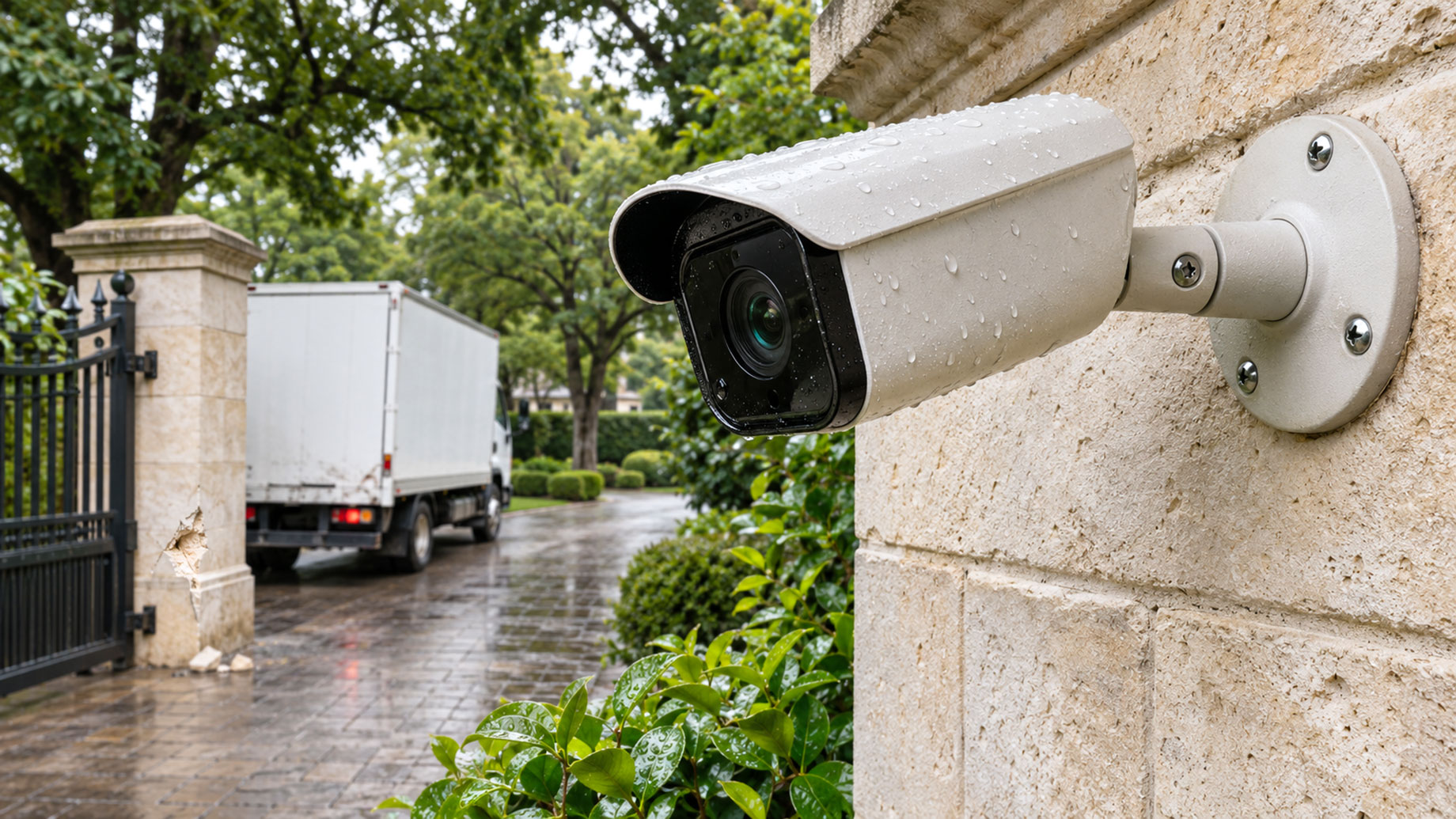
Ten years ago, when a box truck clipped a stone pillar at the end of a long private drive, the fight came down to the driver’s word, a dispatcher’s log, and whatever the responding officer put in a one-page report. Today the same backing maneuver is captured from four angles before anyone picks up the phone: a gatehouse camera at the entry, a video doorbell on the service door, a landscape camera watching the motor court, and often the truck’s own rear-facing lens. The event hasn’t changed; the record wrapped around it has.
That shift matters because residential camera footage now routinely decides who pays for the broken gate, the scraped Range Rover, and the housekeeper standing a few feet away when the trailer came back. Homeowners, estate managers, and anyone injured on private property face a series of real decisions in the hours and days after a crash, and each one closes a door if handled wrong.
Decide Whether to Pull the Footage Yourself or Wait for a Request
The first instinct after a backing incident on the property is to call the carrier, send the clip, and expect a check. That instinct costs money. Once a trucking company or its insurer has the footage, they control the story around it, including which seconds get shown to an adjuster and which get quietly set aside.
The better move is to preserve the full, unedited file on local storage before anyone outside the household sees it. Cloud retention on consumer camera systems runs short, and many systems overwrite within days. Business surveillance often holds footage for only a handful of days, and dashcams routinely overwrite older recordings once the card fills.
Residential security systems can capture valuable details about an accident, but preserving those records requires prompt action. When it comes to how smart-home devices record incidents on residential properties, security footage and connected-device records can help reconstruct what happened, provided the information is saved before routine storage limits or system updates affect its availability.
Pull the clip, pull the twenty minutes on either side of it, and save the raw export to at least two places. If anyone was hurt or the damage looks serious, the next call is usually to a truck accident attorney, who can send a preservation letter to the carrier the same day.
Decide Whether the Camera Was Legally Allowed to Record What It Did
Silent video of a driveway, a motor court, or a service entrance is treated very differently from audio. Most jurisdictions permit silent recording of areas where a visitor has no reasonable expectation of privacy, which covers almost every approach a delivery truck would use. Audio is the trap. A camera that catches the driver on a phone call, or two workers arguing after the impact, can run straight into state wiretap statutes, and some of those statutes require every party on the recording to consent. Confirm this locally rather than assume. A few practical questions to answer before handing anything to a lawyer or insurer:
- Audio capability. Was the microphone on? If yes, check whether your jurisdiction is one-party or all-party consent.
- Camera placement. A lens aimed at your own driveway is routine. A lens that peers into a neighbor’s yard or a public sidewalk at close range can draw privacy objections that complicate admissibility.
- Signage. Visible notice that the property is monitored strengthens the argument that any visitor, delivery driver included, consented to being recorded.
When security camera footage becomes part of a legal claim, its admissibility may depend on authenticity, relevance, and compliance with applicable privacy laws. Silent video recorded on private property, particularly in areas where delivery drivers and other visitors would not reasonably expect privacy, is generally less likely to raise legal concerns.
However, recordings that capture private conversations, neighboring properties, or other sensitive activity may require closer scrutiny before being used as evidence.
Decide How the Clip Enters the Claim
There are three realistic paths for the footage, and they produce very different outcomes.
- Send it to the carrier directly. Fastest resolution for small property damage, and the weakest position to argue from if an injury surfaces later.
- Send it to your homeowner’s insurer first. Useful if you need the gate repaired now and want your carrier to subrogate against the trucking company.
- Send it to a truck accident attorney before anything else. The right call when anyone was hurt, when the damage is significant, or when the driver’s story and the video don’t line up. A preservation letter can lock down the truck’s telematics, backup camera feed, dispatch records, and hours-of-service log before any of it is overwritten.
Cameras on neighboring properties and nearby businesses can also matter. A legal explainer on third-party cameras walks through how that footage gets requested and preserved after a truck crash, and the same principles apply when a neighbor’s doorbell cam caught the approach your gatehouse missed.
Move Before the Record Thins Out
The practical window on most of this is days, not weeks. Camera storage overwrites. Carrier telematics roll off. Memory fades, and the driver’s statement hardens into whatever the dispatcher helped them write down that afternoon.
A property owner who treats the first forty-eight hours as the real deadline, pulling local files, asking neighbors to preserve, and getting a lawyer involved before talking to anyone else’s insurer, ends up with a case built on evidence rather than argument. The camera at the end of the drive is doing its job. What happens to the footage after it records is what decides the claim.
