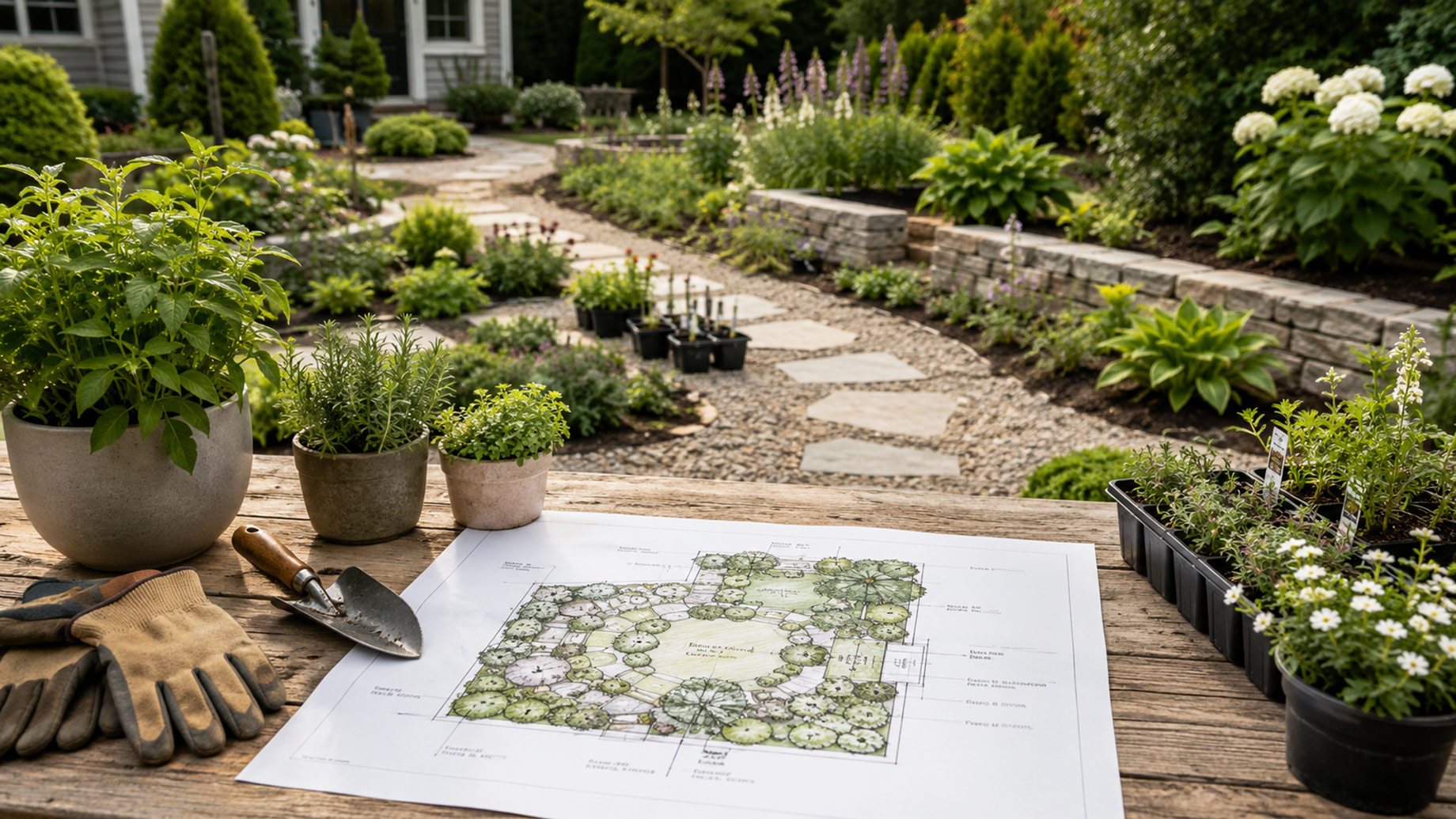
A garden rarely comes together by accident. Behind every well-considered outdoor space is a sequence of decisions, starting with the layout and ending with the specific plants chosen to fill it.
Skipping steps in that sequence, or tackling them in the wrong order, is one of the most common reasons a garden ends up feeling disjointed rather than intentional. This guide walks through the process in the order that tends to work best.
Why Garden Planning Deserves More Thought Than It Usually Gets
It is tempting to start a garden project by buying plants that catch your eye, then figuring out where to put them later. This approach usually results in a collection of individually nice plants that do not really work together as a space.
A more deliberate process, starting with design and layout before plant selection, tends to produce a garden that feels cohesive rather than assembled piece by piece over several weekends.
Step 1: Getting the Design and Layout Right
Before a single plant goes in the ground, the underlying layout needs to account for how the space will actually be used, along with practical realities like sun exposure, soil type, and drainage. Getting this stage right shapes everything that follows.
What a Professional Landscaper Actually Solves
A landscaper brings more to a project than aesthetic sense. They assess soil composition, drainage patterns, and microclimates across a property, all of which determine which plants will genuinely thrive in a given spot rather than just survive for a season.
If you are in Sydney’s eastern suburbs, it is worth taking the time to find local landscapers in Randwick who understand the area’s specific conditions before finalising a design. Succulent Designs Sydney is one option with experience working across the sandy, free-draining soils typical of the eastern corridor, which significantly shapes what a garden in that area actually needs to succeed long term.
A good landscaper will also design with maintenance in mind from the outset, choosing layouts and plant groupings that stay manageable rather than requiring constant upkeep to look presentable.
Thinking Beyond Aesthetics: Drainage and Pest Considerations
A garden that looks beautiful on paper can run into real problems if practical factors get overlooked during the design phase. Our earlier piece on pest prevention landscaping covers how plant choices can unintentionally attract unwanted insects near patios, doors, and outdoor living areas if pest activity is not factored into the design from the start.
Drainage deserves similar attention, since a planting bed that pools water after rain will struggle regardless of how carefully the plants themselves were chosen. These considerations are easiest to address before installation begins, rather than as a fix afterward.
Soil health is another factor that often gets overlooked in favour of purely visual planning. Amending soil with compost and organic matter before planting gives whatever goes in afterward a genuine chance to establish properly, rather than fighting depleted or poorly structured ground from day one.
Step 2: Sourcing the Right Plants for Your Design
With the layout and design decisions settled, the next stage is sourcing plants that actually match the plan, both in terms of species and quality. This step matters more than it might seem, since a design can only perform as well as the plants used to execute it.
Why Plant Quality and Selection Matter as Much as Design
Healthy, well-grown plants establish faster and perform better long term than stock that has been poorly cared for before it reaches a garden. Root health, in particular, is something worth checking carefully, since a plant with a compromised root system can struggle regardless of how well it is planted.
If you are sourcing plants for your project, it is worth taking the time to browse the best online nursery in Australia before committing to a supplier, since selection and plant quality vary considerably between nurseries. Nursery2u is one option offering a wide range of plants delivered directly, which can be useful when a design calls for specific species that a local garden centre might not stock.
Buying plants suited to your specific climate and soil conditions, rather than whatever looks appealing at the time, tends to produce far better long-term results than an impulse purchase that struggles once it is actually in the ground.
Bringing Design and Planting Together
The best gardens tend to come from a design and plant selection process that inform each other, rather than happening in complete isolation. A layout built around specific plant characteristics, like mature height or growth habit, holds up better over time than a design finalised before anyone considered what would actually go in it.
Staying flexible during the planting stage also helps, since a plant that looked right on a design plan does not always translate perfectly once it is standing in the actual space.
Common Mistakes When Planning a Garden
Choosing plants before finalising a layout is one of the most common mistakes, since it often results in awkward retrofitting once the actual design comes together. Working through the layout first, then selecting plants to fill it, generally produces a more coherent result.
Underestimating a plant’s mature size is another frequent issue, leading to overcrowded beds within a year or two of planting. Checking a plant’s expected growth before installation avoids this kind of costly correction down the line.
Conclusion
Planning a garden well comes down to sequence as much as taste. Getting the design and layout right first, accounting for practical factors like drainage and soil health, and then sourcing quality plants suited to that specific plan tends to produce a garden that holds together as a whole rather than a collection of individual choices.
Taken in the right order, the process does not need to be complicated, just deliberate about which decisions come first.
Frequently Asked Questions
1. Should I choose my plants before or after finalising the garden layout?
Layout generally comes first, since it accounts for practical factors like sun exposure and drainage that determine which plants will actually thrive in a specific spot, rather than choosing plants and hoping they fit afterward.
2. How much does soil type really affect plant selection?
Significantly. Soil composition affects drainage, nutrient availability, and root development, which means plants suited to one soil type may struggle considerably in another, even within the same general climate.
3. Is it worth hiring a landscaper for a small garden project?
Even smaller projects can benefit from professional input, particularly around layout and soil preparation, since mistakes made early are often more expensive to correct later than the cost of proper planning upfront.
4. How do I know if a nursery’s plants are good quality before buying?
Checking root health, looking for even, healthy foliage, and choosing suppliers with a track record of caring for stock properly before sale are all reasonable indicators of quality, even when buying online rather than in person.
