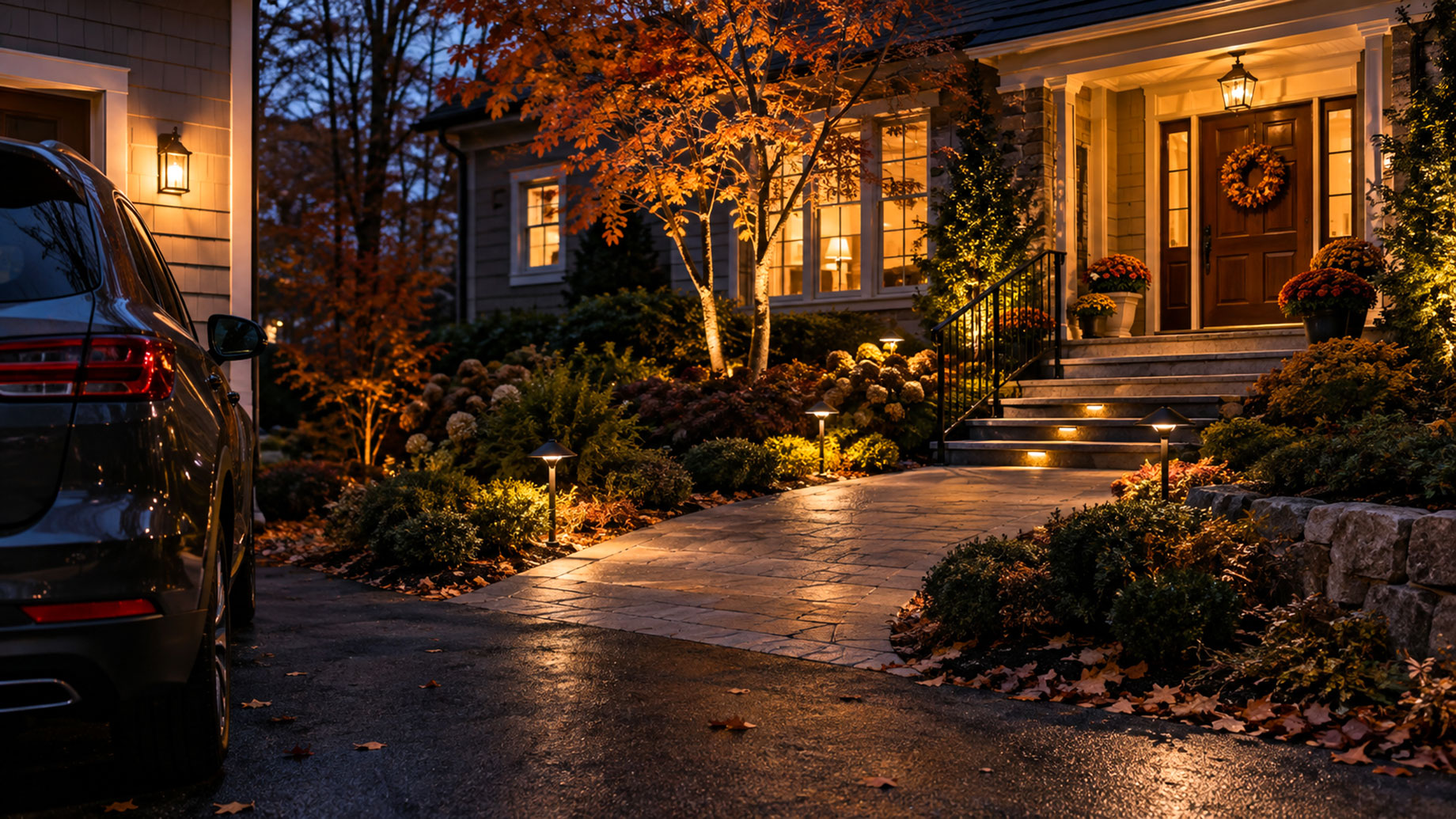
A welcoming home should be easy to reach after sunset. Yet the short walk from a parked car to the front door often receives less attention than the landscaping surrounding it. As fall brings earlier darkness, familiar details become easier to miss: a raised paver, a leaf-covered step, or a planter narrowing the entrance.
Making this route safer starts with a clear, stable walking surface, visible changes in level, and lighting that helps people see where to place their feet. Thoughtful maintenance and a few targeted improvements can make evening arrivals more comfortable while preserving the character of your home’s exterior.
Start Where You Step Out of the Car
Begin with a daylight inspection, then review the route after dark using the lights normally available. Keep a flashlight handy for any poorly lit sections.
Start at the driver’s door and passenger side, then consider where someone retrieving groceries from the trunk would walk. Can everyone reach the path without stepping into a planting bed or squeezing around a second vehicle?
Pay particular attention to three transitions: driveway to walkway, walkway to steps, and landing to threshold. A porch can look beautifully illuminated from the street while leaving the first few feet beside the car in shadow. Note each problem where it occurs so repairs address the whole journey.
Ask anyone who regularly uses the entrance whether there is a spot where they hesitate or struggle to see. Their experience may reveal a problem that a quick visual inspection misses.
Repair Uneven Walkways and Unclear Step Edges
Look for lifted paving, loose stones, crumbling concrete, and edging that protrudes into the walking area. WorkSafe Queensland’s guidance on outdoor walking surfaces identifies uneven paving, level changes, roots, and loose material as common hazards.
Arrange appropriate repairs instead of relying on brighter lighting to make damaged surfaces usable. If roots or recurring settlement are involved, ask a qualified contractor to assess the cause before simply resetting the same stones.
At steps, check that each tread is secure and its edge remains distinguishable after sunset. Repair loose handrails and keep them accessible. The Consumer Product Safety Commission’s home safety checklist recommends well-lit approaches, slip-resistant outdoor steps, and handrails that are easy to grasp.
Keep Wet Leaves and Water Off the Route
Fall leaves deserve attention between major yard cleanups. The UK’s Health and Safety Executive explains that wet or decaying leaves can be slippery and conceal hazards, making a small pile at the bottom step more consequential than it looks.
Sweep the walking route regularly during leaf fall, especially after rain or wind. Include the places where people turn, unload bags, and pause to unlock the door. Remove mud and loose gravel that migrate onto paving.
Look for puddles after rainfall. A downspout, overflowing gutter, or poorly directed sprinkler may repeatedly wet the same section. Address the source, and have persistent drainage problems assessed. Choose cleaning methods suitable for the paving material so maintenance does not damage its surface.
Light the Walking Surface and Every Transition
Plan lighting around what someone needs to see: the ground beside the vehicle, the path ahead, each step, and the door hardware. Check the route with the vehicle parked normally, because its position may block light from the garage.
Use shielded fixtures aimed toward the surfaces that need illumination. DarkSky and the Illuminating Engineering Society’s outdoor lighting principles recommend targeted light, appropriate brightness, warmer colors, and controls that limit unnecessary operation.
Check fixtures from a pedestrian’s viewpoint. An exposed lamp shining toward approaching eyes can be uncomfortable even when the pavement remains difficult to see. Adjust placement and aiming before increasing brightness.
If you are already exploring professional backyard landscape lighting in Lenexa as part of a wider exterior upgrade, include the driveway-to-door route in the design brief. Ask for attention to steps, shadows, and the transition between parking and the entrance.
Test motion sensors from every normal approach. Lights should activate before someone reaches an obstacle and remain on long enough to unload, walk, and unlock the door. Review timer settings as sunset changes through fall.
Give Landscaping Room Without Losing the Path
Inspect planting from the walkway itself. Branches may hang at face height, ornamental grasses may spill across paving, and mature shrubs may hide a turn or cover a fixture.
Prune growth that obstructs the route or its lighting. Move planters away from corners and stair landings, keeping enough space for someone carrying bags or using a mobility aid.
Seasonal decorations need the same scrutiny. Place pumpkins, lanterns, and display stands outside the walking area, and keep electrical cords away from foot traffic. The entrance can still feel generous and inviting when decorative elements frame a clear route.
Consider guests who do not know the layout after sunset. Where a decorative path branches toward a side gate, make sure the main entrance remains easy to identify without walking closer to investigate.
Make Your House Number Easy to Find
Check your address from the street after dark, approaching from both directions. Distinct numerals should contrast with their background and remain visible beyond parked vehicles, foliage, and seasonal decorations.
Illuminated or reflective numbers can improve nighttime readability. Cedarhurst’s house-number visibility guidance emphasizes that clear addresses help emergency responders locate properties.
For a home set well back from the road, consider whether an additional marker near the driveway would help. Check local placement requirements before installation. A number that looks elegant beside the door still needs to be readable from the approach.
Keep the Final Few Feet Clear
Give visitors a clear place to stand while the door opens. Relocate deliveries, shoes, umbrellas, and decorative objects that crowd the landing. Use a mat that lies flat, resists slipping, and does not interfere with the door.
If deliveries routinely block the doorway, designate a visible drop location beside the approach, outside the walking route and clear of the door swing.
Keep the threshold visible and the lock or keypad easy to see. Inside, provide a place for wet footwear and bags away from the entrance.
Make a brief evening check part of fall maintenance: clear debris, confirm lights work, and look for new obstructions. A safer arrival comes from keeping each part of the route usable, from the first step out of the car to the final step indoors.
