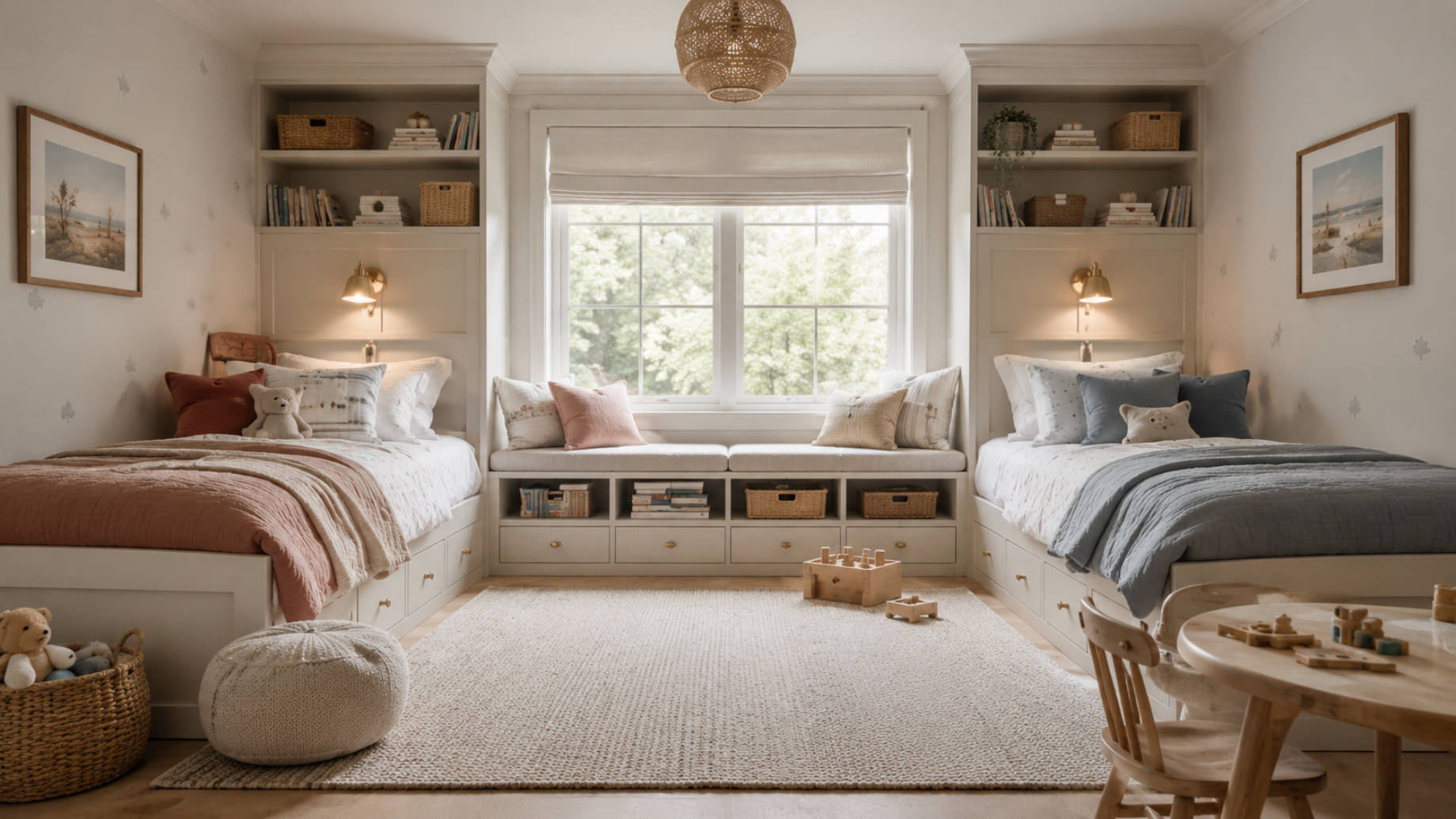
For siblings, a shared bedroom is usually a fun and memorable experience that helps teach them to cooperate and bond. But it’s no secret that when there’s no personal storage space or a lack of privacy, it will end up creating more mess and disputes. With careful planning, you can make a shared bedroom design that’s comfortable, functional, and personalized for each child. Here are essential tips to help you create a shared bedroom that your kids, of all ages, will love.
Start With the Room’s Layout
If you’re planning a bedroom for two children, you’ll need to consider creating separate sections for each child’s personal needs. Consider the location of the beds. Smaller rooms may benefit from bunk beds, as they provide more space for play and storage. Alternatively, you can place the twin beds along the same wall with a shared nightstand in between. This can help keep things symmetrical and balanced.
A larger bedroom may require a more creative way to create a personal space for each child. It can be a bookshelf, a curtain divider, or different rugs, as these can delineate each area without disrupting the overall feel of the bedroom. Regardless of the room’s size, make sure that the layout allows your children to move around comfortably without bumping into furniture.
Make Space for Personalization
One common mistake of parents when creating a shared bedroom is trying to have everything exactly the same for each of the children. While this can make things look organized, it may not be practical for your kids. Give each child a small space or area that they can customize to suit their needs and preferences.
Consider giving them different beddings, unique wall art, separate shelves for their favorite items, individual reading lights, or a display for their favorite toys or photos. This may seem like a small detail to many adults, but to children, it helps them feel a sense of ownership over their shared bedroom, minimizing conflicts and competition.
Add Smart Storage
A shared bedroom can get messy very fast, especially when the room accommodates more than two kids. If there isn’t enough storage, parents may quickly find themselves having to organize and clean up the space daily. Using multifunctional furniture, such as beds with storage, built-in drawers, storage benches, and cube organizers, can make a significant difference.
Using space vertically with floating wall shelves and hooks can also help maximize the storage space without overcrowding the bedroom. Make sure to label the storage containers or give each child their own drawer or shelf to reduce arguments over belongings.
Many homeowners also seek guidance from reliable contractors, such as Vancouver general contractors renovation, when renovating, as these experts can provide smart, practical storage ideas for children of all ages.
Think Ahead with the Right Color Palette
When choosing a color palette for your children’s shared bedroom, consider the shades that will work best in the space. Neutral colors are ideal as they’re versatile enough and can be accessorized with pops of color. Soft green, white, muted blue, or earth tone shades can create a calming and comfortable atmosphere.
You can also add color through beddings, throw pillows, artwork, rugs, lamps, or removable wall decals. This approach is generally easier and more practical, as you can easily update them as your children get older.
Create Separate Sleep and Play Areas
If kids are sharing the room, it’s important to establish physical boundaries. Separating sleeping areas from play areas can help improve sleep routines and prevent overstimulation. If possible, keep the toys away from the sleeping area. A little reading nook, play mat, or craft table can serve as a designated activity area for your children without taking over the entire space.
Separating the areas can also help your kids transition from play to sleep mode. For older children, you can provide desks or homework stations to give each child a designated place to do schoolwork or craft work.
Pay Attention to Lighting
Since children often have different schedules or preferences when it comes to lighting, it’s best to use different light sources. Ceiling light fixtures, bedside table lamps, and reading lights will enable your children to control the light in their individual spaces without disturbing their siblings.
Warm lighting can help create a welcoming and soothing environment. Natural lighting is especially important in smaller spaces because it gives the appearance of a more spacious and inviting room. Blackout drapes or blinds are a must if one child takes a longer nap or tends to rise earlier than their sibling.
Create Flexibility
Since kids grow and change rapidly, creating flexibility in their shared bedroom design can significantly save you time and money down the road. Furniture that can easily change shape or function in various ways is a worthwhile investment.
Avoid using every available space to allow the shared bedroom to expand and grow. For example, a little space on the floor could work as a play area for toddlers, which you can later transform into a study nook or lounge area once they become teenagers.
Encourage Cooperation in the Design Process
One of the best ways to ensure that your children will love their shared bedroom is to include them in the design process. Ask your young ones about their ideas or get their input regarding color, decoration, and organization. Including your children in the decision-making process can help make them feel respected and valued.
Endnote
Creating a shared bedroom for your kids takes some creativity and patience. By focusing on smart room layout, personalized touches, smart storage, and flexible design, you can design a shared bedroom that your children will truly enjoy and cherish.
