You can spend six figures on a house and still get the roof wrong. A crisp modernist box can end up saddled with a faux slate profile so heavy looking it flattens the whole facade. The roof is roughly 40 percent of what a passerby actually sees, and most homeowners treat it as an afterthought decided in a contractor’s truck. That’s backwards. Roofing material should be chosen the way you’d choose a front door: it has to work with the geometry, the climate, and the wall material, not fight any of them. Get that match right and you also get fewer leaks, because water behaves differently on a low slope than on a steep pitch.
Most homeowners also want to know how the roof plays into their policy, which is why so many start by pricing comprehensive homeowners insurance before they pick a shingle, and that order makes more sense than it sounds. Your coverage terms can hinge on material and roof age, so knowing them early saves you from a nasty surprise later.
Below is a walkthrough of how the major materials actually perform, followed by a decision framework you can use to choose the right material for your house.
Start with the roof’s shape, not the catalog
Pitch decides more than taste does. A steep roof sheds water fast, which opens up your options. A low slope holds water longer, which shuts most of them down unless you’re willing to pay for a membrane system or standing seam metal.
Look at your house from across the street and trace the roofline. Is it a simple gable, a hip, a series of intersecting planes? Complex roofs with valleys and dormers create more seams, and every seam is a place where a cheap material will fail first. If your roofline is busy, spend your money on installation quality over material prestige. A well flashed asphalt roof on a complicated plan is a better choice than a bargain slate job with sloppy valleys.
Overhangs matter too. Deep eaves protect the walls and let you get away with more material choices. A house with almost no overhang, common in a lot of midcentury modern work, pushes water right to the edge and demands better flashing detail no matter what you install.
What each material actually costs you over time
Here’s the comparison most people never get in one place. All figures are rough national ranges, so treat them as ballpark numbers for planning, not quotes.
| Material | Typical lifespan | Best suited to | Main drawback |
|---|---|---|---|
| Asphalt shingle | 15 to 30 years | Steep slopes, tight budgets | Shortest life, least character |
| Standing seam metal | 40 to 70 years | Low slopes, snow country | High upfront cost, dents |
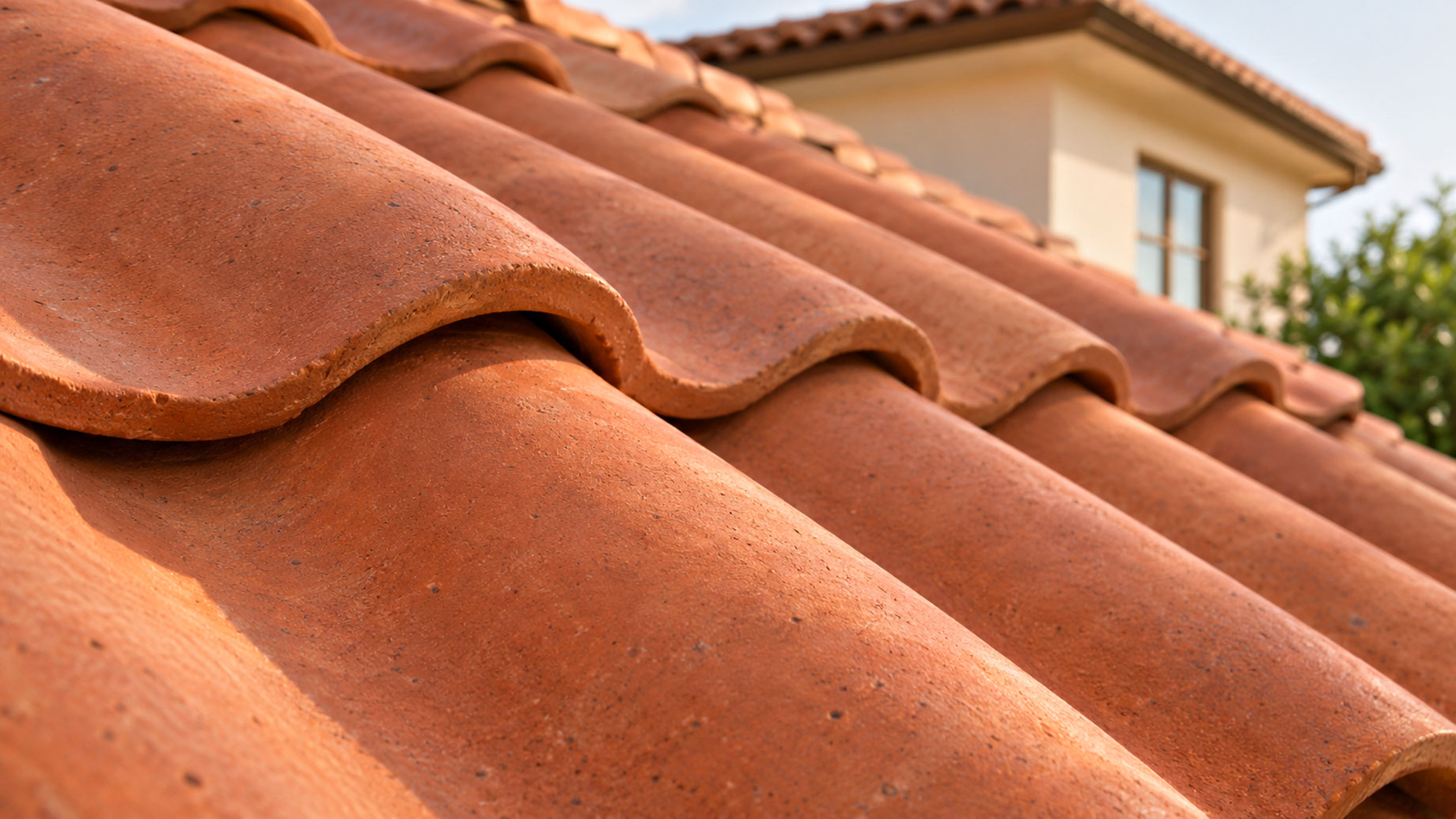
| Clay or concrete tile | 50 years plus | Mediterranean and Spanish colonial styles | Extremely heavy, needs framing check |
| Natural slate | 75 to 100 years | Historic and Gothic revival homes | Very expensive, specialist labor |
| Wood shake | 25 to 40 years | Craftsman and rustic styles | Fire risk, needs treatment |
Weight is the hidden variable. Tile and slate can run several times the load of asphalt, and not every frame was built to carry it. If you’re switching material families, bring in a structural engineer before you sign anything, because reinforcing a roof costs real money and it’s better to know now.
Climate narrows the field fast
Where you live does half the choosing for you. In hail country, metal and tile shrug off impacts that will bruise asphalt, while wood shake is a liability. In wildfire zones, fire rated assemblies matter more than color or profile, and local codes increasingly require them. Coastal salt air eats fasteners and thin metal, so specify the right hardware or watch a new roof rust from the inside out.
Snow is its own problem. Slick surfaces shed snow and reduce the risk of ice dams, which is why metal performs so well in cold regions. But snow sliding off a metal roof lands with force, so you need snow guards above doorways and driveways. A guard set can cost less than repairing one crushed railing, and it’s the kind of detail that separates a good install from a bad one. The Federal Emergency Management Agency publishes broad guidance on building to withstand local hazards, and it’s worth a look before you commit.
Match the material to the architecture
This is where most projects go wrong, and where a designer’s eye pays off. The roof should read as part of the house’s original logic, not a later correction.
- Spanish colonial and Mediterranean: low pitch, clay barrel tile, warm earth tones. Nothing else looks right.
- Craftsman bungalow: deep eaves, exposed rafters, moderate pitch, and wood shake or a shake-look composite.
- Modern and minimalist: clean standing seam metal or a flat membrane with hidden fasteners. Keep the profile quiet.
- Colonial and traditional: slate or a quality architectural shingle in a dark, uniform color.
A simple rule of thumb: if you can’t tell where the roof ends and the wall begins, you’ve probably matched them well. If the roof shouts, you’ve missed. The U.S. Department of Energy also points out that roof color and material affect how much heat your home absorbs, which matters in hot climates and links your aesthetic choice to your cooling bill.
A practical framework for choosing your roof
Call it the four question sort. Run any candidate material through it and the field narrows to two or three options in about ten minutes.
- Does it fit the pitch? If not, cross it off. No exceptions.
- Can the structure carry it? Check weight against the framing, not against what the last owner had.
- Will it survive your weather? Hail, snow, salt, fire, and sun all eliminate different options.
- Does it belong on this house? Style match, and whether local codes or a historic district restrict you.
One more thing that gets skipped: ventilation. A roof that can’t breathe traps moisture and rots from underneath, sometimes before the surface shows any wear. Whatever material you choose, pair it with proper intake and exhaust. The U.S. Department of Housing and Urban Development has long noted that attic ventilation and moisture control affect how long a roof lasts, and it’s cheap insurance against a premature replacement.
How to make the final decision
If you’re staying in the house for decades and the architecture supports it, spend the money on metal or tile and stop thinking about it. If you’re selling in five years or your budget is tight, a quality architectural shingle installed by a careful crew beats a premium material installed badly, every single time. Roofing is a system, not a product.
So before you call a contractor, stand across the street, look at your roofline, and ask what your house is actually trying to be. The right answer usually shows up in that first minute, and it beats whatever’s on sale.
