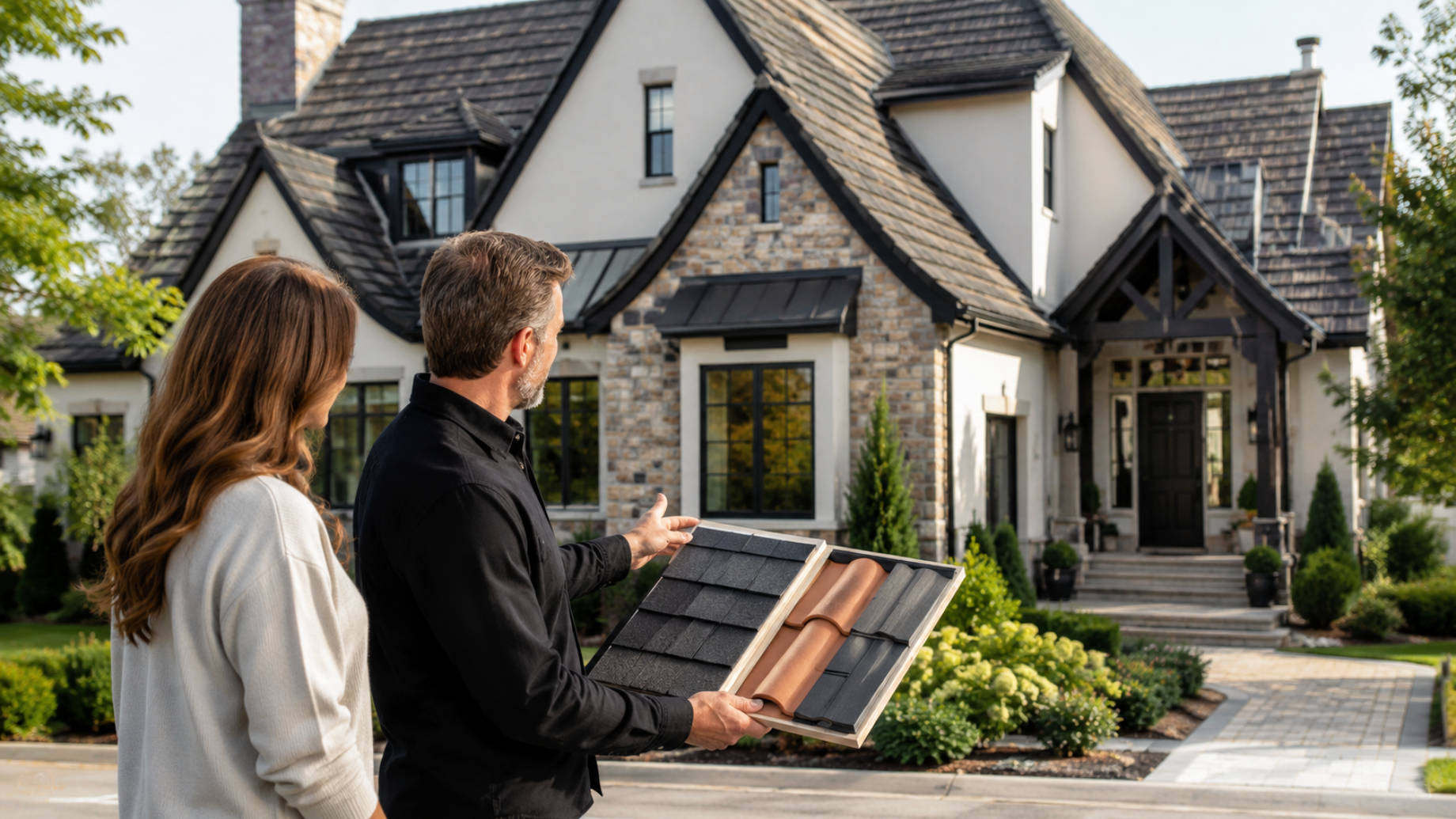
A roof does much more than protect a home from rain and storms. It also influences curb appeal, energy efficiency, maintenance needs, resale value, and the overall architectural character of the property.
Choosing the right roofing material requires balancing appearance with practical considerations. Budget matters, but so do the local climate, the structure of the home, neighborhood requirements, and the amount of time the homeowner expects to remain in the property.
The best roofing choice is rarely based on one factor alone. It should look appropriate for the home while providing reliable performance for the environment in which it will be installed.
Start With the Home’s Architectural Style
Roofing should feel like an intentional part of the home’s design rather than a separate feature placed on top of it.
Traditional homes often pair well with architectural asphalt shingles because they provide texture without overwhelming the exterior. Standing-seam metal can complement modern, contemporary, farmhouse, and Hill Country designs. Clay or concrete tile is commonly associated with Mediterranean, Spanish, and Southwestern architecture, while composite slate or shake can provide an upscale appearance without the weight or maintenance requirements of natural materials.
When evaluating roofing samples, homeowners should consider how the material will interact with:
- Exterior brick, stone, stucco, or siding
- Window and door colors
- Gutters, flashing, and metal accents
- Roof pitch and complexity
- Landscaping and surrounding homes
- Existing neighborhood or homeowners association requirements
A material that looks attractive as a small sample may appear very different when installed across an entire roof. Viewing completed homes with similar architecture can make the decision easier.
Compare Cost With Long-Term Value
Upfront price is important, but it should not be the only consideration. Roofing materials vary considerably in lifespan, maintenance, energy performance, and replacement cost.
Asphalt Shingles
Architectural asphalt shingles remain the most common residential choice because they provide a strong balance of affordability, versatility, and appearance.
They are available in numerous colors and profiles, making them suitable for traditional, transitional, and contemporary homes. Upgraded impact-resistant options may also provide additional protection in hail-prone regions.
A properly installed asphalt shingle roof commonly lasts approximately 20 to 30 years, although local weather conditions and attic ventilation can affect its actual service life.
Metal Roofing
Metal roofing typically costs more initially, but it offers a long lifespan and a distinctive appearance.
Standing-seam metal is especially popular on modern and custom homes because of its clean lines. Metal can also reflect solar energy, shed water efficiently, and resist strong winds when the system is properly designed and installed.
Depending on the metal, coating, and installation, a quality roof may last 40 to 70 years or longer.
Tile Roofing
Clay and concrete tile provide a premium architectural appearance and can last for several decades.
Tile performs well in hot climates and is commonly selected for luxury homes with Mediterranean, Spanish, or Southwestern influences. However, it is significantly heavier than asphalt shingles or many metal systems.
Before installing tile, a roofing professional should verify that the structure can support the added weight. The underlayment and flashing system are also particularly important because they provide much of the roof’s water protection beneath the visible tiles.
Composite Roofing
Composite products can replicate the appearance of natural slate, wood shake, or tile while requiring less maintenance.
These systems are often selected by homeowners who want a distinctive architectural look without the weight, fragility, or installation complexity associated with certain natural materials. Product quality varies, so homeowners should carefully review manufacturer specifications, testing, and warranty coverage.
Account for the Local Climate
A roofing material should be selected for the conditions it will face, not just for how it looks in a showroom.
In Central Texas, roofs are routinely exposed to intense sunlight, prolonged heat, sudden temperature changes, hail, heavy rain, and strong winds. These conditions can shorten the life of materials that are poorly suited to the climate or incorrectly installed.
Heat and Sun Exposure
Dark roofing materials can absorb significant solar heat. Reflective metal finishes and lighter shingle colors may help reduce roof-surface temperatures, although insulation and attic ventilation also play important roles in overall energy performance.
Hail
Hail can bruise asphalt shingles, crack tile, dent metal, and damage flashing. Impact-resistant roofing products may provide additional protection, but no material should be considered completely hail-proof.
Homeowners should also ask their insurance carrier whether tested impact-resistant materials qualify for policy discounts.
Wind
Strong winds can lift improperly fastened shingles and damage poorly secured roof components. Metal and tile systems can perform well in high winds, but only when the roof deck, underlayment, fasteners, flashing, and edge details are installed correctly.
The quality of installation is often just as important as the material itself.
Consider the Structure Beneath the Roof
Not every home can support every roofing product without modification.
Tile and natural slate are considerably heavier than asphalt shingles. A home originally designed for a lightweight roof may require structural evaluation or reinforcement before switching to a heavier material.
The condition of the roof deck should also be inspected before installation. Rotted or weakened decking must be repaired so the new roofing system has a solid attachment surface.
Roof pitch can further limit available choices. Certain products require a minimum slope to drain properly, while low-slope areas may need a membrane system rather than shingles, metal panels, or tile.
Think About Maintenance and Ownership Plans
Homeowners should consider how long they expect to keep the property and how much ongoing maintenance they are willing to manage.
A homeowner preparing to sell may prioritize a clean, attractive, and affordable asphalt shingle roof. Someone planning to remain in the home for decades may place greater value on the longevity of metal, tile, or a premium composite product.
Maintenance needs also vary. Asphalt shingles should be inspected for granule loss, lifting, and storm damage. Tile roofs may require cracked tiles to be replaced and underlayment to be monitored. Metal systems should be checked periodically around seams, flashings, penetrations, and coatings.
No roofing material is maintenance-free. Periodic inspections help identify small issues before water reaches the roof deck or interior of the home.
Work With a Contractor Who Understands Design and Performance
Online research and product samples are helpful, but they cannot replace an evaluation of the home itself.
A qualified roofing contractor should inspect the structure, roof pitch, ventilation, drainage, existing materials, and surrounding conditions before recommending a system. The contractor should also explain how different materials will perform over time and how each option affects the total project cost.
Homeowners comparing premium materials or complex roof systems can consult an experienced company such as Driftwood Builders Roofing to review the practical and architectural trade-offs before making a final selection.
The goal is not simply to install the most expensive product. It is to choose a roofing system that fits the home, performs well in the local climate, and supports the homeowner’s long-term plans.
Choosing a Roof With Lasting Appeal
The right roof should provide a combination of durability, beauty, and compatibility with the home’s design.
Asphalt shingles offer versatility and value. Metal provides longevity and modern appeal. Tile creates a distinctive premium appearance, while composite materials can deliver the look of natural products with fewer structural or maintenance demands.
By considering architecture, climate, structure, budget, and ownership goals together, homeowners can choose a roofing material that protects the property while enhancing its appearance for years to come.
