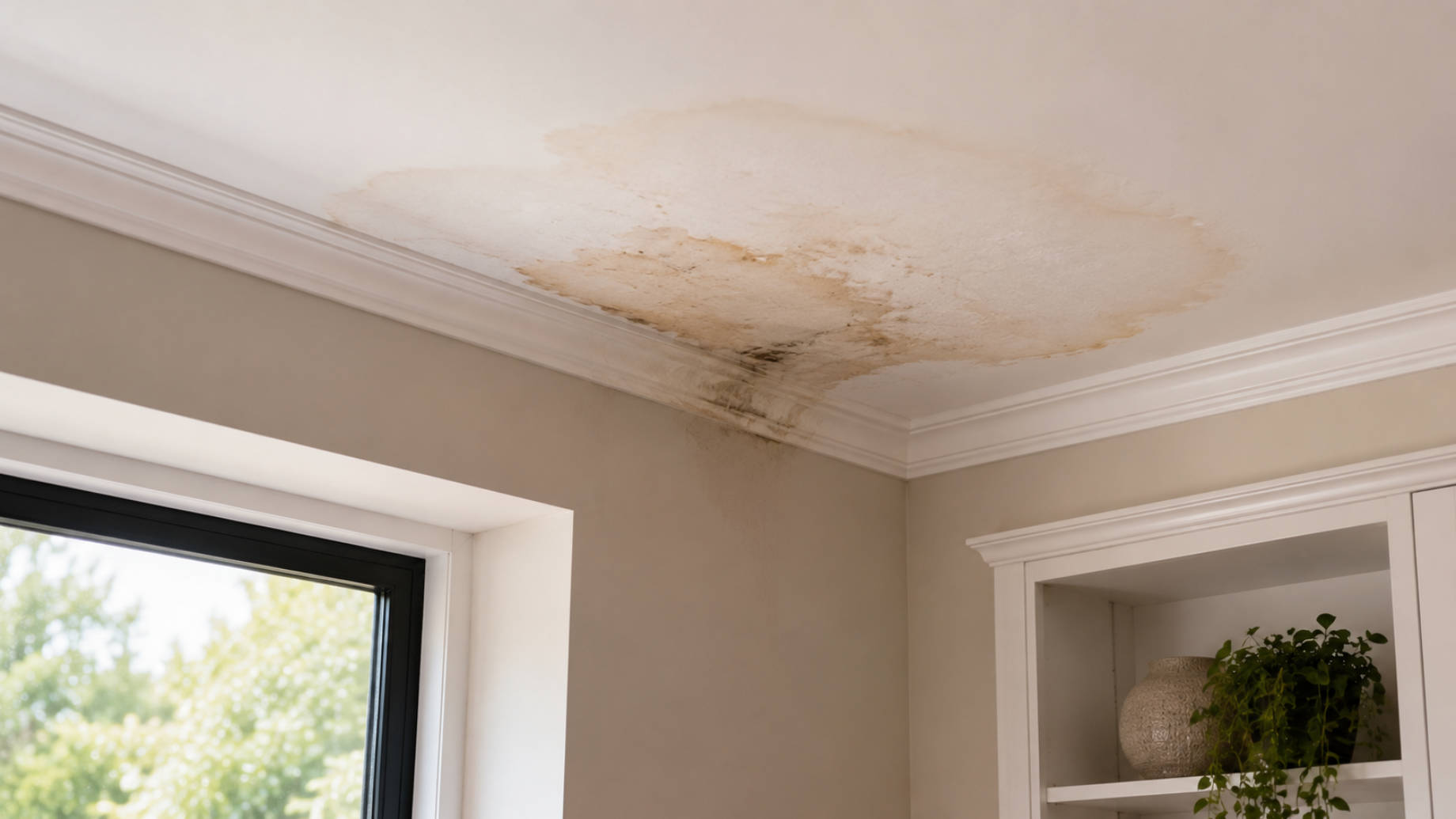
Damp inside a home is often treated as an internal problem. Homeowners may look first at ventilation, heating, condensation or plumbing. Those causes are certainly common, but the outside of the building should not be forgotten. A small defect in the roof, guttering, chimney or flashing can allow rainwater to enter the structure and appear indoors some distance from the original source.
This is particularly true in older homes, coastal properties and buildings with complex roof shapes. Roof slopes, chimneys, valleys, dormers and flat roof areas all move water in different ways. If one detail fails, moisture can travel along timbers, felt, masonry or insulation before finally showing as a stain on a ceiling or wall.
Understanding the link between roof defects and damp helps homeowners act earlier and avoid treating only the symptom.
Water rarely travels in a straight line
One of the frustrating things about roof leaks is that the visible damp patch may not be directly below the defect. Water can enter around a chimney, run along a rafter, collect behind plasterboard and then appear elsewhere. This can make small leaks difficult to diagnose without a careful inspection.
Homeowners should pay attention to patterns. Does the mark appear after heavy rain? Is it worse when wind comes from a particular direction? Does it dry out in summer and return in winter? These clues can separate roof-related damp from condensation or plumbing issues.
Chimneys and flashings are common weak points
Chimneys are exposed to weather on all sides. The junction between chimney and roof covering usually depends on leadwork and sound masonry. If flashing cracks, mortar fails, pots loosen or flaunching deteriorates, rainwater may begin to enter.
This does not always create an immediate drip. It may show as staining around a chimney breast, damp smells in an upstairs room, or dark marks in a loft. Because chimneys are often difficult to inspect from ground level, these internal signs are important.
Gutters can create damp without a roof leak
Not all roof-related damp comes through the roof covering. Blocked, leaking or misaligned gutters can send water down walls or back towards the roof edge. Over time, that can saturate brickwork, damage render, affect fascias and contribute to internal damp.
During heavy rain, homeowners can often spot gutter problems from the ground. Look for water spilling over one section, dripping from joints, staining below brackets or downpipes that cannot cope. These are not cosmetic issues; they are part of the building’s rainwater defence system.
For property owners comparing roofing Chichester, it is sensible to include gutters, flashings, chimneys and roofline details in any discussion about damp prevention. The visible roof covering is only one part of the system.
Flat roofs and hidden edges
Flat roofs on dormers, garages, porches and extensions can be another source of moisture problems. Splits, lifted edges, blocked outlets and standing water may allow moisture into the structure. Because flat roofs are often out of sight, problems may not be noticed until an internal ceiling mark appears.
After heavy rain, a safe visual check can reveal whether water is draining properly. No one should climb onto a roof without the right access, but from windows or ground level it may be possible to spot debris, ponding or obvious surface damage.
Older buildings need joined-up thinking
In historic or character properties, roof repairs should be considered alongside masonry, pointing, chimneys and ventilation. A damp patch may have more than one contributing factor. For example, a small flashing defect might be made worse by blocked gutters or porous masonry. Treating only one element may not solve the whole problem.
Joined-up maintenance does not have to mean major work. It means thinking about how the roof, walls and drainage work together to keep water out.
Act before decoration is damaged
It is tempting to repaint a stain and hope it does not return. Sometimes that is enough if the cause was temporary condensation. But if rainwater is entering from outside, the mark will usually come back. Worse, moisture may continue affecting timber, insulation or plaster even when it is not obvious.
A practical approach is to investigate recurring damp before redecorating. Check gutters, look in the loft where safe, note weather patterns and arrange a roof inspection if the evidence points upwards.
Small defects are often manageable when caught early. Left through a winter of rain and wind, they can become more disruptive. The roof is the first barrier between weather and the home, and keeping that barrier sound is one of the most effective ways to prevent damp from becoming a bigger issue.
