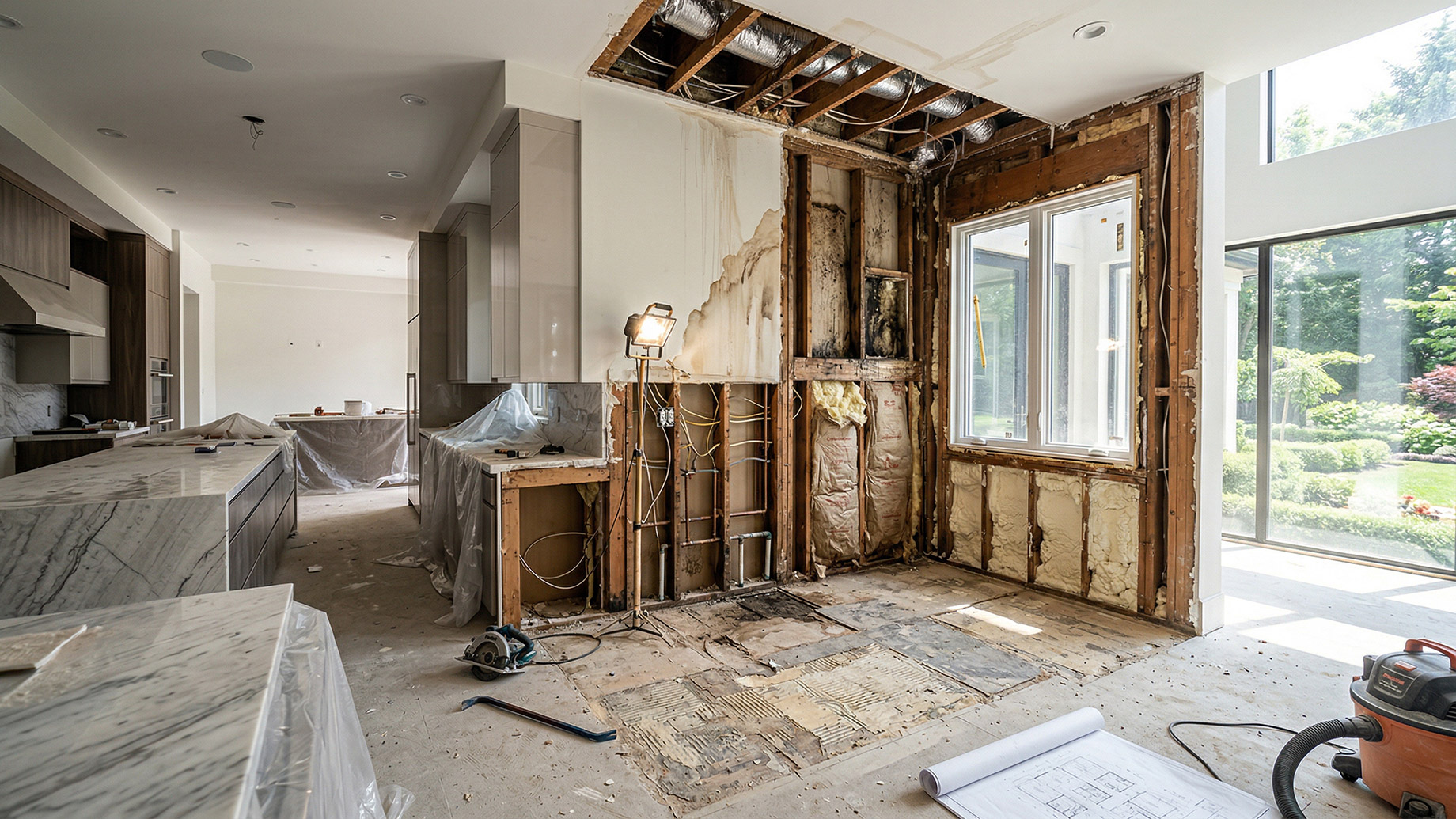
Reconstruction has a way of dismantling assumptions. What appears structurally sound and visually complete often turns out to be a layered composition of temporary fixes, material fatigue, and concealed inefficiencies. Finishes such as drywall, tile, and cabinetry tend to function as a visual endpoint, giving the impression of stability while quietly masking what lies beneath. Once those layers are removed, the home transitions from a finished space into a system under scrutiny, where its actual condition becomes difficult to ignore.
Most homeowners approach upgrades with a defined scope, expecting targeted improvements rather than full-scale revelation. In practice, reconstruction rarely stays confined to the surface. A simple intervention often exposes structural inconsistencies, outdated installations, or environmental stress points that were previously invisible.
Opening Walls and Structural Reality
Walls serve as both enclosure and concealment. Once opened, they reveal deviations from expected structural standards, including irregular framing, compromised load distribution, or localized material degradation. What appeared stable from the outside may show signs of long-term stress, previous interventions, or incomplete reinforcements. Such discoveries rarely align with initial expectations, particularly in homes that have undergone multiple phases of modification.
At this stage, the course of the project often changes. What begins as a controlled upgrade evolves into a broader structural assessment. Homeowners recognize that surface corrections cannot compensate for underlying deficiencies, leading to a reassessment of scope and approach. Moreover, seeking residential reconstruction services becomes essential here, not only as an upgrade but as a necessary step toward restoring structural coherence and ensuring long-term performance.
Layered Fixes in Older Homes
Older properties tend to exhibit a cumulative repair history rather than a singular structural narrative. Reconstruction frequently uncovers multiple layers of intervention, each addressing symptoms rather than root causes. Patchwork repairs, mismatched materials, and inconsistent techniques often coexist within the same section of the home, creating a fragmented structural profile.
These layered solutions introduce complexity rather than stability. A wall may contain evidence of repeated attempts to manage moisture, alignment issues, or insulation gaps, none of which were fully resolved. Once exposed, this accumulation provides context for recurring problems that were previously attributed to isolated incidents.
Moisture Beneath Tile Surfaces
Tile installations are often perceived as impermeable and structurally reliable, yet their performance depends heavily on what exists beneath the surface. During removal, it is not uncommon to find retained moisture within adhesive layers, subfloor materials, or underlying substrates. This trapped moisture does not always manifest visibly, allowing it to persist without immediate detection.
The implications become apparent once the system is exposed. Prolonged moisture retention can compromise material integrity, weaken bonding layers, and alter the stability of the substrate. What appeared to be a sound surface often reveals a gradual process of deterioration beneath.
Ceiling Work and Hidden Leak Pathways
Ceilings frequently act as concealment zones for past water intrusion. Surface finishes may appear uniform, yet underlying structures often retain evidence of historical leaks. These pathways are rarely linear or obvious until the ceiling is opened, at which point patterns of water movement begin to emerge through staining, material distortion, and localized weakening.
Such findings highlight a recurring issue in residential maintenance: remediation focused on appearance rather than source control. Water damage may have been addressed superficially, allowing the underlying pathway to remain active or partially unresolved. Reconstruction exposes these routes in a way that enables accurate diagnosis, shifting the focus from concealment to correction and preventing recurrence through structural intervention.
Window Replacement Revealing Framing Issues
Window replacement projects often extend beyond the unit itself, uncovering deficiencies in the surrounding framework. Once the existing installation is removed, gaps in sealing, misaligned framing, or inadequate structural support become visible. These conditions may not have caused immediate failure, yet they contribute to inefficiencies in insulation, air exchange, and long-term durability.
A compromised window opening affects more than just the window. It influences thermal performance, moisture resistance, and the structural integration of the wall system. Reconstruction provides an opportunity to correct these inconsistencies at their source.
Exterior Wall Openings and Insulation Deficiencies
Opening exterior walls introduces a different layer of evaluation, particularly around thermal performance and material suitability. Insulation, which is rarely inspected once installed, often reflects the standards and practices of the time it was placed. In many cases, materials may be insufficient, unevenly distributed, or degraded due to environmental exposure.
Such deficiencies are not always apparent through indoor comfort alone. Reconstruction reveals gaps, compression, or outdated insulation types that no longer align with current expectations for energy efficiency and moisture control.
Adhesive Layers Beneath Flooring
Flooring removal frequently uncovers a history of interventions that were intended to extend usability rather than resolve underlying issues. Multiple adhesive layers, residual compounds, and uneven bonding surfaces indicate repeated attempts to install new finishes over existing problems. While these layers may have supported temporary functionality, they often introduce inconsistencies in leveling and long-term stability.
Once exposed, these accumulated layers reveal how the floor system has evolved through successive modifications. Irregular adhesion, trapped debris, and compromised substrates affect how new materials will perform if left unaddressed. Reconstruction, in this context, becomes an opportunity to reset the surface entirely, removing legacy layers and establishing a stable base for future installations.
Hidden Mold Within Enclosed Cavities
Mold presence is often underestimated due to its tendency to remain concealed within enclosed cavities. Walls, ceilings, and underfloor spaces provide environments where moisture can persist without direct visibility, allowing biological growth to develop gradually. Surface inspections rarely capture the extent of this issue, particularly in areas that have not been previously disturbed.
Opening these spaces brings the full scope into view. Discoloration, odor, and material degradation reveal how long the conditions have been present and how extensively they have spread.
Water Damage Patterns Revealed Through Material Removal
Water damage rarely remains localized, even if it appears that way from the surface. Once surrounding materials are removed, patterns of movement become visible through gradients of discoloration, softened structures, and directional spread.
Looking at these pathways allows for a more accurate assessment of affected areas. Instead of treating visible damage in isolation, reconstruction enables a broader evaluation of interconnected zones. This approach ensures that corrective measures address the full extent of the issue rather than only the areas that were initially apparent.
Reconstruction operates as a form of exposure rather than disruption. Each layer removed reveals a deeper level of truth about how a home has been built, maintained, and adapted across time. What begins as an upgrade often evolves into a comprehensive understanding of structural integrity, system performance, and material condition.
