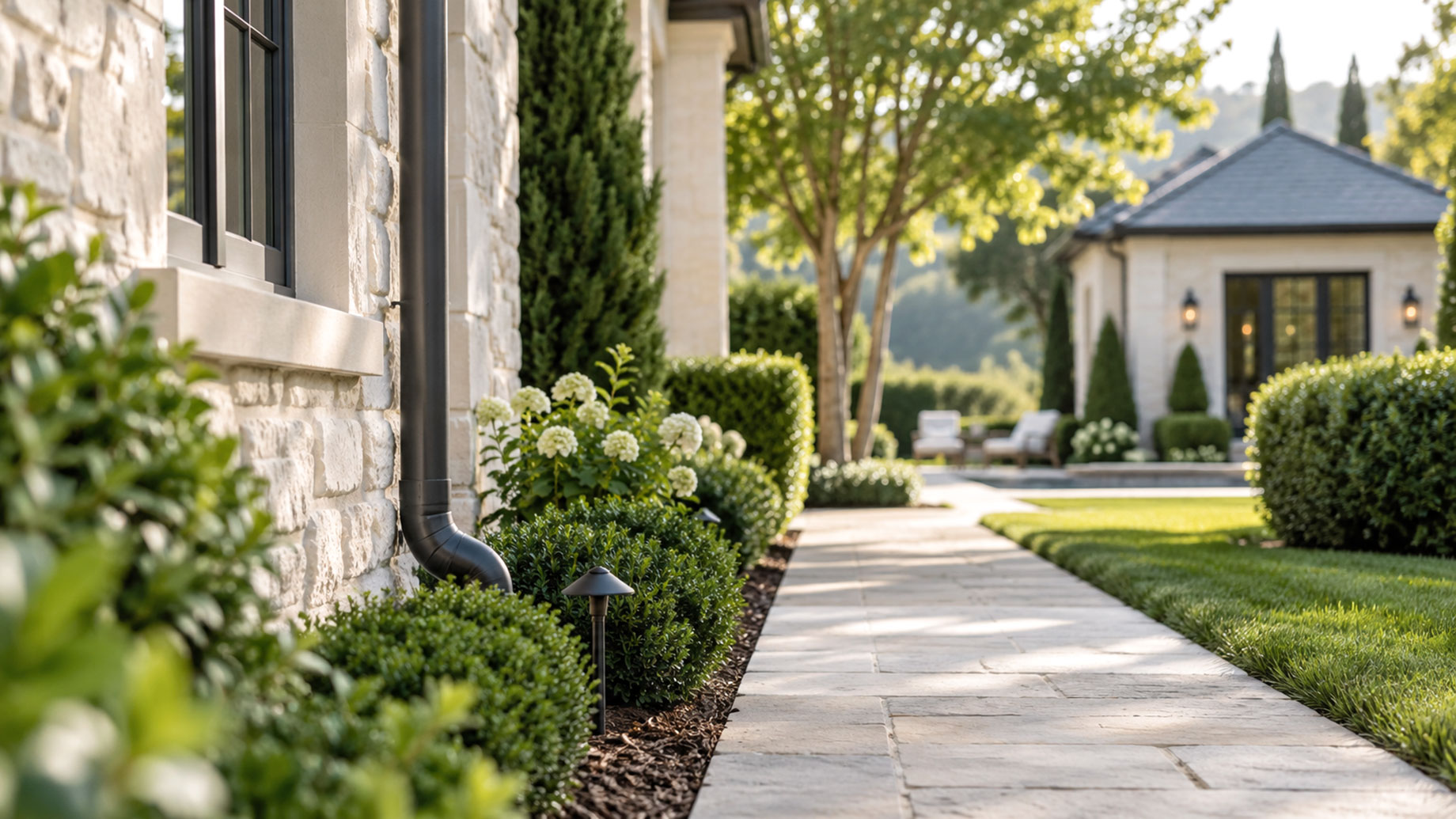
A high-value home is rarely a single structure with a single risk profile. It’s a main house, a guest cottage, a garage or carriage house, a pool cabana, extensive landscaped grounds, and often a wine cellar, workshop, or storage building that gets visited only occasionally. Each of these spaces has its own materials, moisture patterns, and entry points, which means a single pest control method applied across the whole property almost always leaves something unprotected. Layered prevention, treating the property as a collection of distinct zones rather than one undifferentiated space, tends to hold up far better over time.
Why One Method Rarely Covers a Whole Estate
Standard pest control on a modest single-family home often works reasonably well with one consistent approach: a perimeter treatment, some interior monitoring, and a seasonal check. Scale that same approach across five acres, three structures, and a stretch of ornamental landscaping, and the gaps start to show.
A perimeter treatment focused on the main residence does little for a detached guest house sitting two hundred feet away with its own foundation and its own vulnerabilities. Moisture control inside a primary kitchen doesn’t address a pool house bar with its own plumbing and its own periods of disuse. Termite monitoring stations placed around a main structure won’t necessarily catch activity building in a wine cellar’s wood shelving or a detached garage’s framing. Each of these spaces needs its own layer of attention, coordinated rather than treated as an afterthought to whatever protects the primary residence.
Structural Materials and the Termite Risk They Carry
Larger properties often incorporate more wood, more custom millwork, and more decorative structural elements than a standard home, all of which represent potential termite targets. Exposed beams, wine cellars with wood racking, custom staircases, and decorative trim throughout a large interior all provide cellulose material that termites can exploit if conditions allow.
Routine inspection matters more here than almost anywhere else on the property, since termite damage often progresses quietly behind finished surfaces for months or years before becoming visible. Moisture control plays a direct role in prevention as well, since termites are drawn to damp wood far more readily than dry material. Basements, wine cellars, and any partially below-grade space deserve particular attention, since these areas naturally run more humid than upper floors and often go unchecked for extended stretches between visits. Homeowners investing in custom woodwork or expanding a structure with additional timber framing are generally well served by pest control specialists at Magic City Pest Control who can assess moisture levels and termite risk before finish work is complete, since correcting a condition during construction is considerably easier than addressing it afterward.
Landscaped Grounds Introduce Their Own Layer of Risk
Extensive grounds, mature trees, ornamental gardens, water features, come with pest considerations that a smaller yard simply doesn’t generate. Dense plantings near a structure create the same bridging risk seen on any property, but at a larger scale, with more square footage of vegetation in direct contact with exterior walls across multiple buildings.
Irrigation systems designed for expansive landscaping also introduce more points of potential moisture buildup, more valve boxes, more drip lines, more opportunities for a leak to go unnoticed simply because of the property’s size. Water features add another layer entirely, since standing or slow-moving water near a structure can support mosquito breeding and draw other pests looking for a reliable water source. Regular landscaping maintenance, trimming vegetation back from every structure rather than just the main house, checking irrigation across the full property rather than assuming a single inspection covers it all, becomes considerably more involved on a large estate than on a standard residential lot.
Garages, Guest Spaces, and Low-Traffic Areas
Detached garages, guest houses, and staff quarters often see less daily foot traffic than a primary residence, which makes them attractive to pests precisely because activity there tends to go unnoticed longer. A garage used mainly for vehicle storage, or a guest wing occupied only a few weeks a year, can develop rodent activity, cockroach populations, or ant colonies that go completely undetected until someone finally spends extended time in the space.
Entry-point management matters as much in these secondary structures as it does in the main house, sometimes more, since detached buildings frequently have less rigorous sealing around doors, vents, and utility penetrations than a primary residence built or renovated more recently. A few areas worth checking on a recurring basis across every structure on a property include the following:
- Door sweeps and thresholds on garages, guest houses, and outbuildings, which wear at the same rate as those on a main residence but get inspected far less often
- Vent screens and utility penetrations on any structure not used daily
- Storage areas within garages or outbuildings, particularly cardboard boxes or seasonal items left untouched for months
- Crawlspaces or below-grade areas under secondary structures, which often receive even less attention than those under a main house
Monitoring these low-traffic spaces on a set schedule, rather than relying on someone noticing a problem during occasional use, closes a gap that many large properties leave open by default.
Outdoor Amenities Add Complexity Rather Than Simplicity
Pool houses, cabanas, outdoor kitchens, and entertaining pavilions all introduce food, water, and shelter in spaces that are used seasonally or intermittently rather than daily. An outdoor kitchen used heavily through summer and closed up for winter can accumulate food residue and moisture that draws pests during the exact months no one is checking on it. Cabanas and pool houses often include soft furnishings, cushions, and fabric that create the same hiding opportunities as interior textiles, just in a space that gets far less routine attention.
Because these amenities cycle between heavy use and near-total dormancy, they benefit from inspection scheduled around that rhythm rather than a generic seasonal check. A pre-season inspection before an outdoor kitchen or pool house reopens for the year catches problems that developed during months of disuse, before they have a chance to spread into adjacent structures.
Building a Coordinated Prevention Plan
The core idea behind layered prevention is coordination. Rather than treating each structure or zone as an isolated problem, an effective plan accounts for how pests move between them, from landscaping into a garage, from a guest house into connecting walkways, from an outdoor kitchen toward the main residence. That coordination requires tracking multiple inspection schedules, multiple moisture sources, and multiple sets of entry points across a single property.
Pest control specialists at Magic City Pest Control typically approach larger properties this way, building a customized plan that accounts for every structure and outdoor space rather than applying a single, one-size treatment across the entire estate. This kind of tailored approach reflects how differently a wine cellar, a pool cabana, and a detached garage each need to be handled, even though they all sit on the same piece of property.
Key Takeaways
Protecting a large, high-value property from termites, rodents, ants, and cockroaches requires more than extending a standard pest control approach across more square footage. Structural materials, landscaped grounds, garages, guest spaces, and outdoor amenities each carry distinct risks and need their own layer of routine inspection, moisture control, and entry-point management. Properties that rely on a single method applied uniformly tend to develop blind spots in exactly the areas that see the least daily attention. A coordinated, multi-layered plan closes those gaps by treating each zone according to its actual conditions rather than assuming what works for a main residence will automatically extend to everything else on the property.
